You can view and download my Visual Proposal PDF here:
I originally wanted to make a book because of the physical, material quality of an object and its grounding role on storytelling. However, with the pandemic, this will prove to be very difficult because objects and people are having to be experienced by different, non-physical ways. This is why I think that for my final project, I would like to compile the little stories I have been sharing on this blog, along with others from the first semester in a different, more specifically curated space. This way, the narrative can be designed and experienced with this “digital bridge” in mind.
Little Stories of Little Griefs
The Jacaranda
A little story about a big tree with tiny purple flowers.
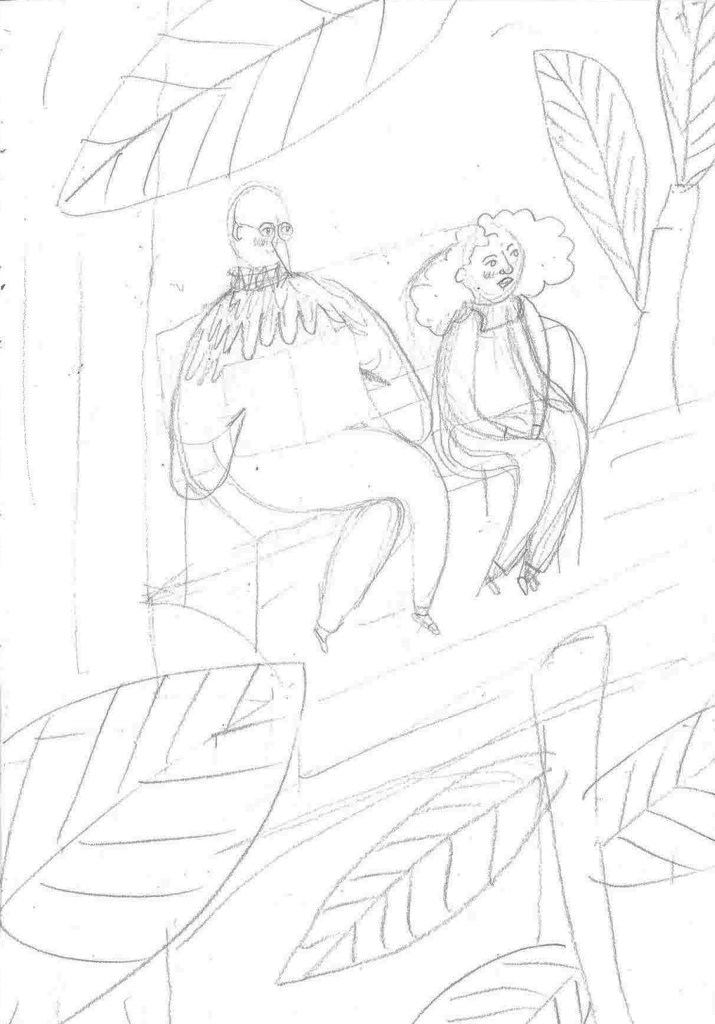
My dad said the jacaranda in front of my house started as a bonsai he bought in a market in Mexico City for my sister. It was planted in a clay pot and left on the back patio when they left to Japan. He said that by the time they came back to Mexico with me, the bonsai’s roots had grown, broken the clay pot that contained it, and planted itself in the ground. He then moved it to the front of the house and the bonsai became a tall, jacaranda tree.
Welcome
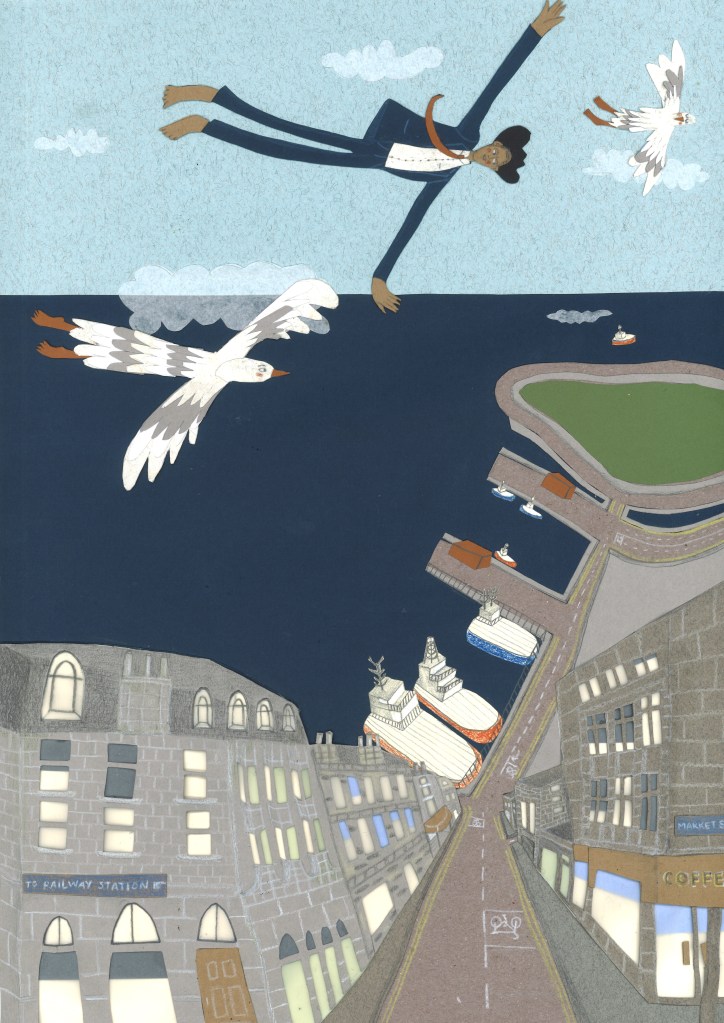
Eric Fabián
A little story about a bird with roots.
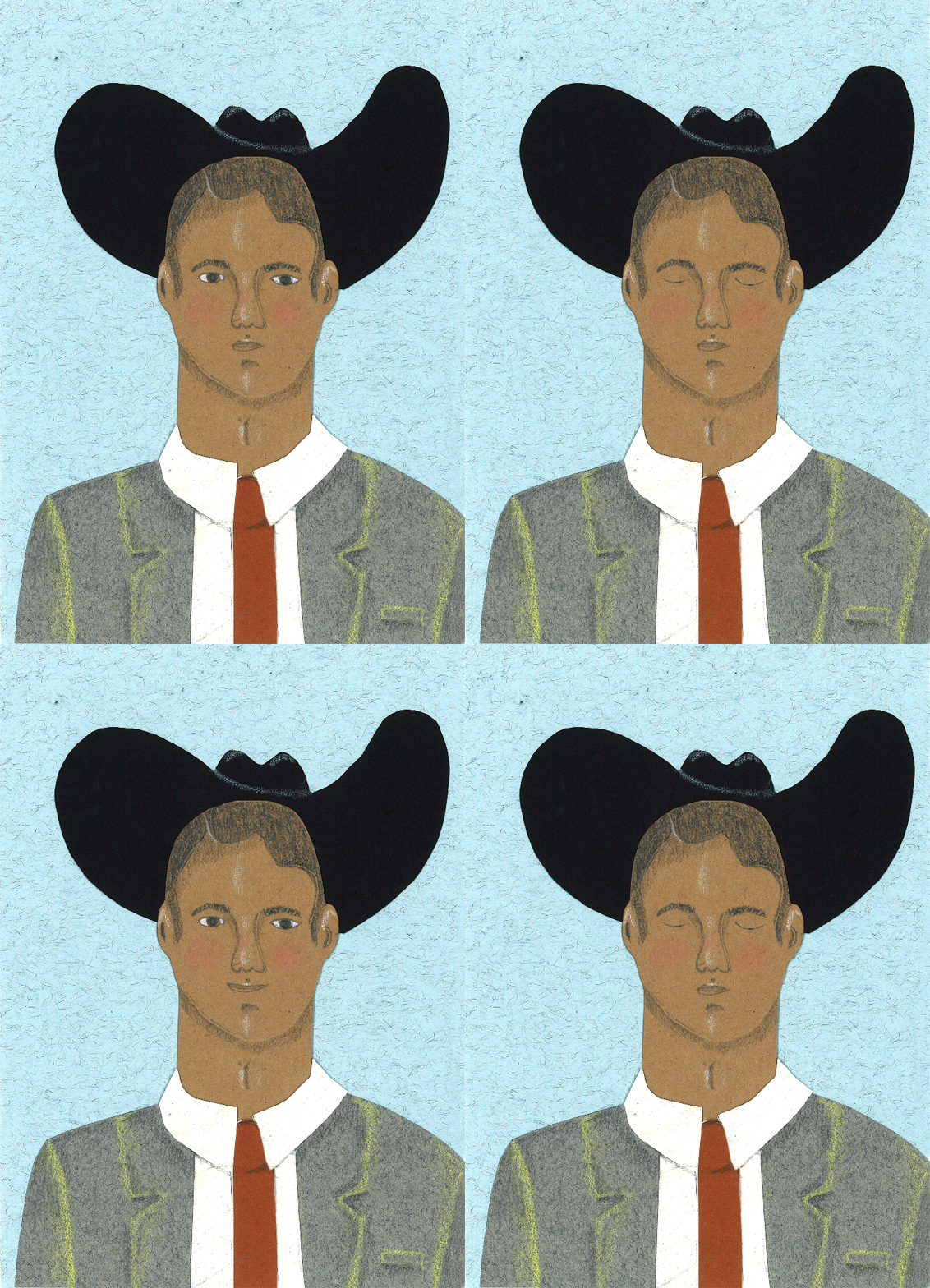
Eric Fabián has moved a lot. He said some people are meant to fly, others to grow roots. He said that he would do anything for his betterment. He said he feels like a bird with roots. He said that if he had the chance to bring anything from Mexico, it would be his guitar and his hand painted piggy bank, too. He always wears the black hat.
Santo Toribio Romo
A little story about an amulet.

Saint Toribio Romo wishes you safe travels, wherever you are going, for whatever the reason.
Some migrants buy an amulet in the Sonora Market in Mexico City, which include:
- a photo of Donald Trump with a dab of balm on his head, so he relaxes
- road opener oil, which is made of laurel leaf, black pepper, sea salt, rosé, lemon, cinnamon, myrrh ash, brown sugar and olive oil.
- an image of Saint Toribio Romo
- the printed prayer of Saint Toribio Romo, which reads: “I ask, Saint Toribio Romo, that you take care of me and protect me and the family I have had to leave, so I can travel to far away lands to find betterment. Please, let me keep my faith firm and let me get back to my home soon to reunite with my loved ones, strengthened in body and soul.”
The amulet costs around 500 Mexican pesos, which you have to pay in US Dollars, around 25.
Día de Muertos
A little story about the places we build.
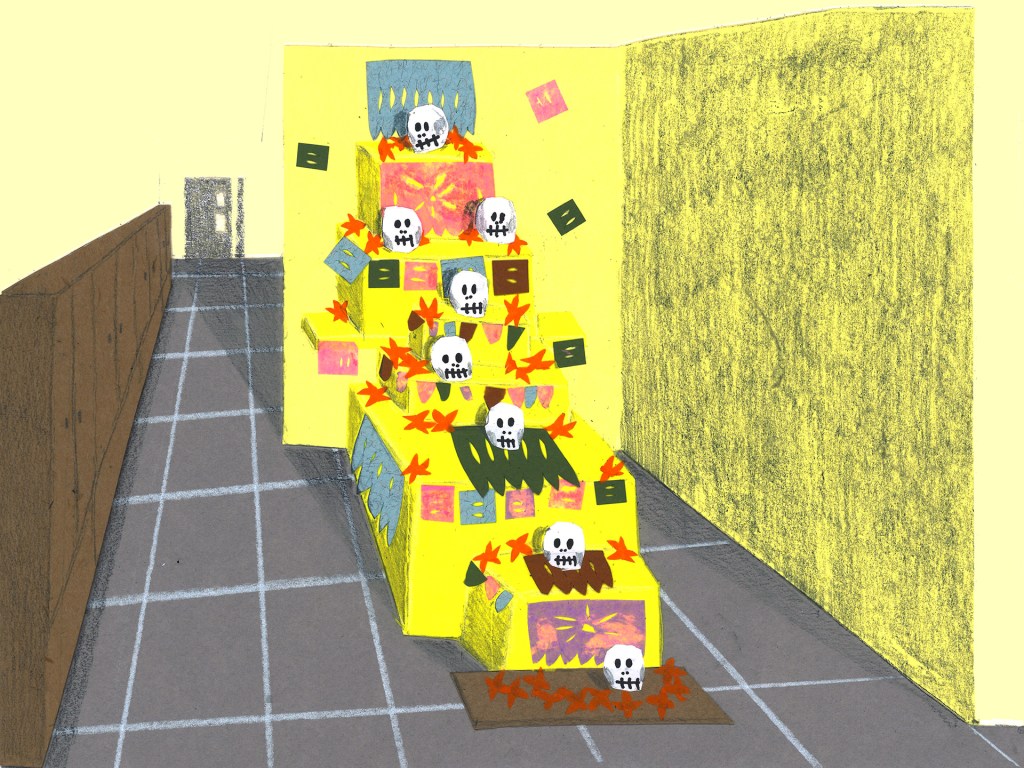
During Day of the Dead, the dead can visit the living, and we, the living, welcome them with altars to offer food, drinks, and bright colours, so they can find us after their journeys.
Memorial Benches
A little story about the benches we sit in and the people we remember.
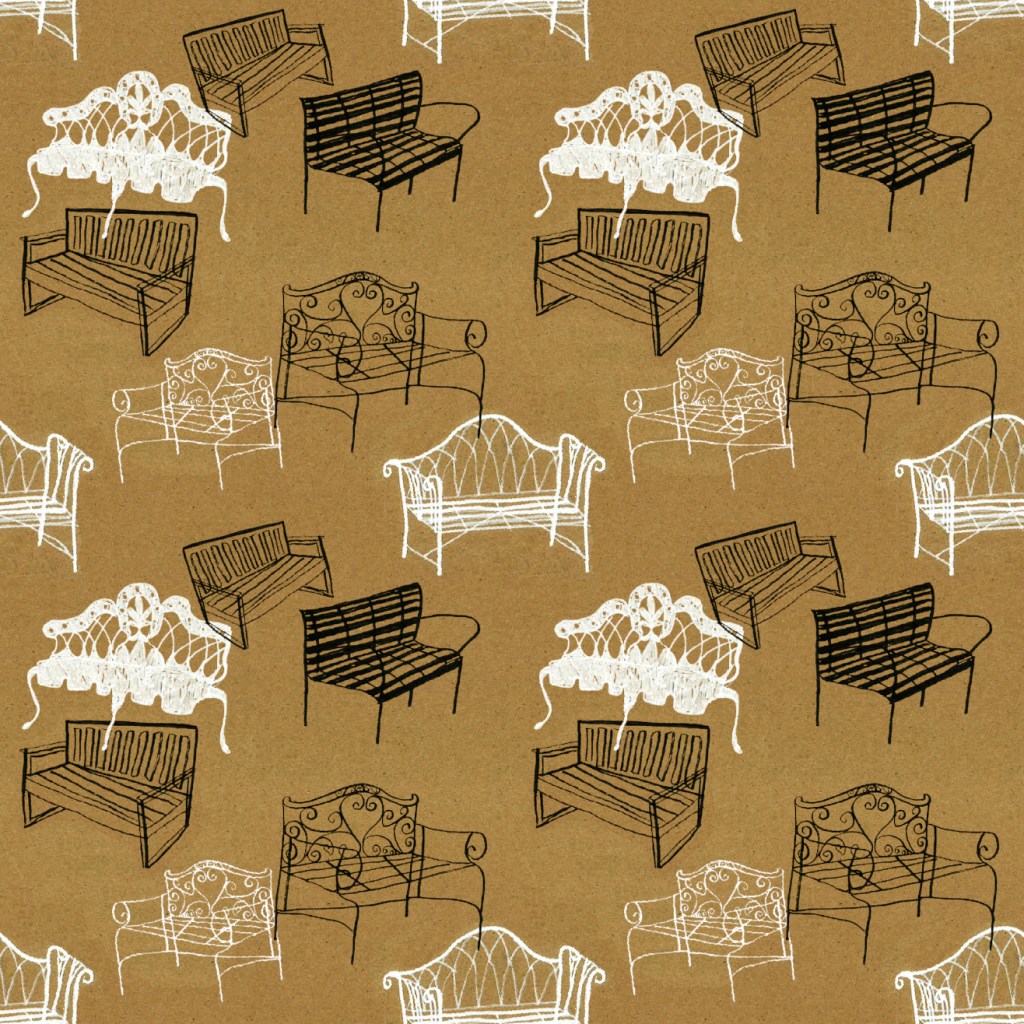
In México, we place it on Day of the Dead shrines, and in Aberdeen in benches.
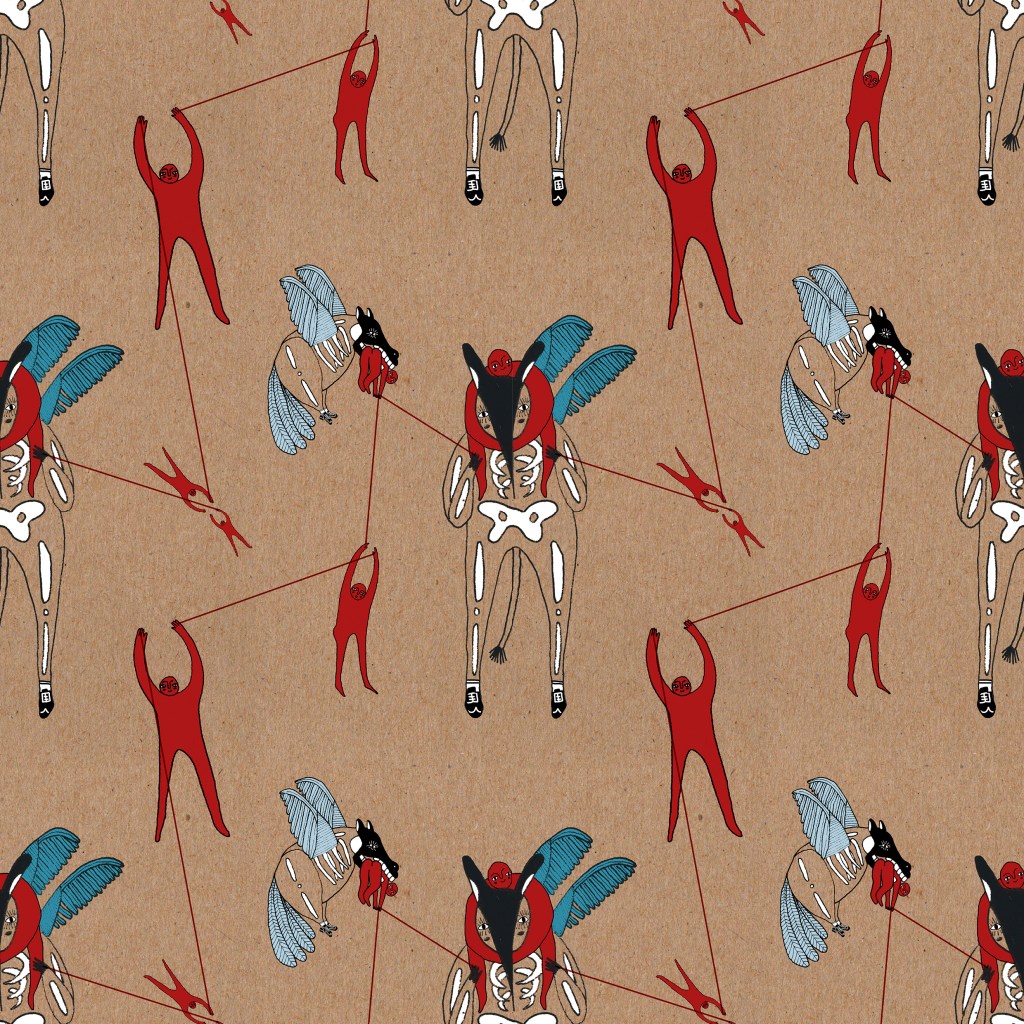
The Xoloitzcuintle
A little story about how souls travel in Mexico.

They travel on the backs of hairless dogs. Xoloitzcuintles help them cross the river. Maybe horses do that in Scotland. They would need brogues.
Manuela
A little story about a big woman.
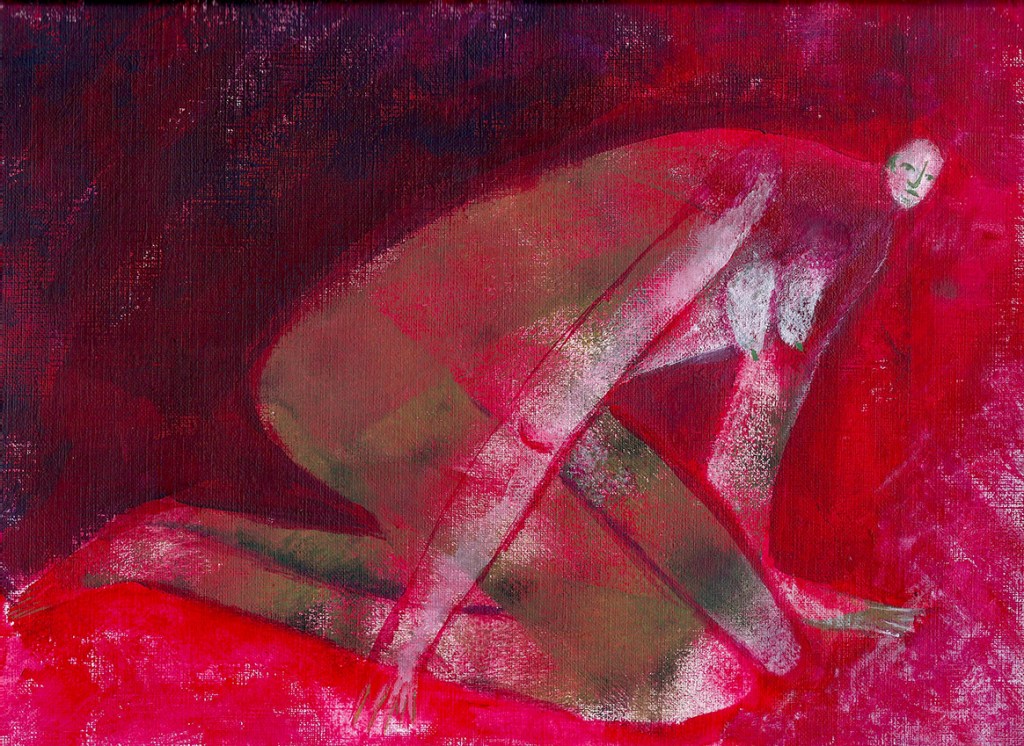
Manuela missed a lot. She missed the purple flowers, her mother, the color of her bedroom, and the plane flying above her heading towards all those things, she thought. She also missed her father and green tomatoes.
Manuela’s new bed was wide, her coat thick, and her trousers long enough to cover her legs, which happened to also be wide and thick. The view from her new window included one river, two mountains and three or four birds. She didn’t know with certainty because seasons here changed before they could get acquainted.
A Body Is A Home
A little story about the parts of us that make us whole.

“As a woman, I have no country. As a woman, I am an immigrant in the entire world.” – Sandra Cisneros
A Suitcase To Carry My Tomatillo Garden
A little story about the plants we miss.
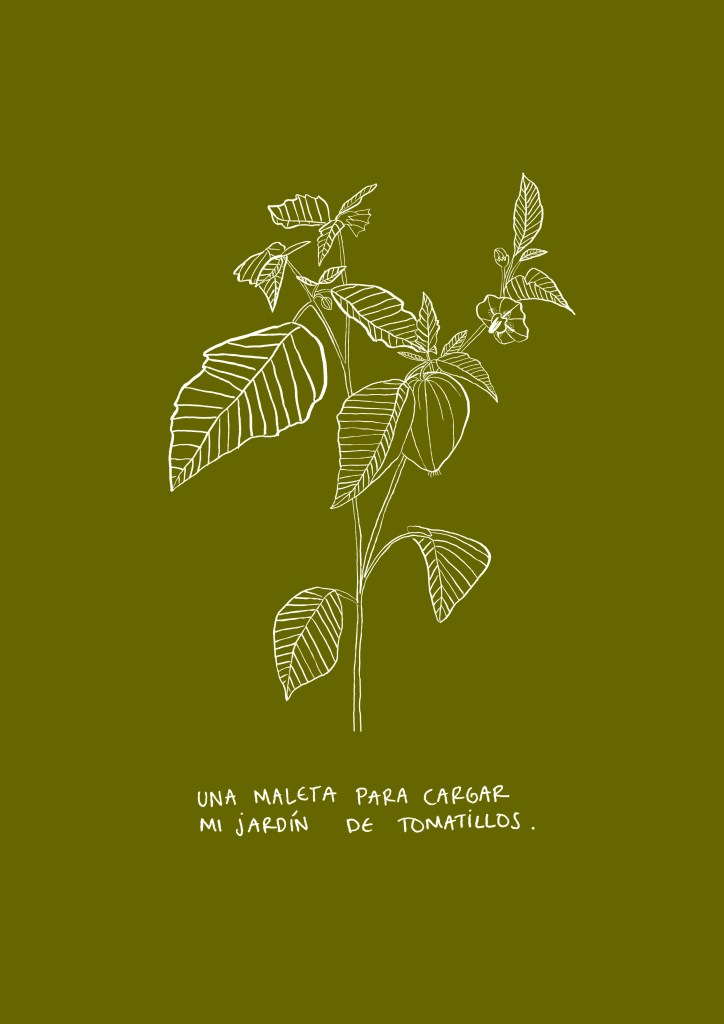
Even flowers are tall in the Netherlands. Roses and camellias grow in bushes that look like trees. In Mexico, Peruvian lilies grow up to my ankle, in pots, and to see them one would have to be invited to someone’s back back patio or be able to jump really high over fences. In my mother’s house, we protect our purple wild potato vine more than the silverware. In the Netherlands, gladiolas grow on the streets, without barbed wire fences or gates to separate them from the noses of those who instinctively pull their faces close to them. I was taught that flowers were for smelling.
In the Netherlands, flowers are to be admired. They are bought in bulk on markets: tulips, mistletoe and daffodils, and windows are kept impossibly transparent to display them. Window ledges fit more than one vase, and, in Mexico, they are small enough so that a foot won’t.
When roses were planted in Reforma Avenue, men in suits would cut and take them, and women would take little plastic bags to bring them home, roots and all. Joggers would even bring tiny shovels with them to facilitate the unplanting. In the Netherlands, vines grow without these fears. In the Witte Singel canal, flowers remain untouched for so long that grow to be as tall as walls.
In the front patio of my mother’s house, there are azaleas, fuchsias and night-blooming jasmines. It is in the back where she keeps her arum and yellow lilies and agapanthus. I learned that polen makes me sneeze by touching the pistils, and realized I am alergic to marigolds when I plucked its petals. In the Netherlands, I can’t find out what those white, poppy-looking flowers smell like. It seems they respect them too much for that sort of craziness. In Mexico what is crazy is that in the Netherlands they have gardens on the front of their houses that are open to the public. They are called “hofjes”.
In Mexico, the only plant that can be out on the streets is the jacaranda tree because it is tall enough, so that no one plucks its petals, and sufficiently democratic to cover all sidewalks with its purple flowers.
If I’m Not Back Tomorrow
A little story about big pains we share.
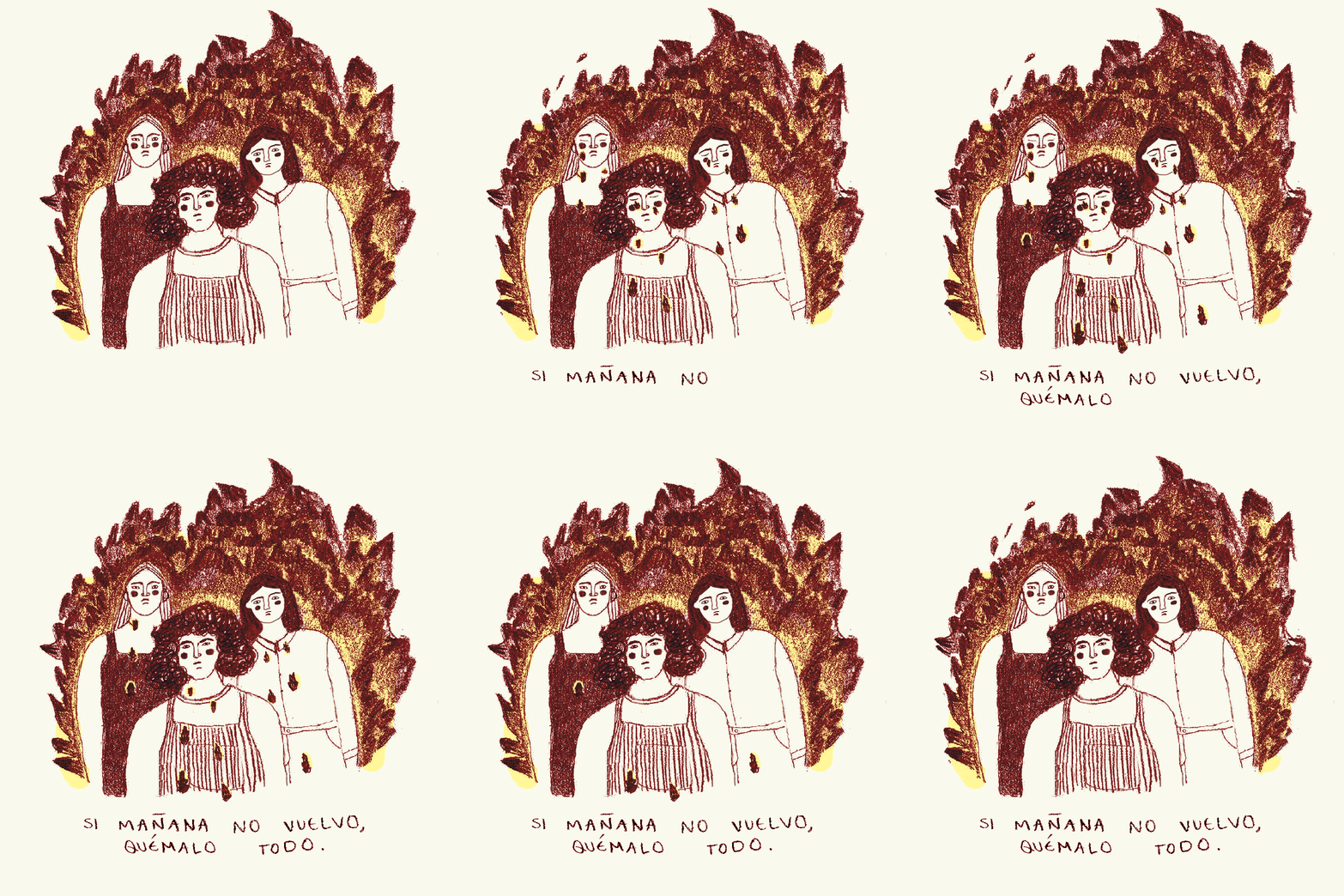
10 women are murdered in Mexico daily.
We cry fire for them.
On the streets.
We scream.
If I’m not back tomorrow, burn it all.
The Noses We Share
A little story about a nose that misses a face.
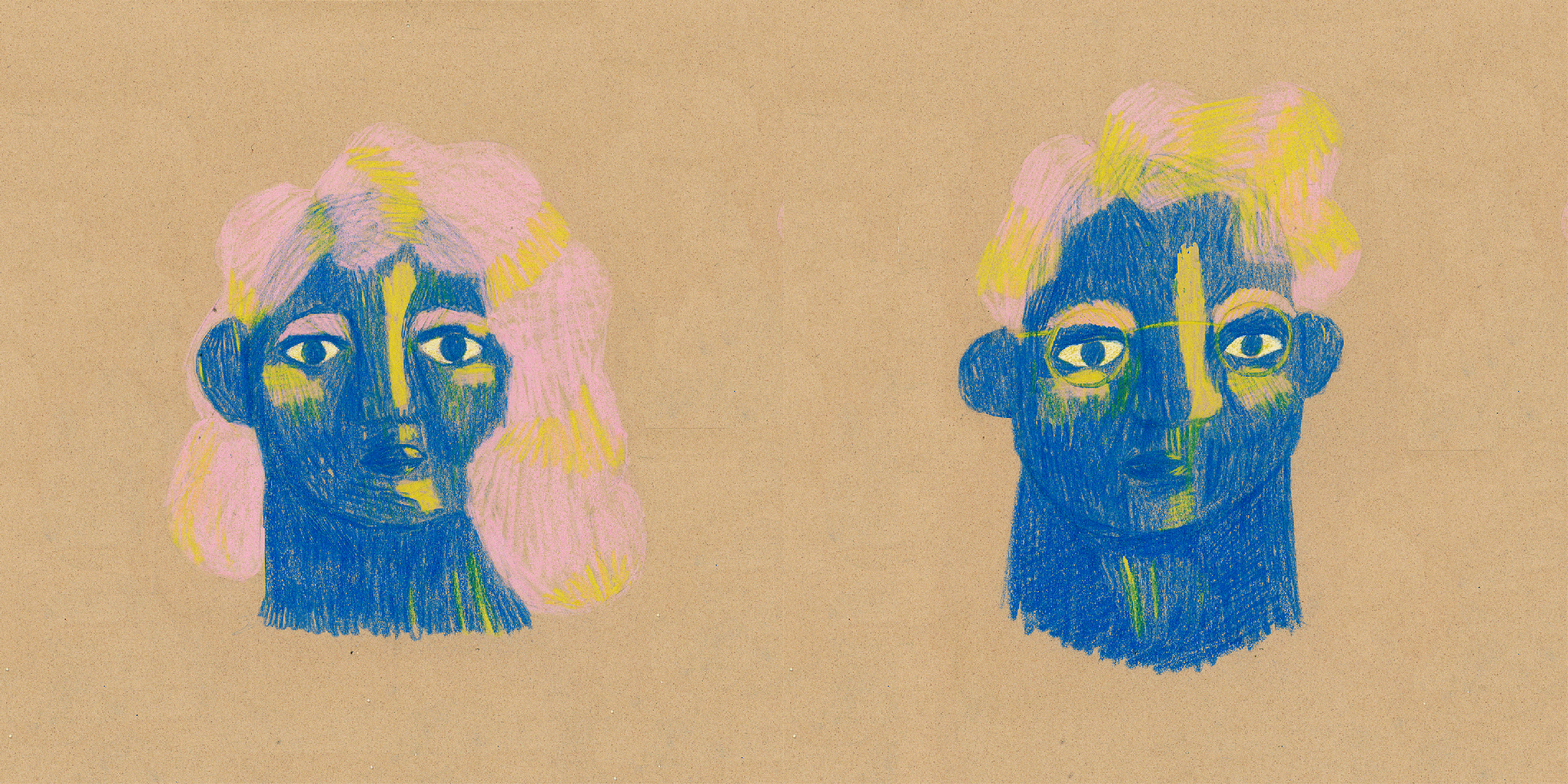
My nose is big and competent, like my father’s was. It is just as round and wide. I don’t know if he ever had an empirical concern about his, but I know that my nostrils are big enough for three things: two of my sister’s fingers, three broad beans, and to tell if a green salsa has avocado leaf or not.
I am particularly good in distinguishing spice smells; they are my favorite. My mother’s kitchen smells like cumin and garlic, my bedroom like cotton and myrrh, the living room like old flower water, star anise, floor cleaner and musky notes from my dad’s chair. They are not elegant smells, or harmonious, but the combination of all of them makes my mouth water with a craving to inhabit all these rooms again.
A few years ago, I got my left nostril pierced. The anxiety that resulted from the lack of completeness forced me to get rid of it just two days later. I felt like something was escaping from me through the perforation, like a nasal glaucoma. It’s tragic, really, how such a vital organ –at least in my case– is completely ignored by our eyes to make way for sight, which has given me nothing extraordinary.
The smell of my dad’s chair is beginning to fade. If someone was interested in smelling it, someone would have to squeeze her face to the backrest, firmly. It is strange to begin to assume this nose as fully mine because it was always his. Everyone said so. If I had the chance to choose, I would prefer my eyes see it always.
The Bee Orchid
A little story about a flower that paints to remember the bee it misses.
Swedenborg
A little story about little demons.
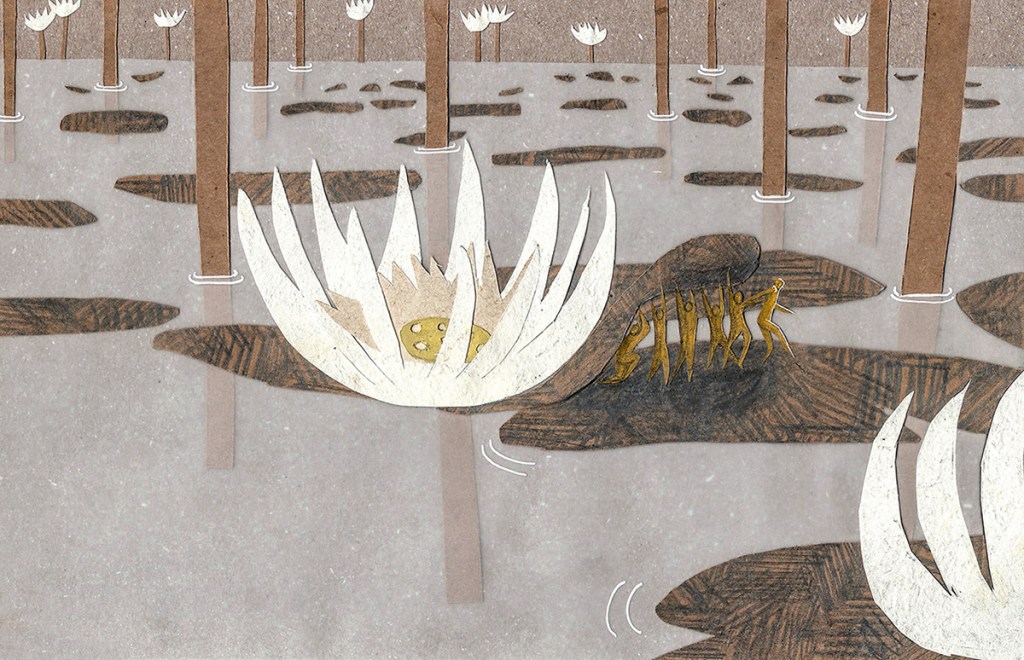
About Swedenborg’s demons, Borges says:
«The demons of Emanuel Swedenborg (1688-1772) do not constitute a species; they derive from humans. They are individuals that, after death, choose hell. They are not happy in that region of swamps, deserts, jungles, burnt villages, brothels and dark lairs, but they would be more miserable in heaven. Sometimes a gleam of heavenly light shines on them from above; demons feel a burn and unpleasant smell. They think they are beautiful, but most have faces of beasts or mere pieces of flesh or no face at all. They live in reciprocal hatred and in armed violence; if they get together it is to destroy themselves or one another. gods forbid men and angels to map hell, but we know it has the general shape of a demon. The most sordid and atrocious hells are in the West.»
Hell is a flower you can’t see from above.
Los Kelpabrijes
A little story about medium-sized creatures with big responsibilities.
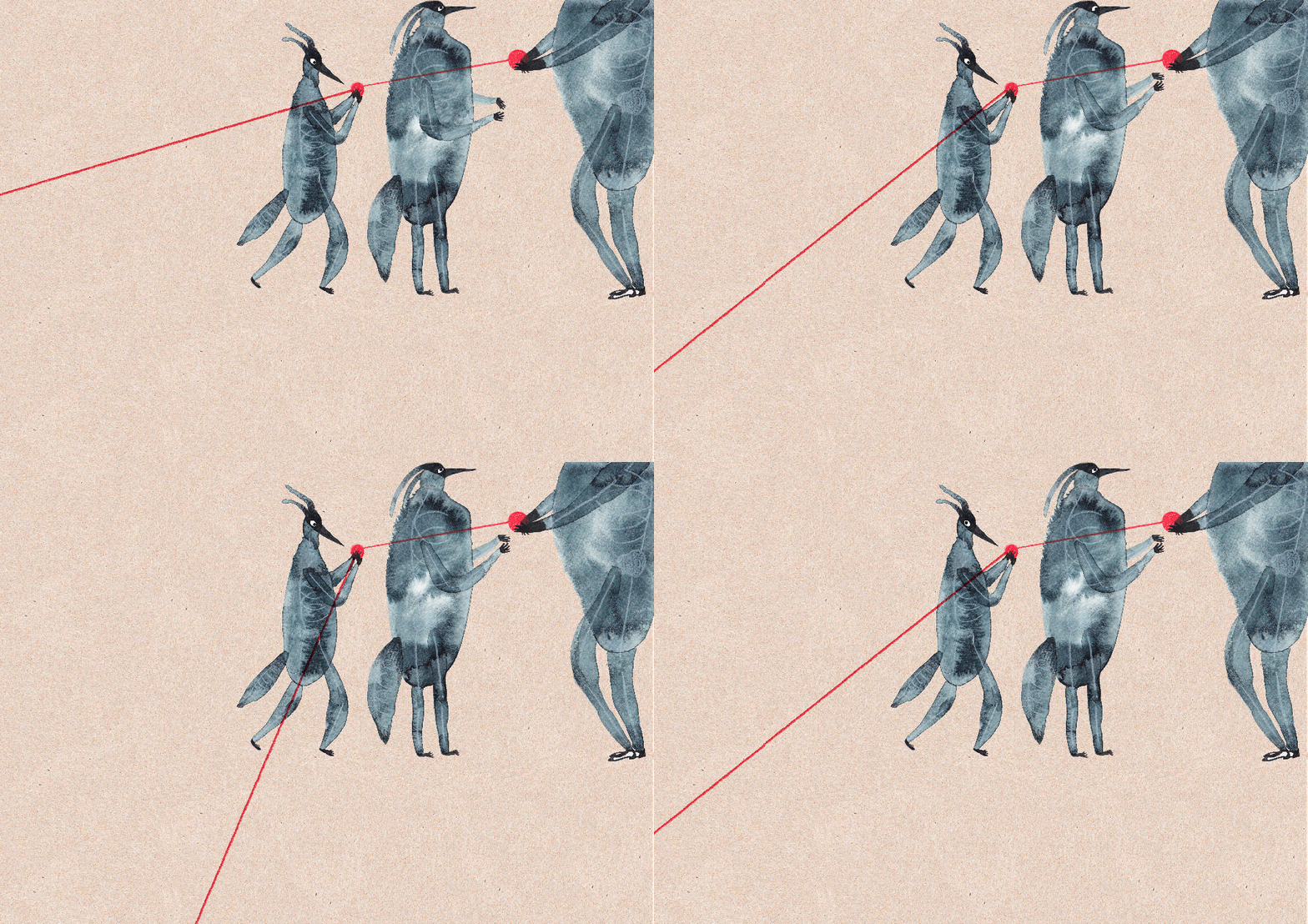
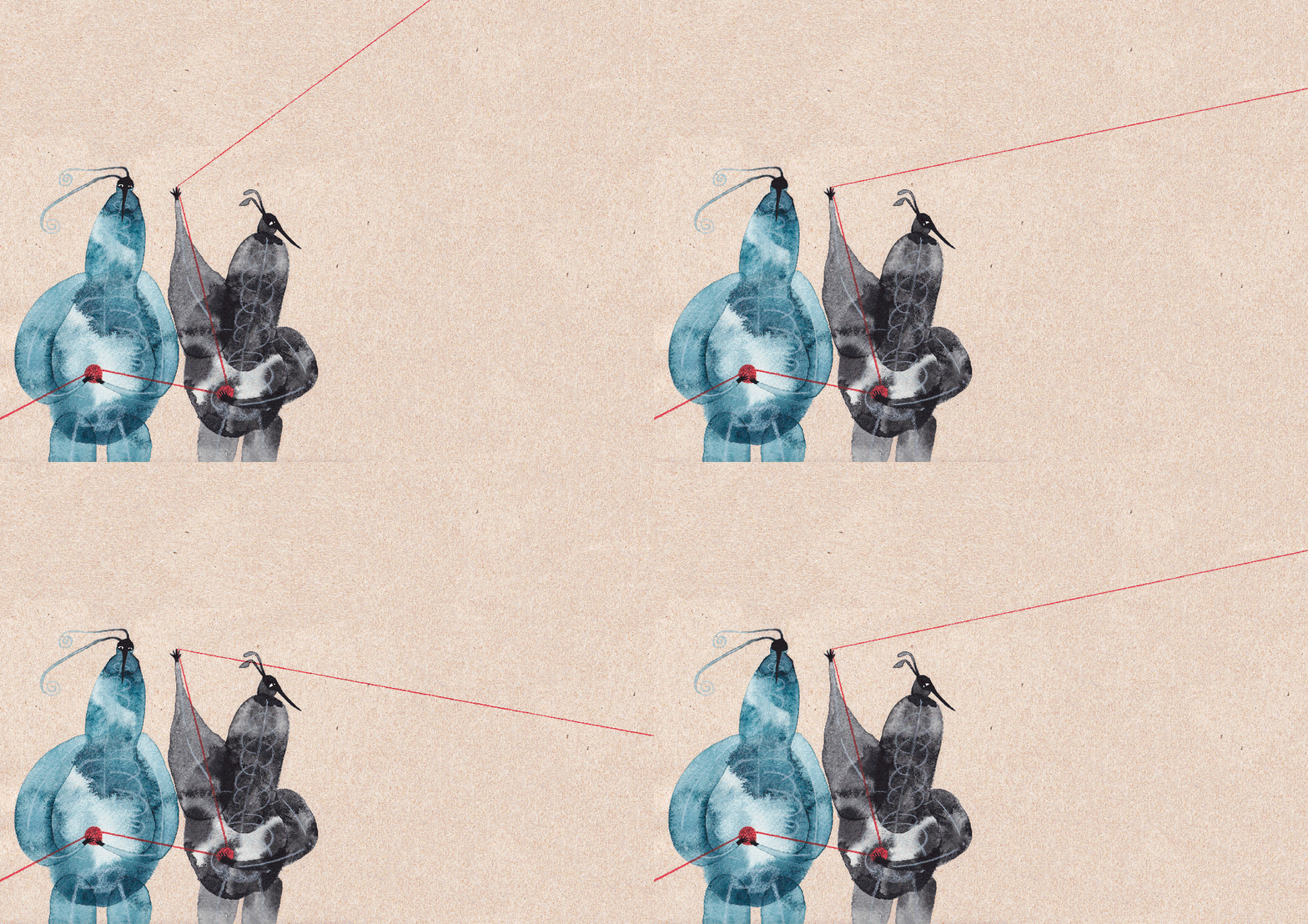
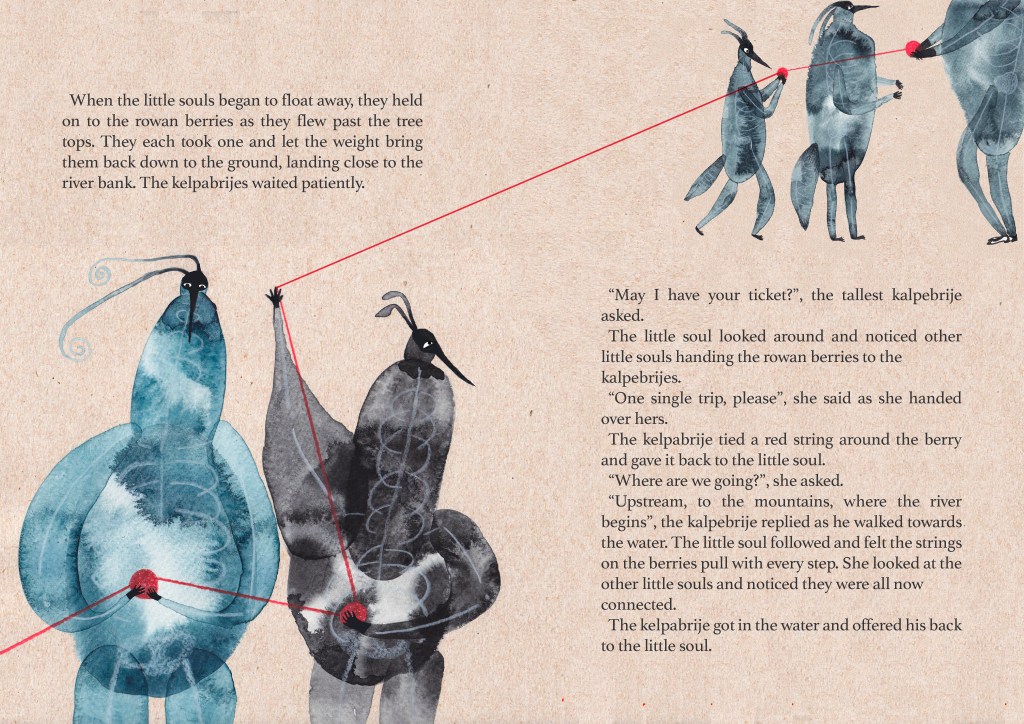
When the little souls began to float away, they held on to the rowan berries as they flew past the tree tops. They each took one and let the weight bring them back down to the ground, landing close to the river bank. The kelpabrijes waited patiently.
“May I have your ticket?”, the tallest kalpebrije asked.
The little soul looked around and noticed other little souls handing the rowan berries to the kalpebrijes.
“One single trip, please”, she said as she handed over hers.
The kelpabrije tied a red string around the berry and gave it back to the little soul.
“Where are we going?”, she asked.
“Upstream, to the mountains, where the river begins”, the kalpebrije replied as he walked towards the water. The little soul followed and felt the strings on the berries pull with every step. She looked at the other little souls and noticed they were all now connected.
The kelpabrije got in the water and offered his back to the little soul.
I Have Breakfast Here
A little story about the rooms in which we are and the ones in which we are not.
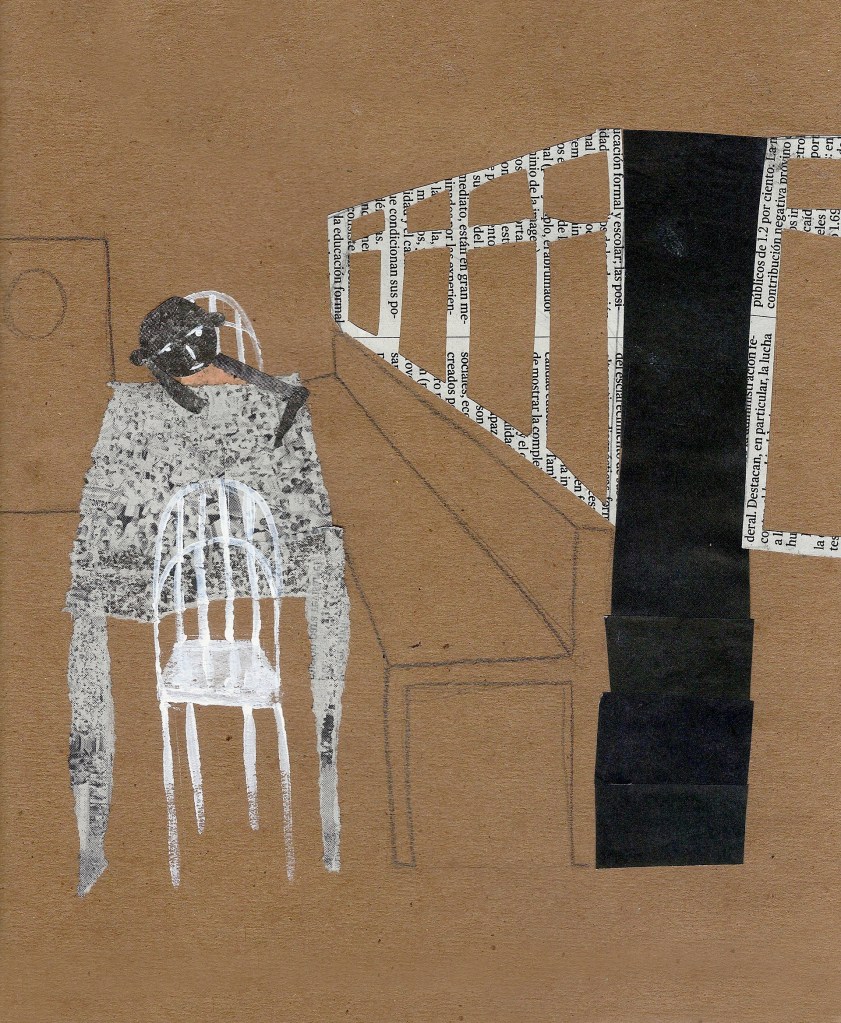
Some days I get sad and frustrated, but I have found comfort thinking about my house in Mexico and all its rooms. It is uncertain when I’ll be able to go back and see my mom, but every now and then I imagine what she is doing in the living room and wonder which chair she is sitting on in the kitchen.
 Maxim Zaragoza