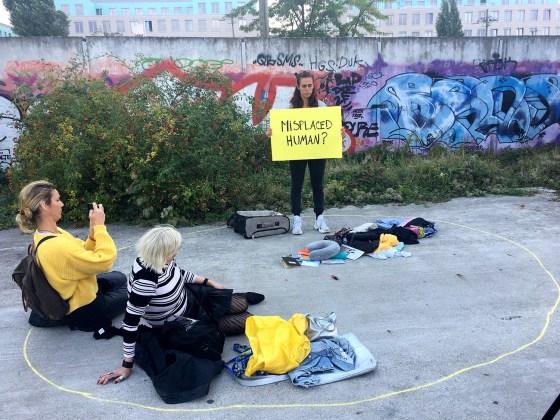
Misplaced Women? A performance by Luciana Damiani.

Luciana Damiani: “The Safe Circle”, Misplaced Women? Workshop, Park am Nordbahnhof, Berlin, 2019. Photo: Tanja Ostojic:

«I started with taking everything out of my suitcase: books, clothes, shoes, papers, documents. I turned all my clothes inside out. After my suitcase was empty and all my belongings were on the floor, scattered, I began to read my manifesto.

‘I am body and I am statement.

I am witness and I am evidence of manipulation.

I don’t want to ask permission to be.

I don’t have to ask permission to be.

I don’t want to be defined by you, or anybody, or anywhere, or anything.

I don’t want to be from here or there.

If my existence threatens you, that is because you’re afraid of losing  your privileges.

If your walls will surround me, my words will be the weapon to make them fall.

If you hurt me, I will heal.

And I will repeat this all over again.

Because I have a pact with all of my kind.

Because that’s my duty and my only way to resist.

After the reading, I tried to get inside the suitcase but of course, it was very small, I would never fit inside it. At some point this action was immediately connected with my experience in Barcelona, ​​trying to be in a place where there was no room for me. It was like bringing everything back.»
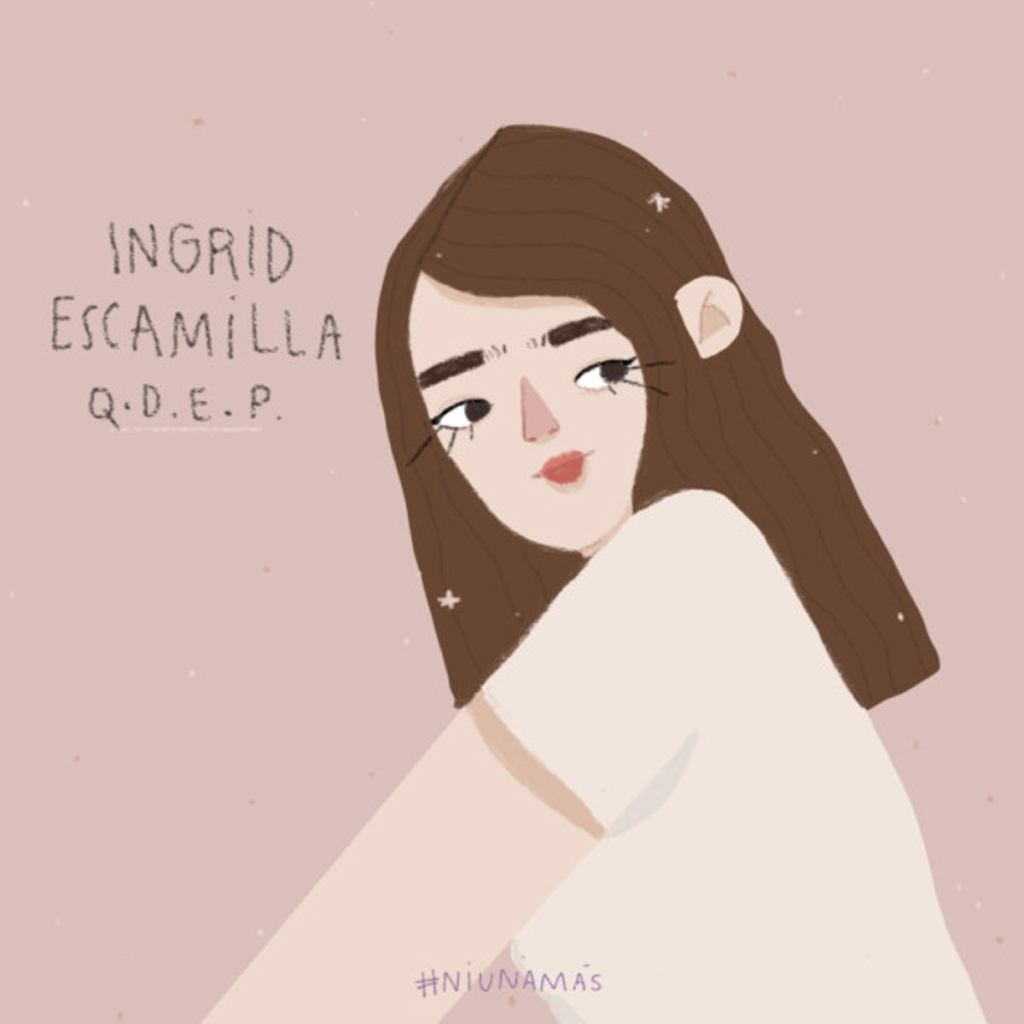
The digital memorial of Ingrid Escamilla

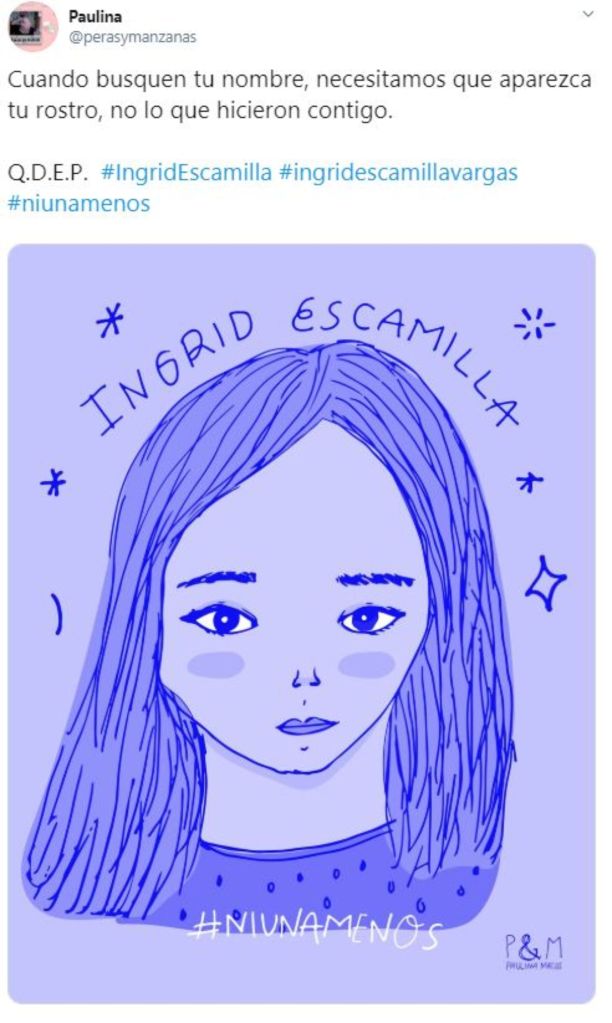
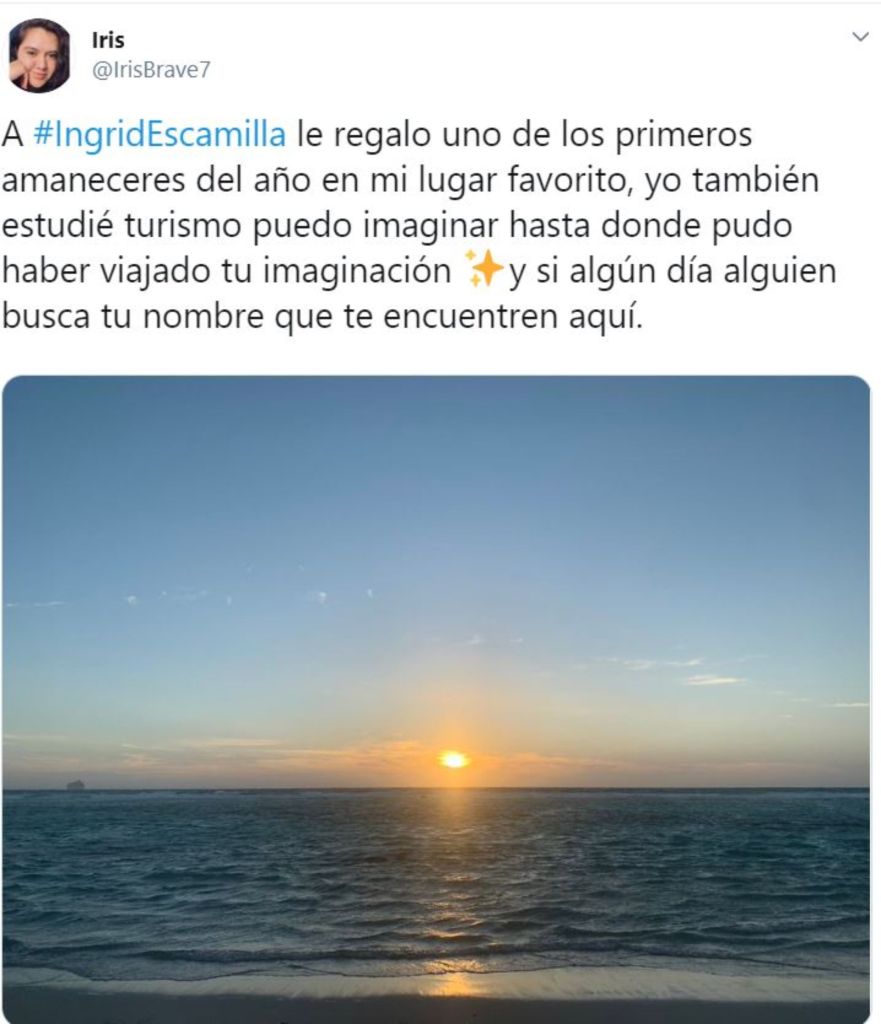
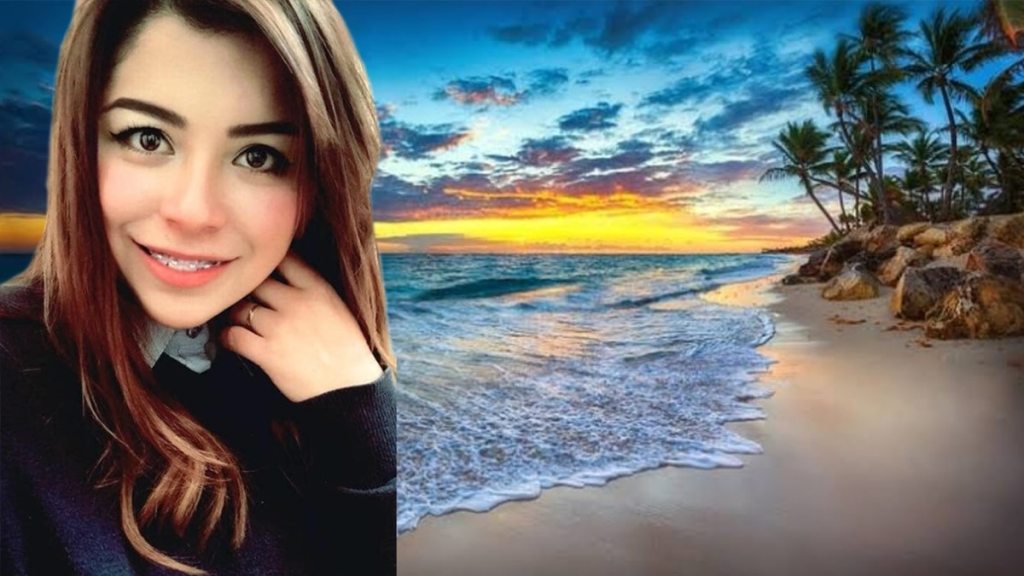
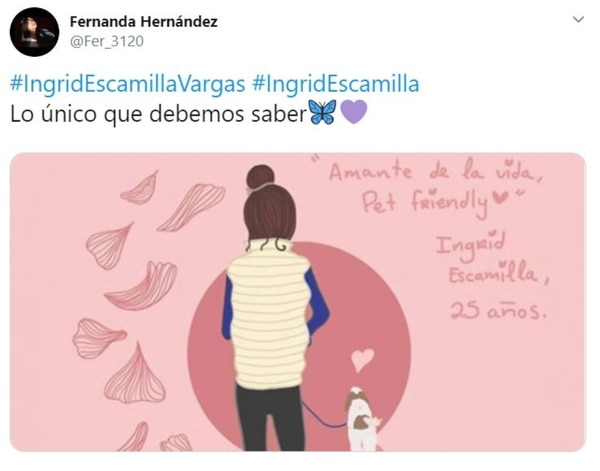
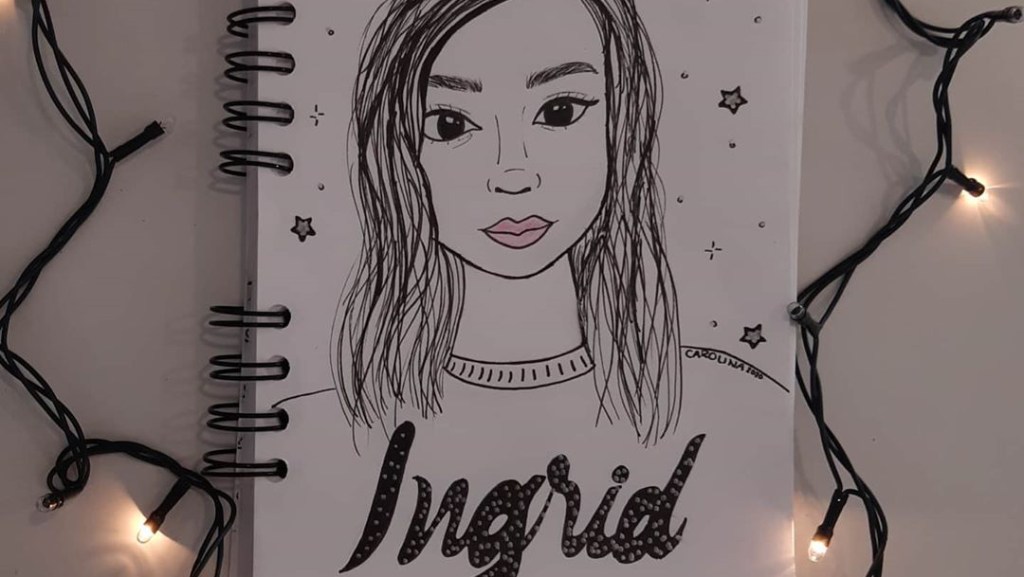
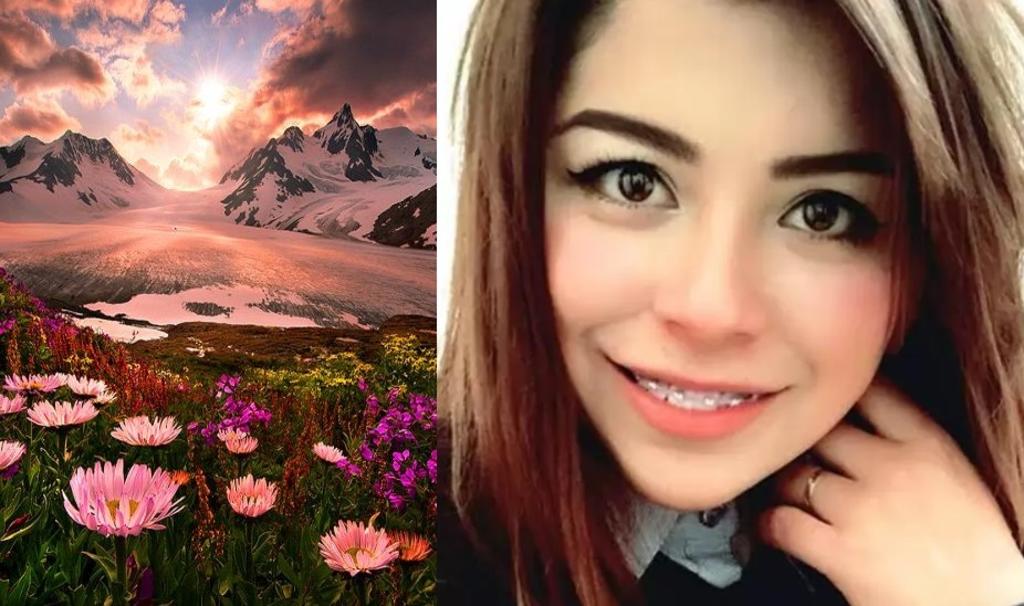
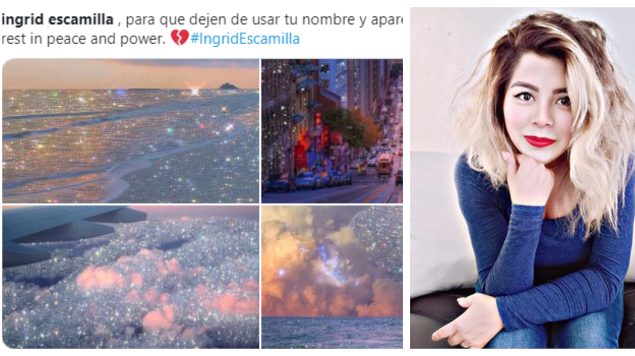
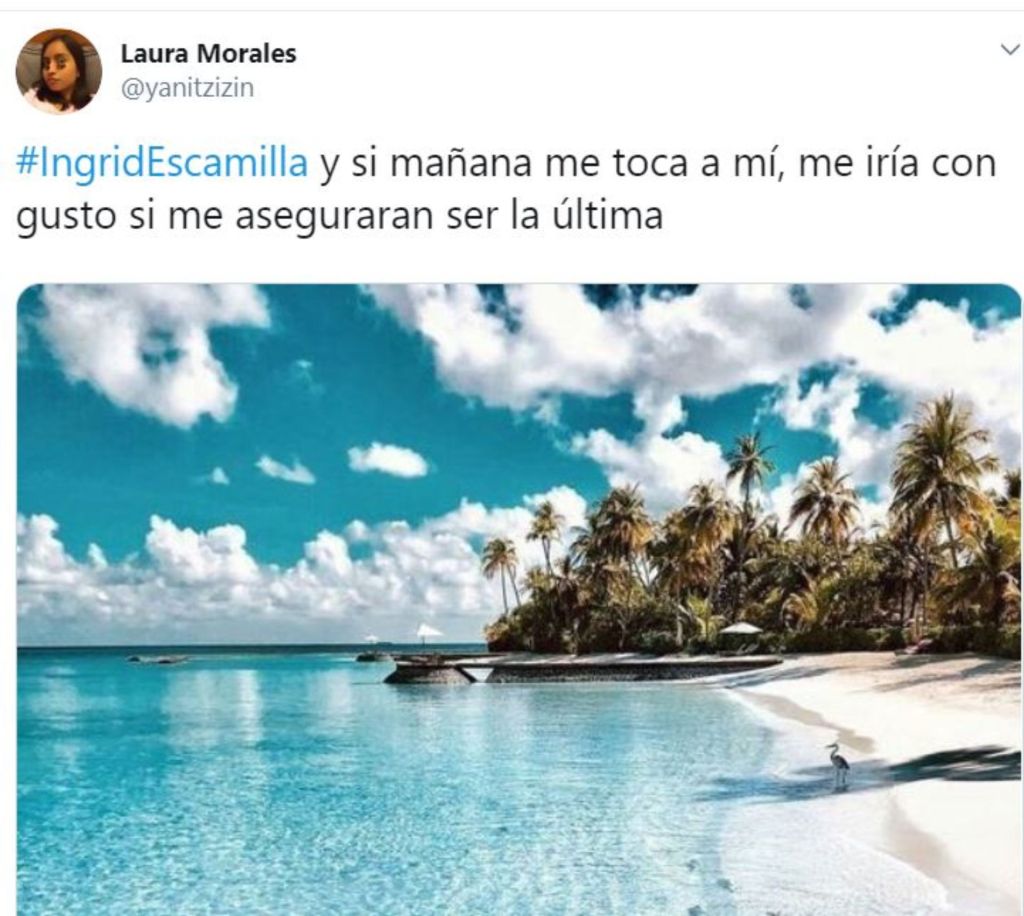
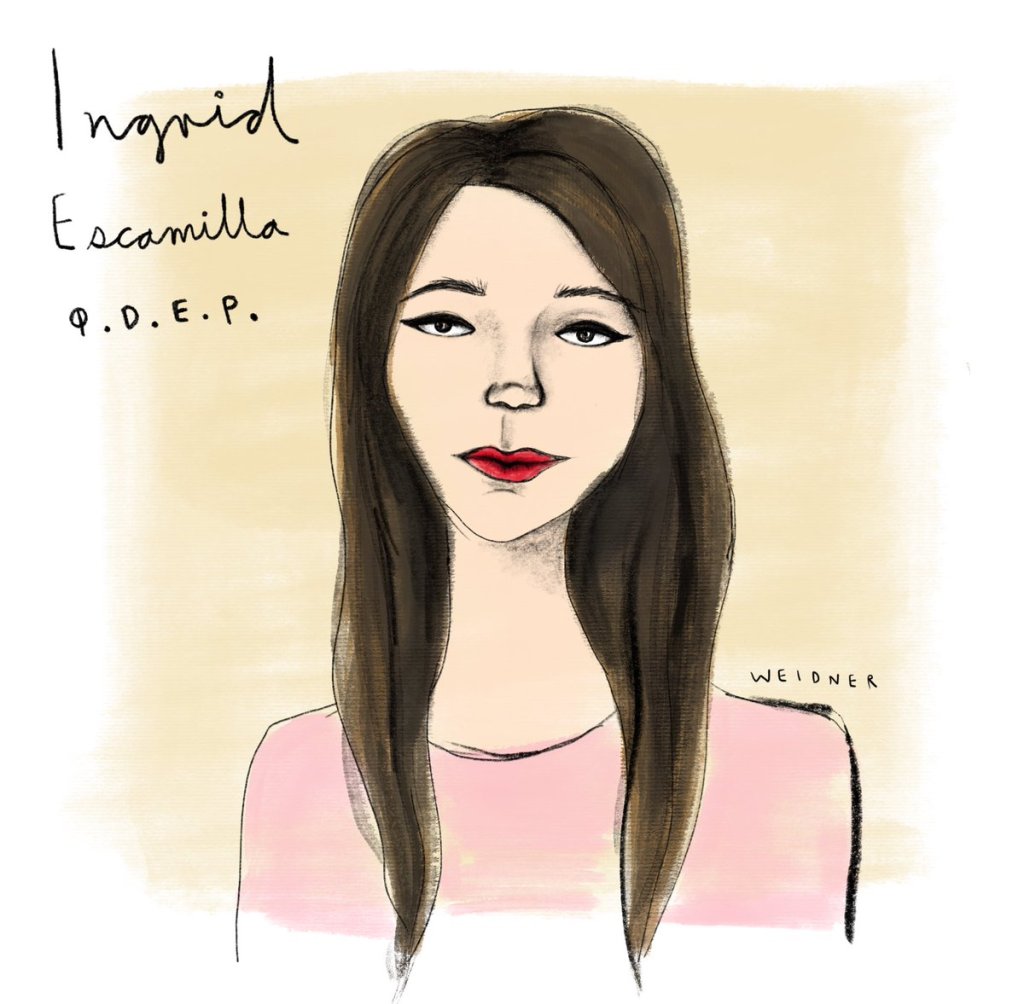
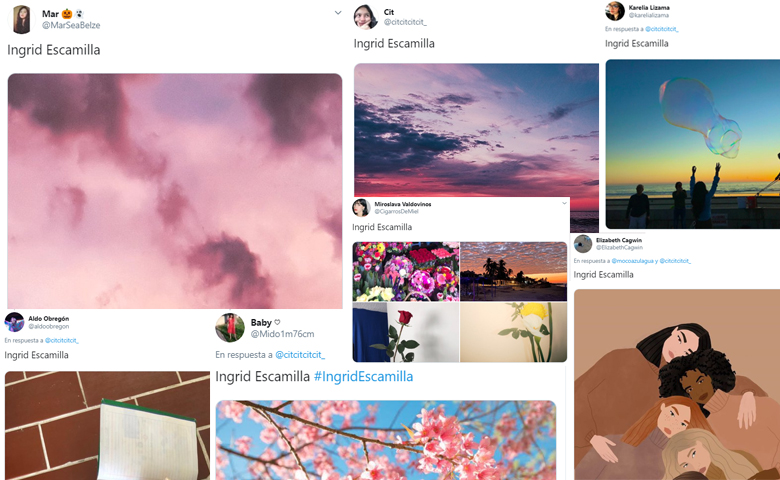
After the murder of Ingrid Escamilla, authorities in charge of her investigation leaked extremely graphic photos of her death that went viral. In an effort to control and dignify the internet search results for her name, twitter users spammed social media with photos of nature, flowers, illustrations of Ingrid and photoshopped images of her in beautiful places. I think it’s very powerful how people are collectively altering metadata that was dehumanizing her, and turned it into a colorful, digital memorial to honour her life instead.

“That when someone searches for the name of Ingrid Escamilla find beautiful images that honor his memory and that honor the life of his family.”

“When they look for your name, we need your face to appear, not what they did with you».

“I give Ingrid Escamilla [a photo of] one of the first sunrises of the year in my favorite place. I also studied tourism, I can imagine how far your imagination could have traveled, and if someday someone looks for your name this is how they will find you».

«Pet friendly. The only thing we should know about you (cited from her bio)».

An interesting text about the theory of online memorial culture: here.

A text about Deleuze and Memorial Culture: here.

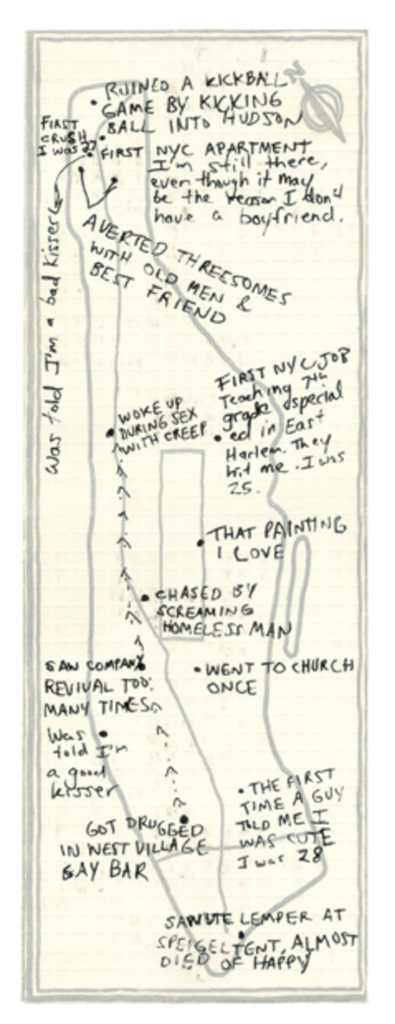
Deep map ideas:

  1. A map of where chilangos are from.
  2. A map of how my walk on along the River Dee has changed with my getting acquainted with the city.
  3. A map of where grief is deposited in Aberdeen and Mexico City.
  4. A map of where my loved ones are.
  5. A map of memorial benches in Aberdeen.
  6. A map of how I got from Tokyo to Aberdeen.
  7. A map of how my movement in the city of Aberdeen has changed as I get acquainted with it.
  8. A map that shows where my comfort foods are from and where I find them in the city I am in.
from «Mapping Manhattan» by Becky Cooper.

Deep mapping and experience mapping

The lecture made me think that deep mapping is a just way of representing a personal account. The fact that it embraces experience as a guiding and writing tool, works well in the making of a visual representation of movement and travel. Deep mapping makes space for empathy because it makes visible the relationship between those who inhabit a space, the space itself and the people who seek to speak of that space.

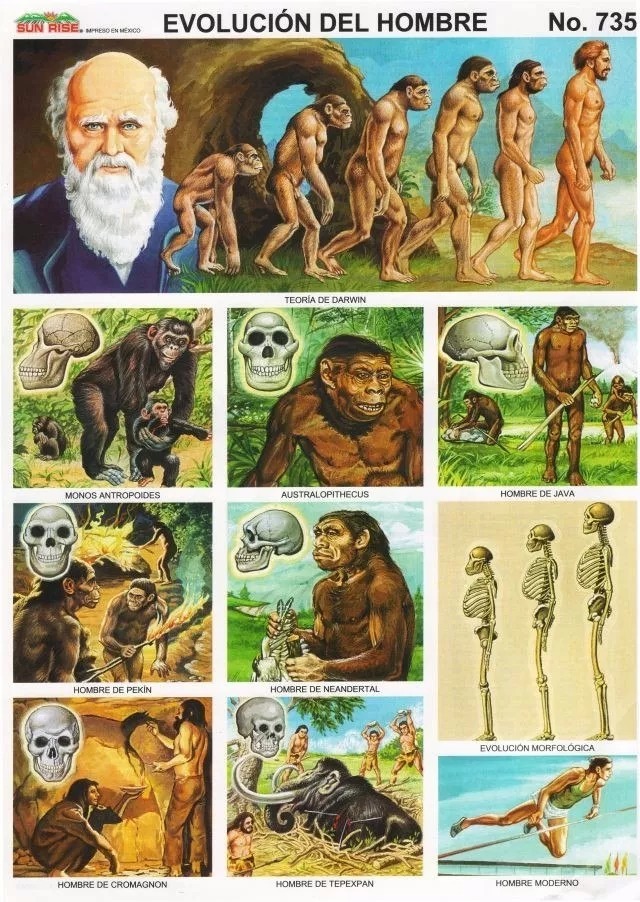
It is also interesting to consider the politics of map making. A power relation exists in the narrative. It reminded me of Mexican monographs. I used to buy them in primary school from the little stationery and grocery shops that are in every corner of Mexico City. Our teachers asked us to recreate it by hand, so we would draw our interpretation of the illustrations and copy the exact text that was on the back of each. They were «official» versions of historical events such as the Mexican Independence, the Revolution, and the «discovery» of America. They were so horrible looking and, most of the time, incorrect and incomplete.

There is agency in a deep-mapping experience.

I learned about Patrick Geddes, who recognized an interdependence between culture and nature. Which made me think again about the memorial chairs and the placing of grief close to a pretty view or flowers. Deep mapping seems like a good way to communicate these layers in which we experience a place.

Mother Tongue

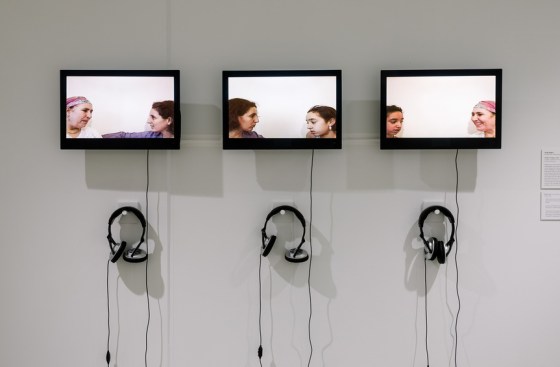
I visited my sister in London. We went to the Tate Britain and I saw an installation by Zineb Sedira called «Mother Tongue».

The display caption says: «the reflects on storytelling as a way to preserve cultural identity across generations. It underscores the difficulty of maintaining a shared heritage across national and linguistic divides and acknowledges the complexity of identity.»

It’s three TV’s playing simultaneous videos: one of the artist and her mother having a conversation in Arabic, the second of the artist and her daughter conversing in French, and the third of her daughter and mother conversing in English.

The piece made me think of what videos would sound like if I recorded the conversations I have now and in the future, if I had a child. What language would we speak to each other? Where in the world will we be by then? Would we understand each other? Would my mother understand? Will my accent change? Would the child look like me?