Hello, my name is Maxim, and I am currently part of the Communication Design MA programme at Gray’s School of Art in Aberdeen. I will be focusing my project on issues concerning migration.
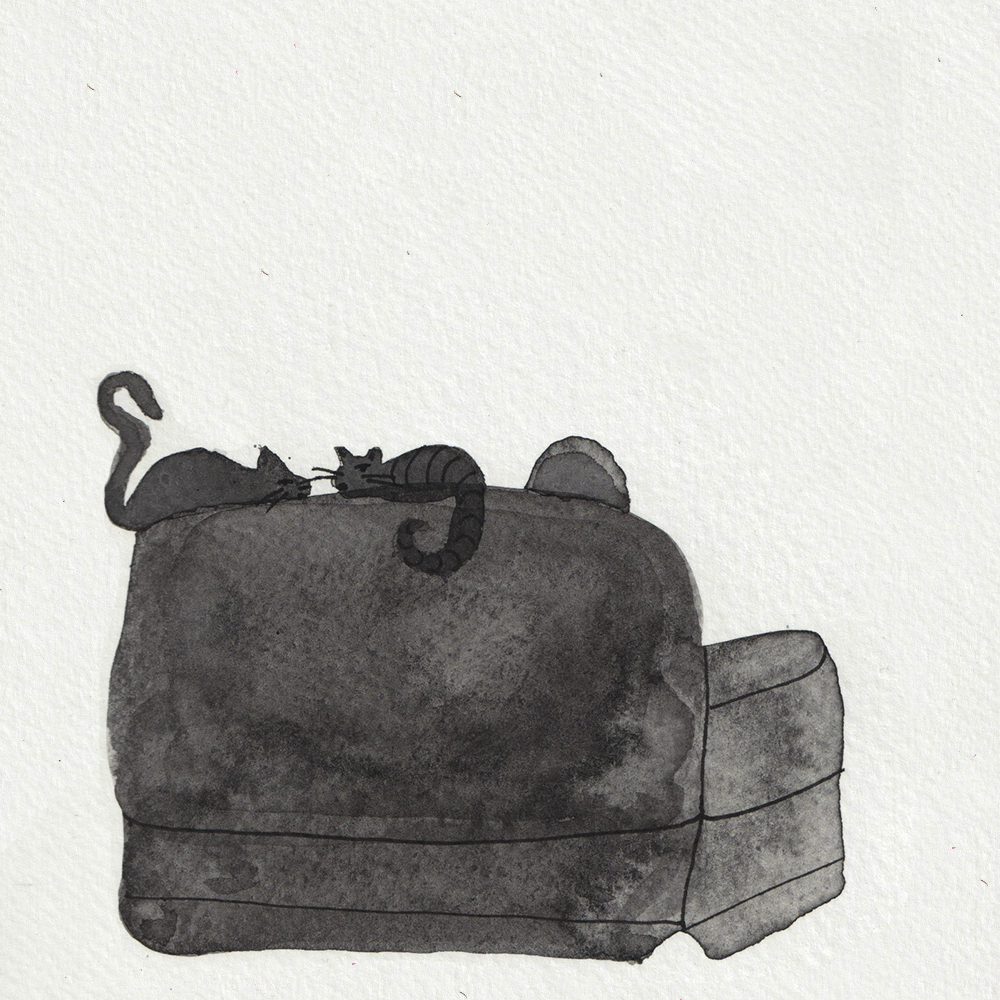
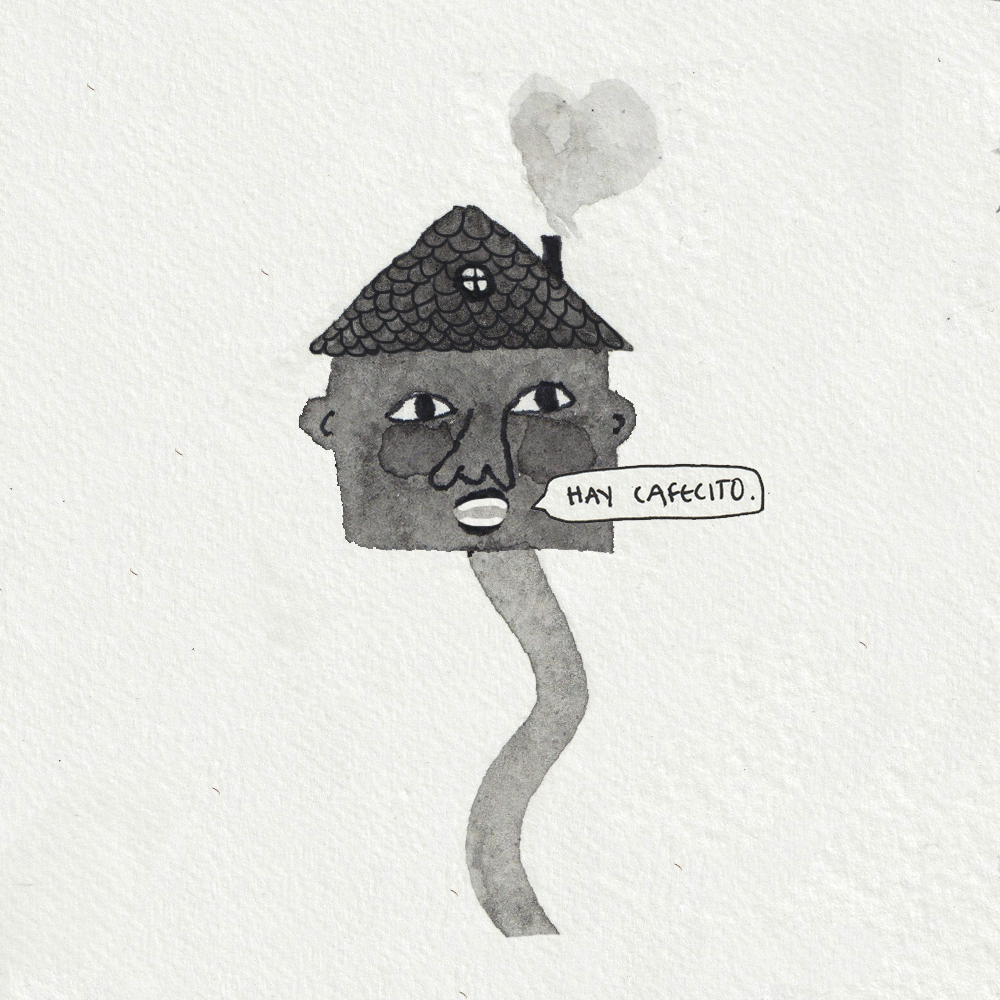
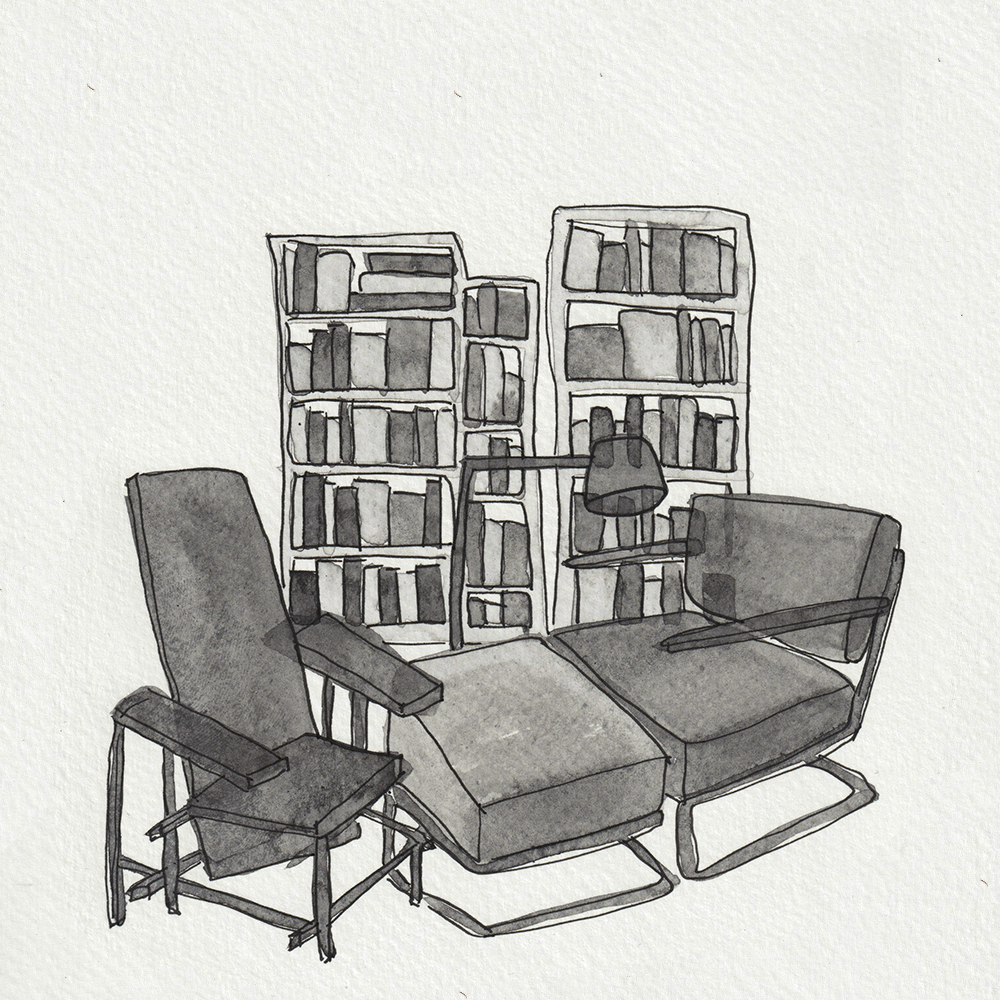
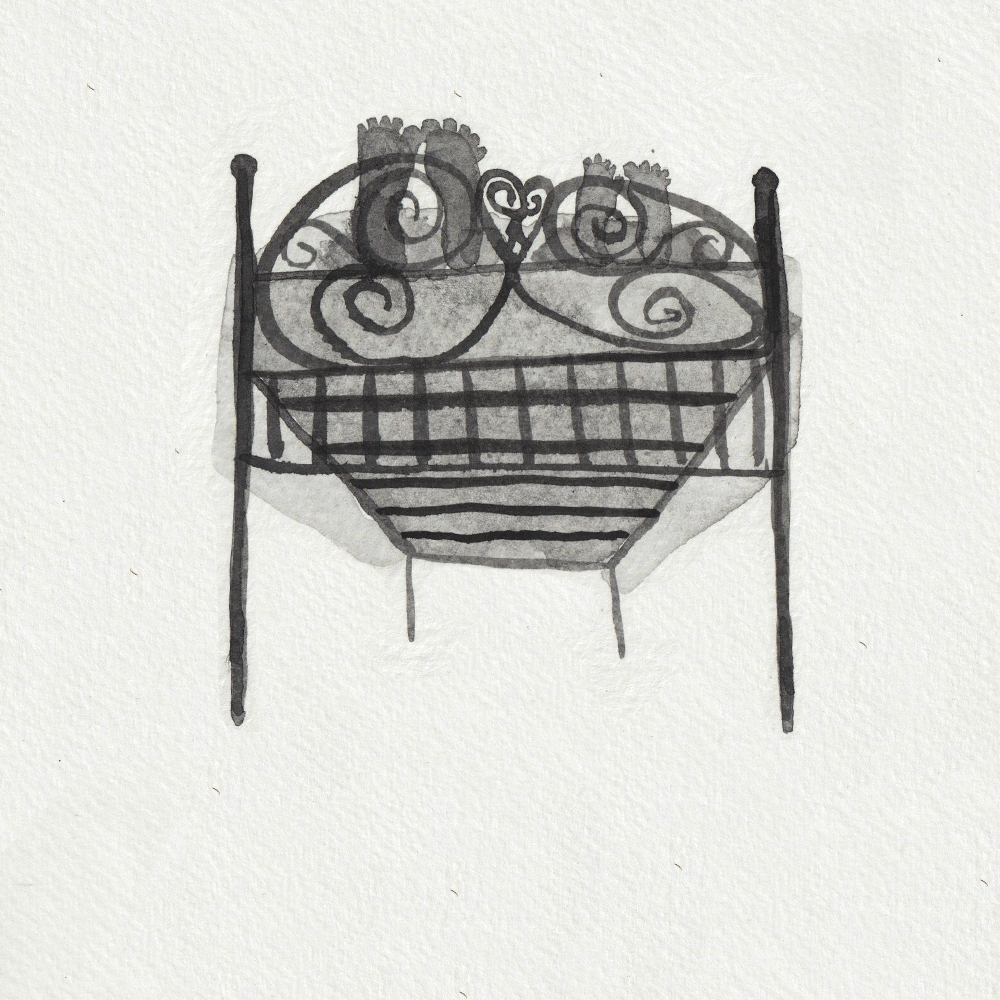
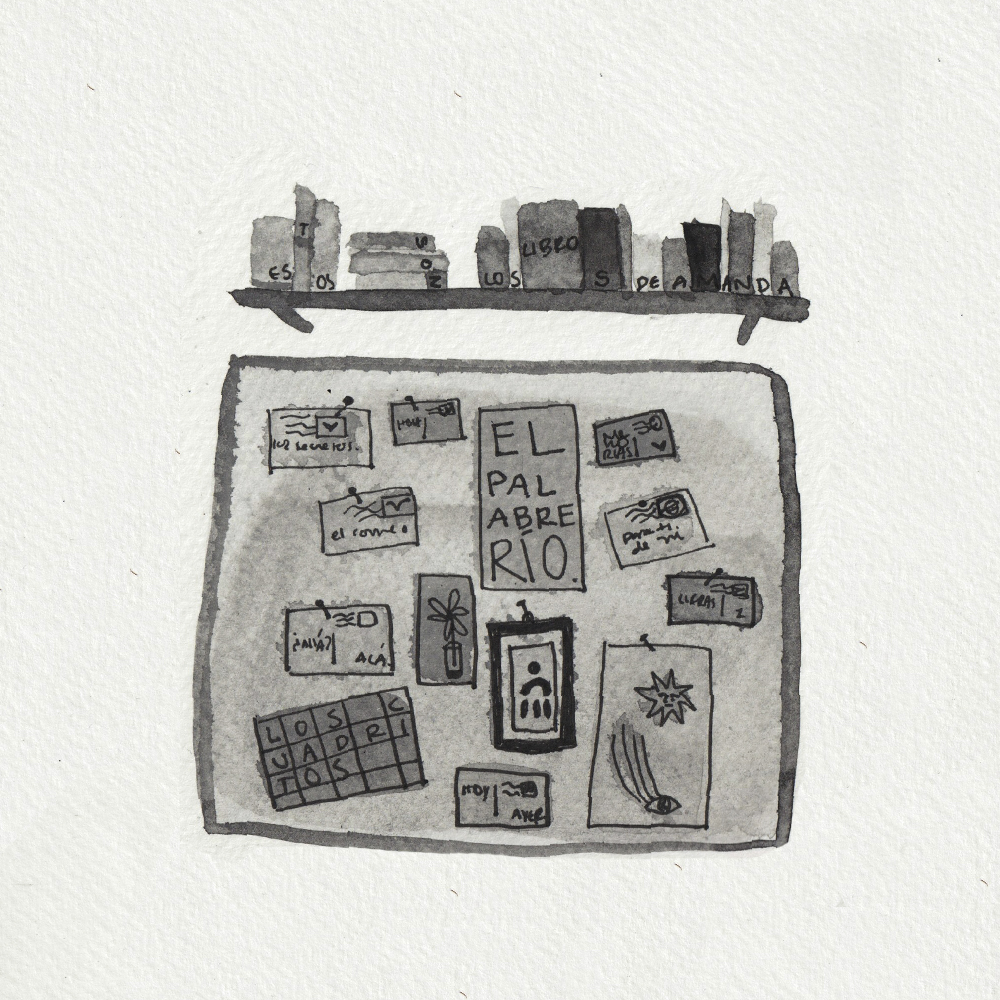
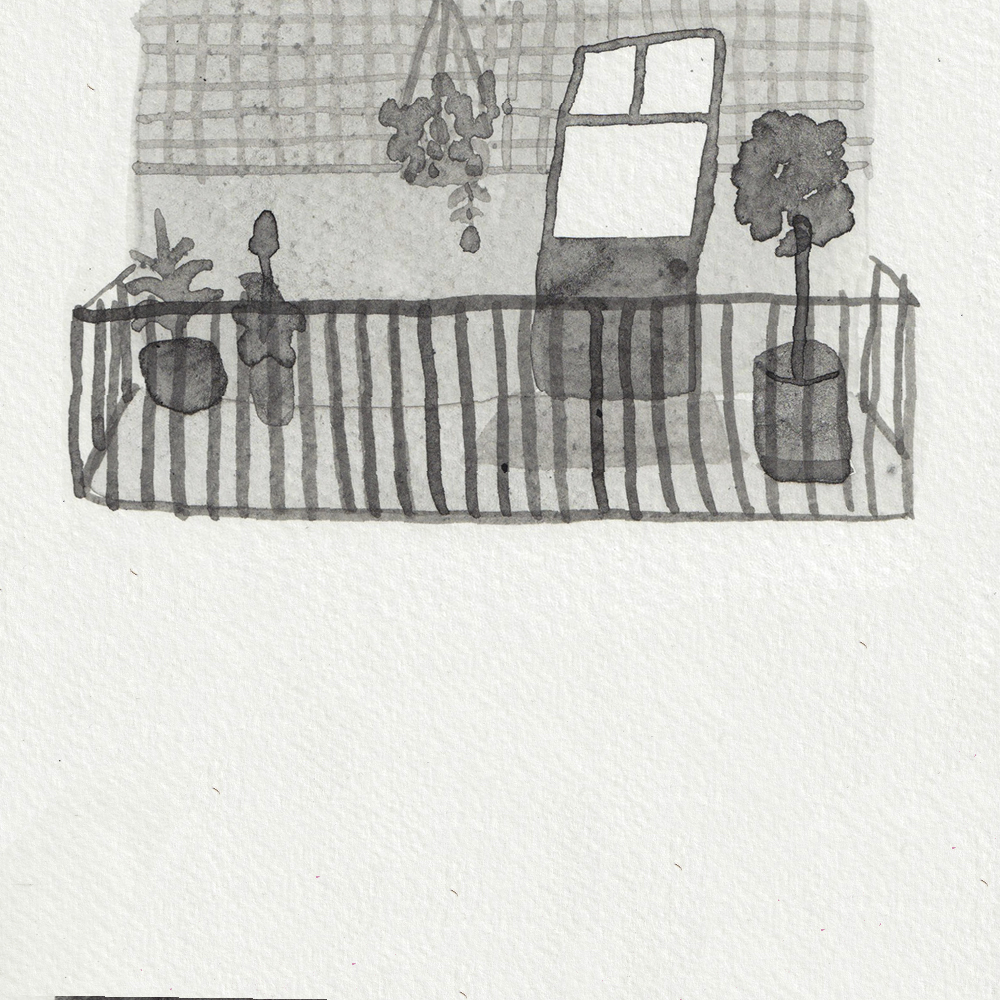
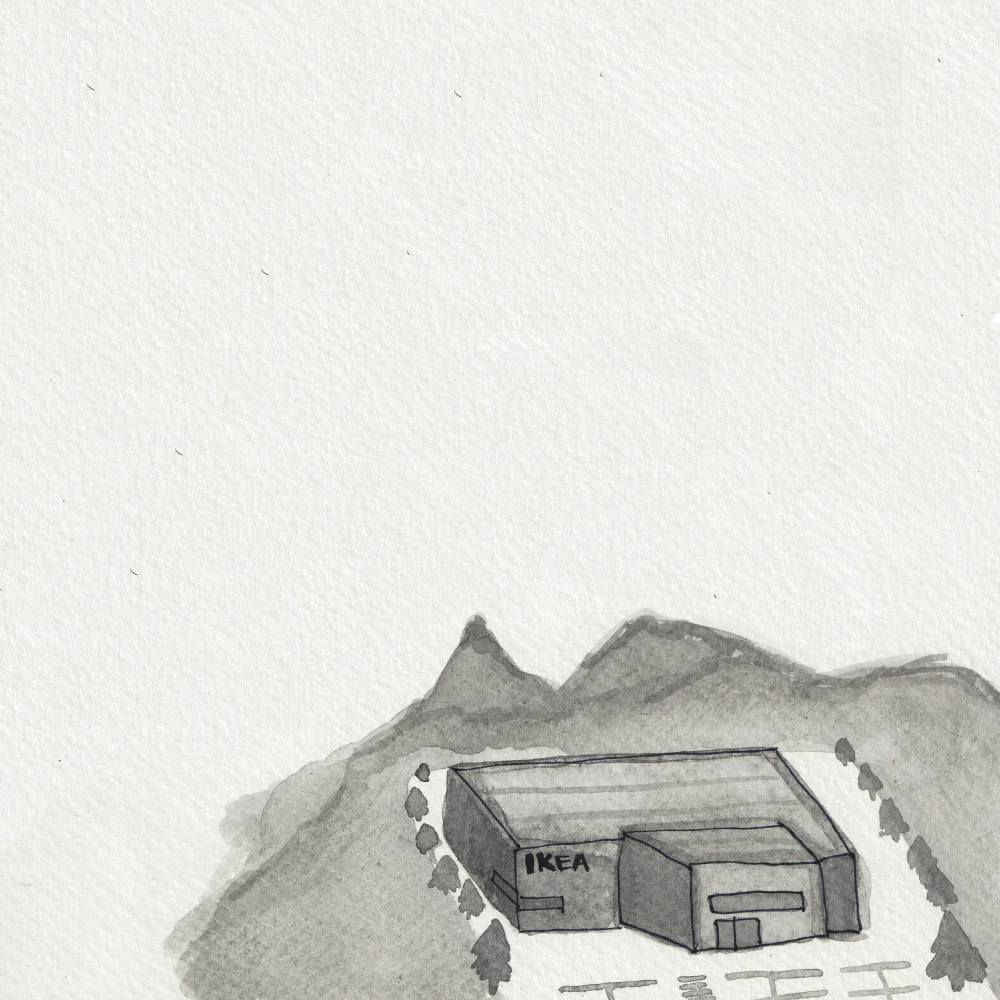
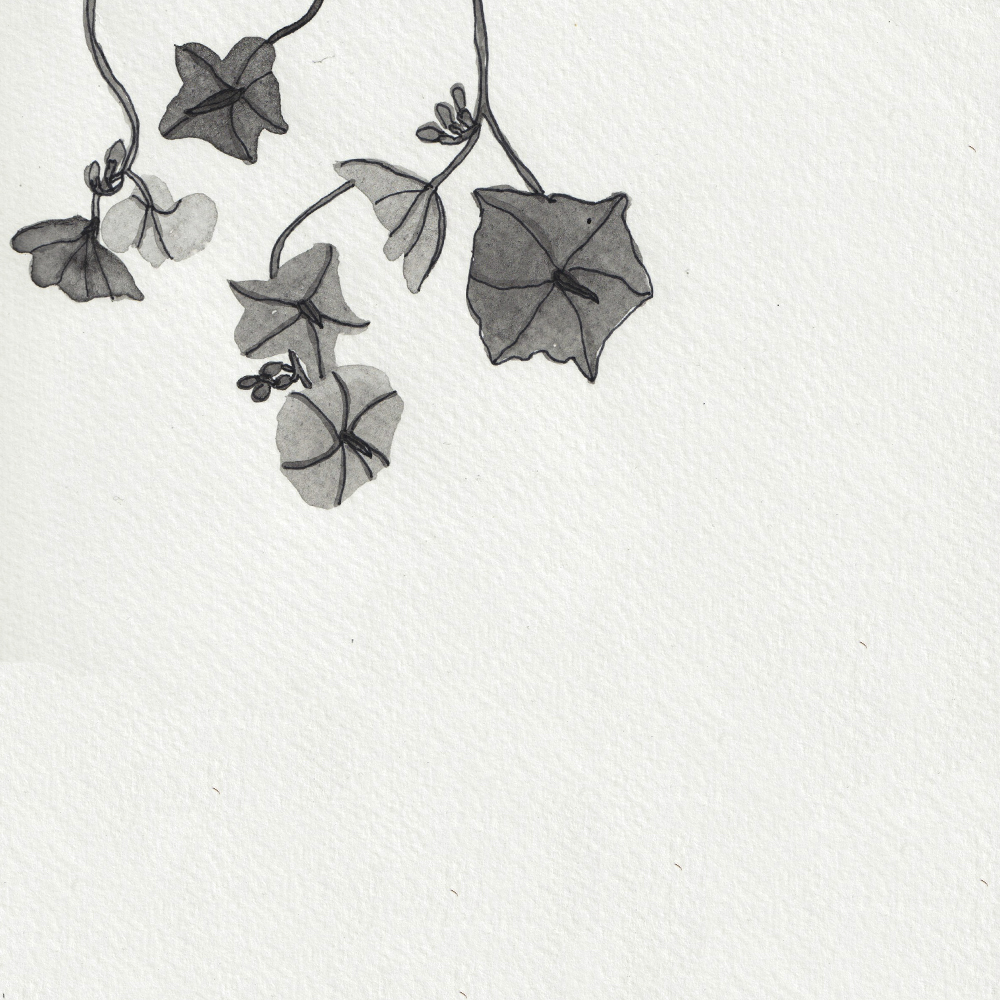
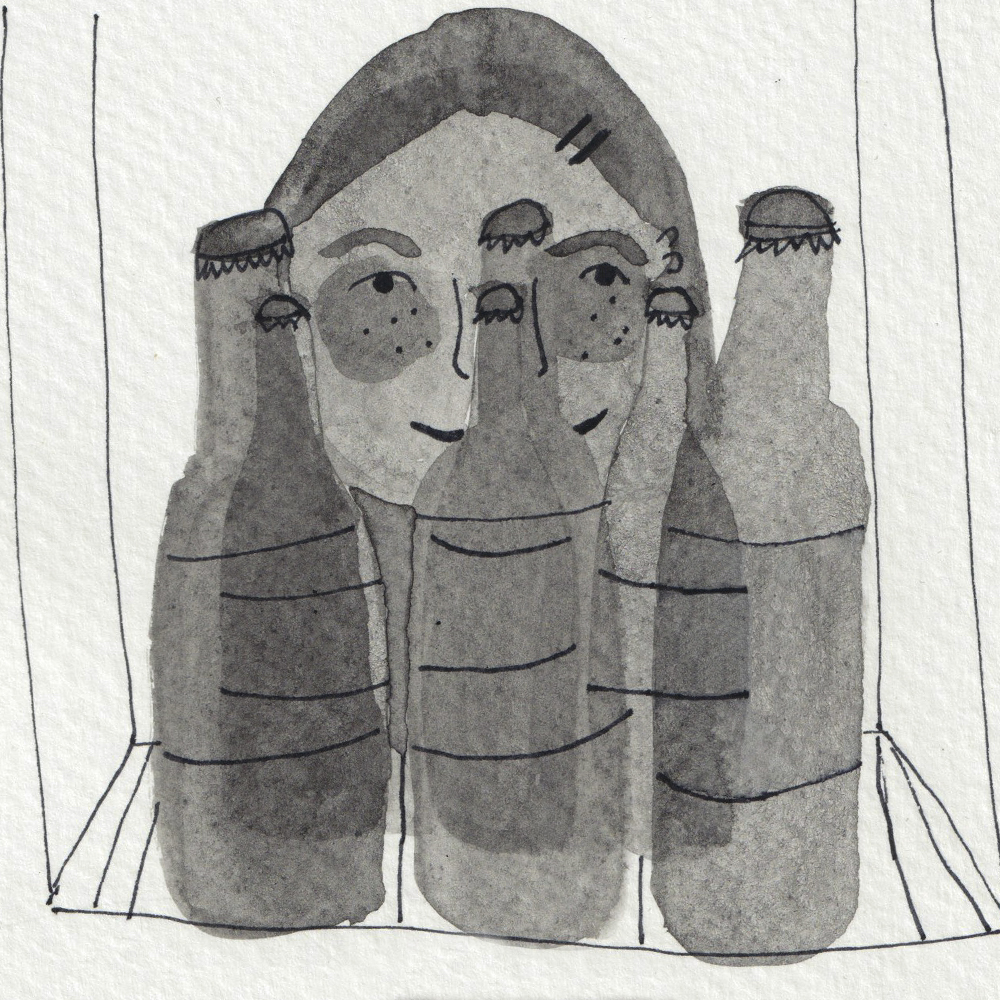
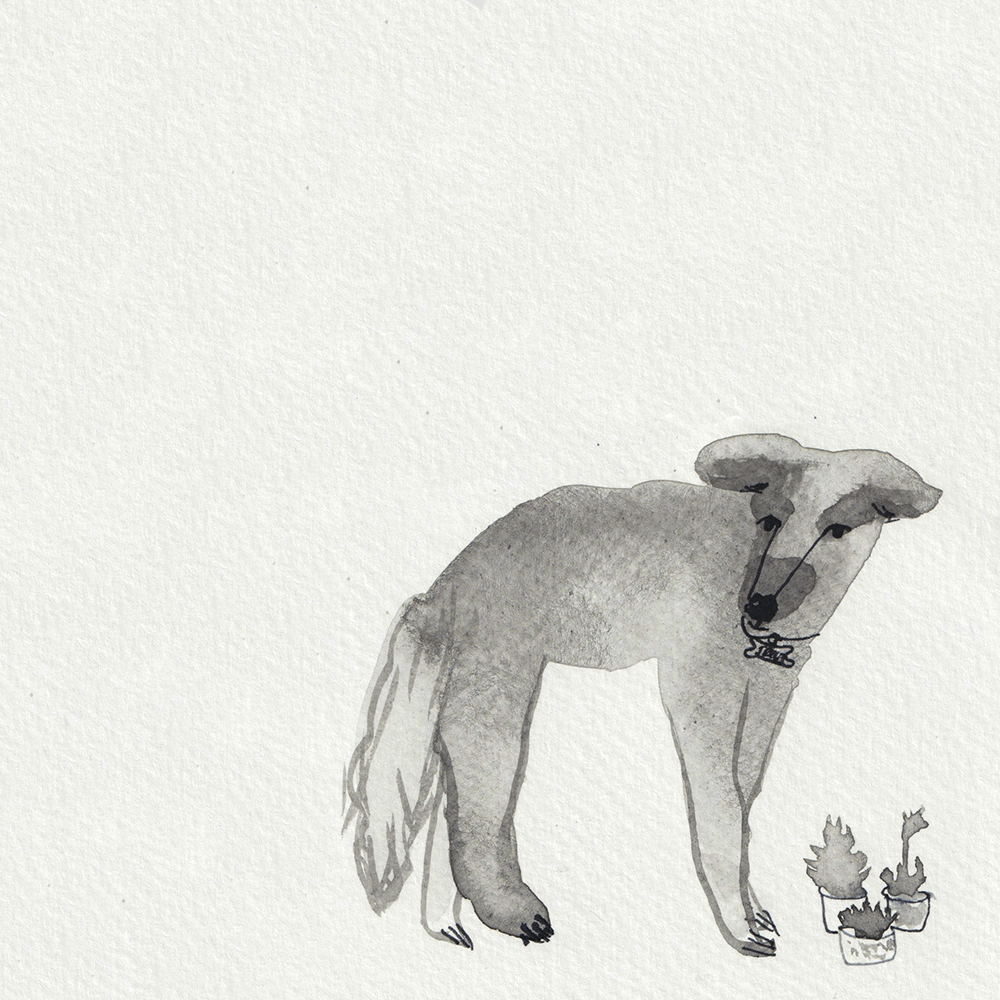
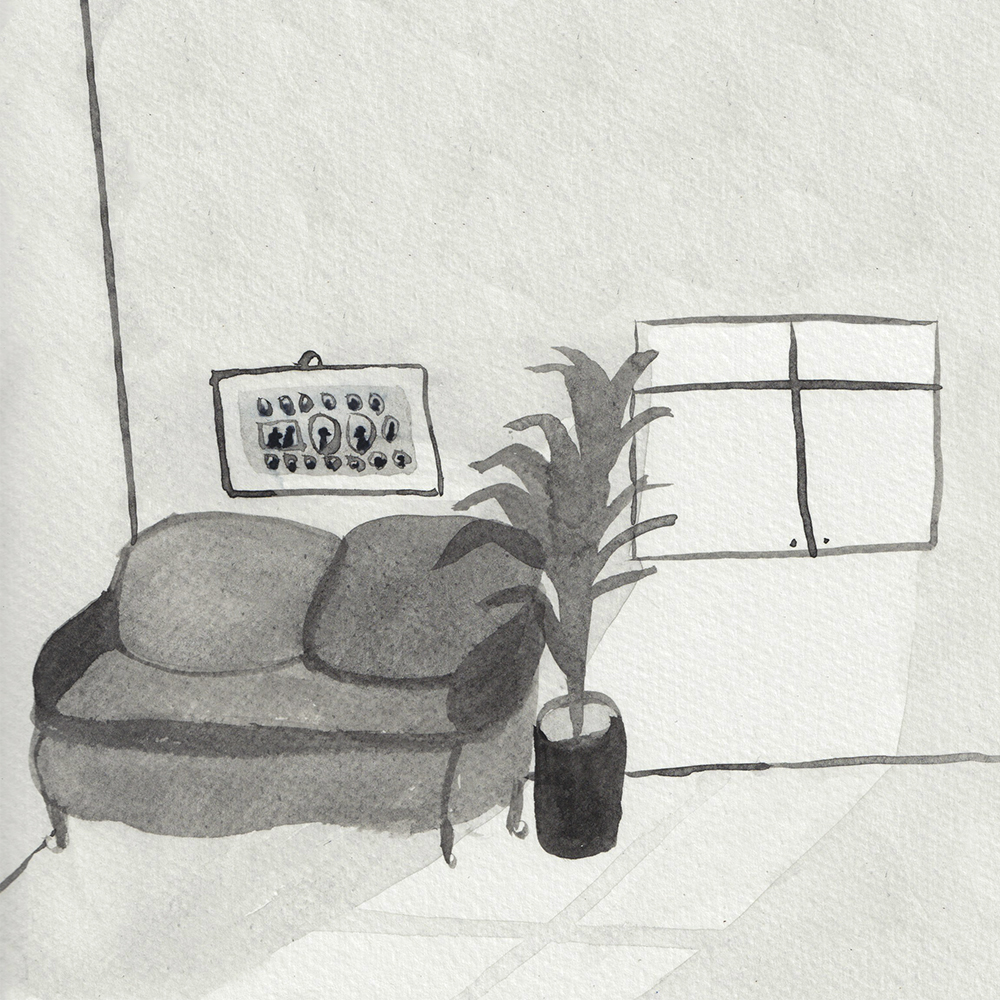
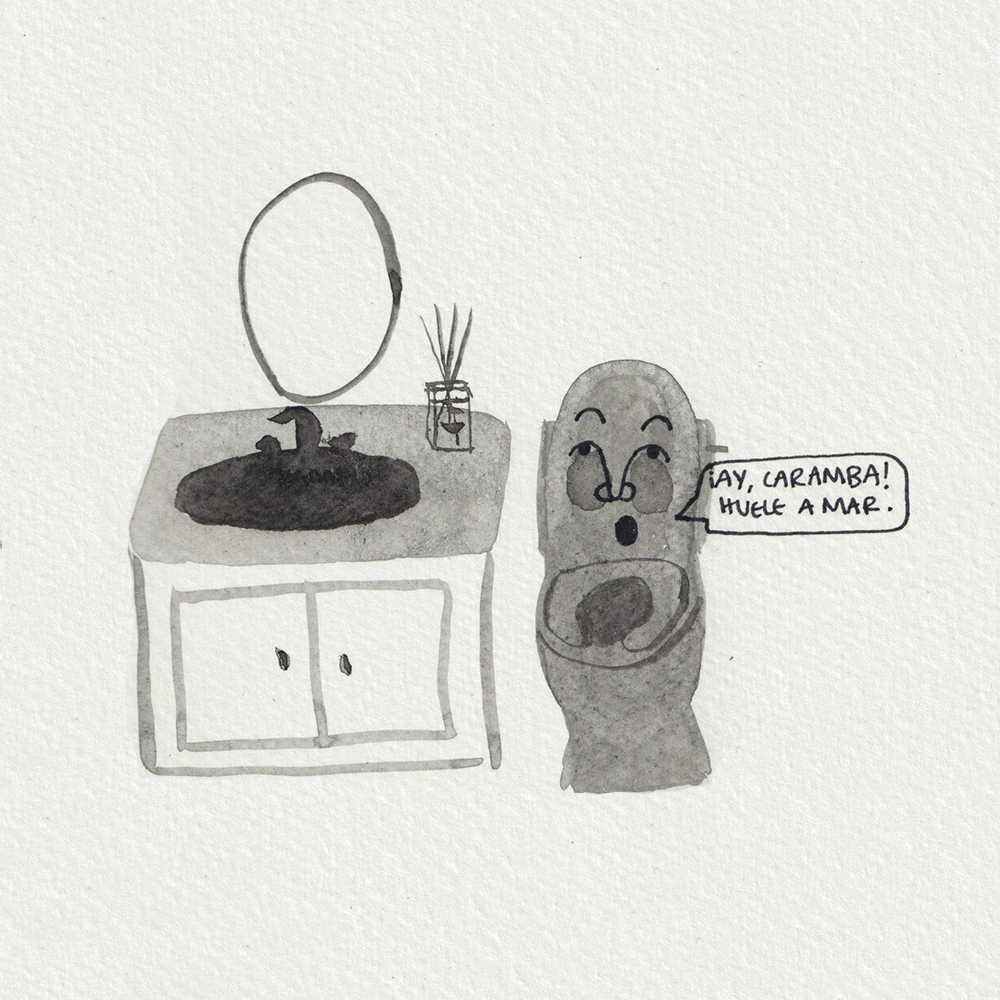
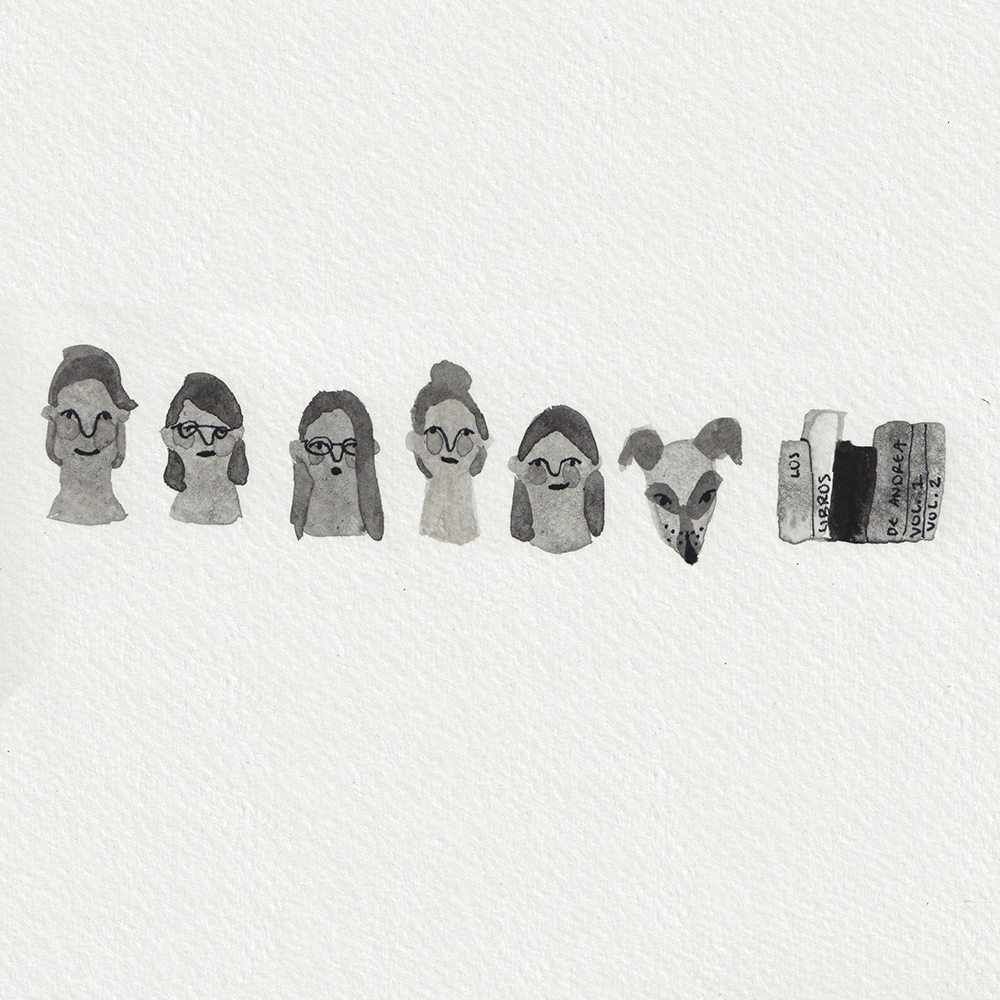
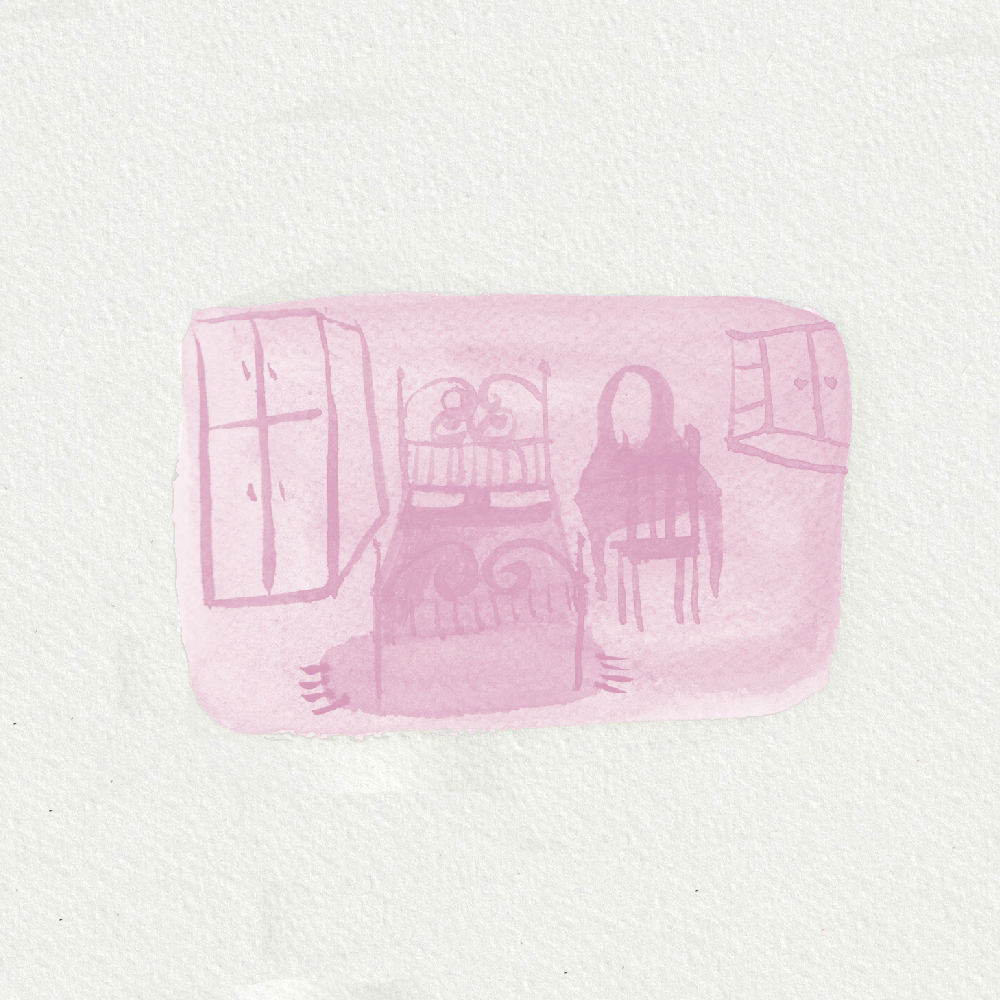
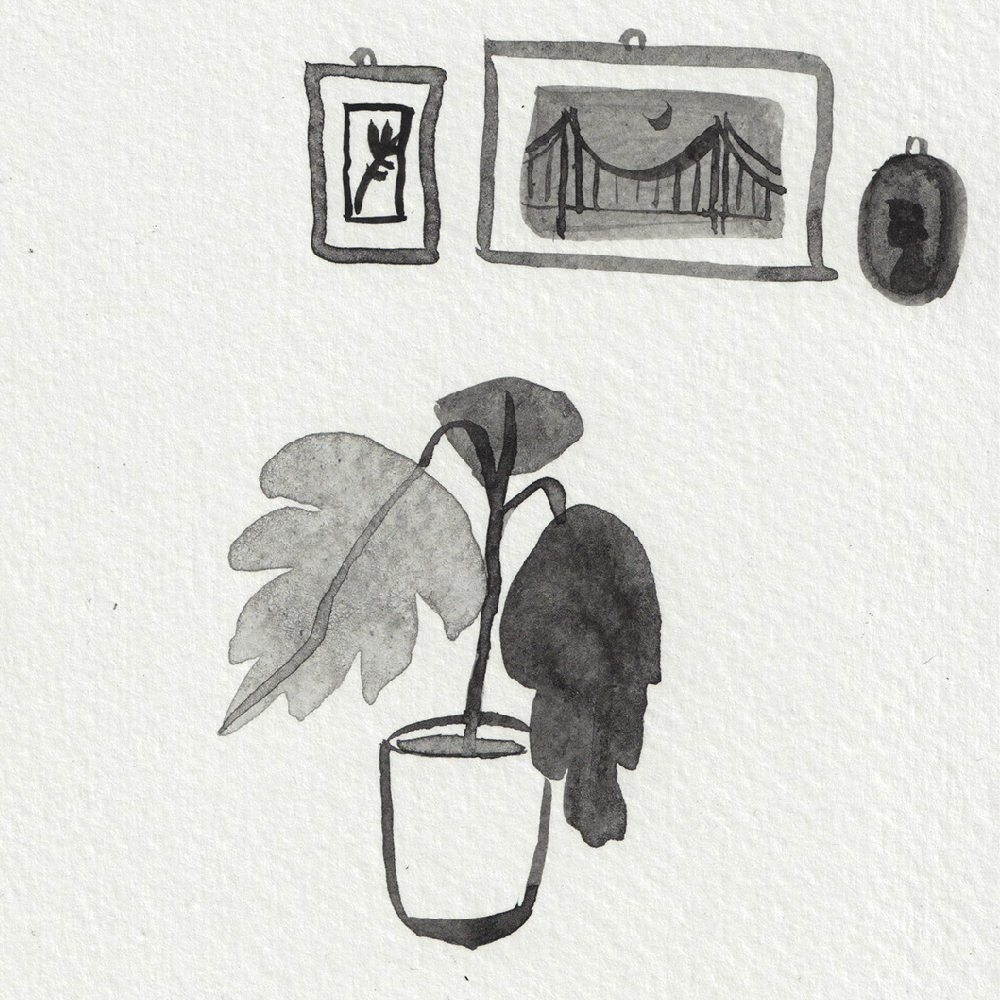
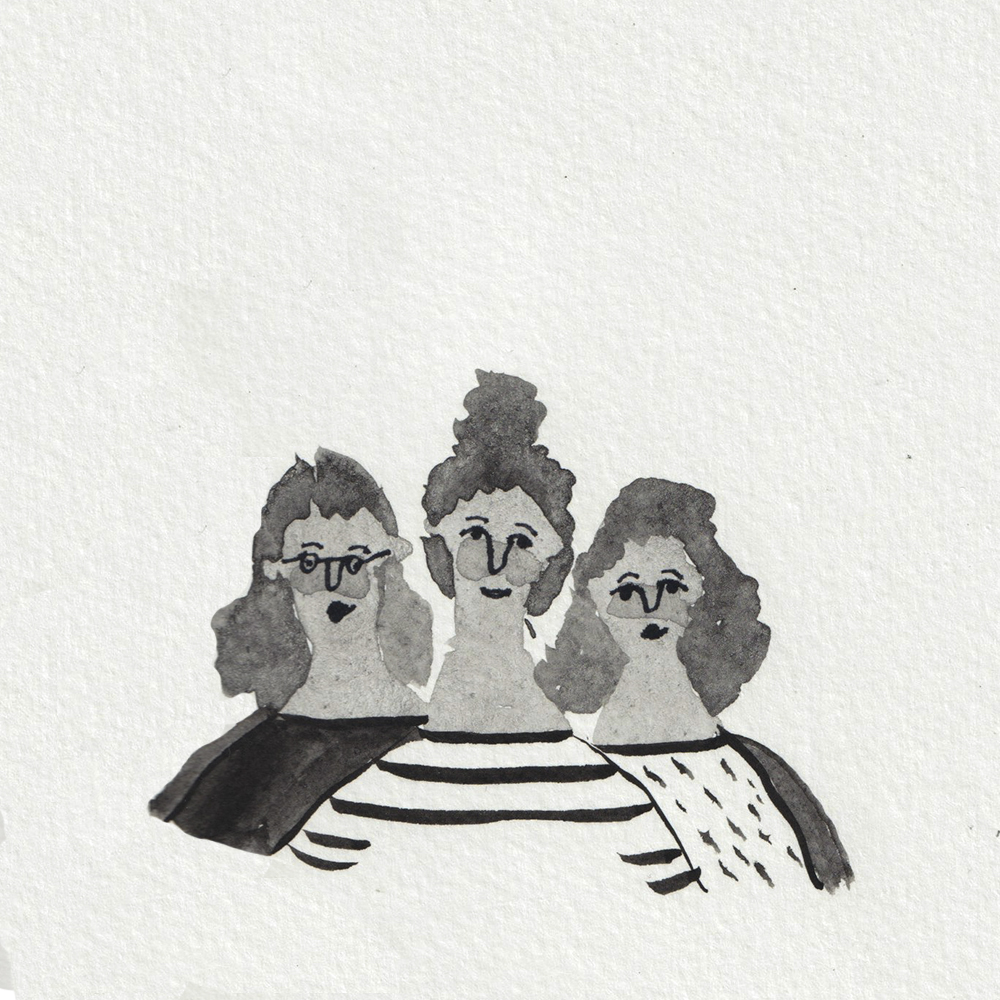
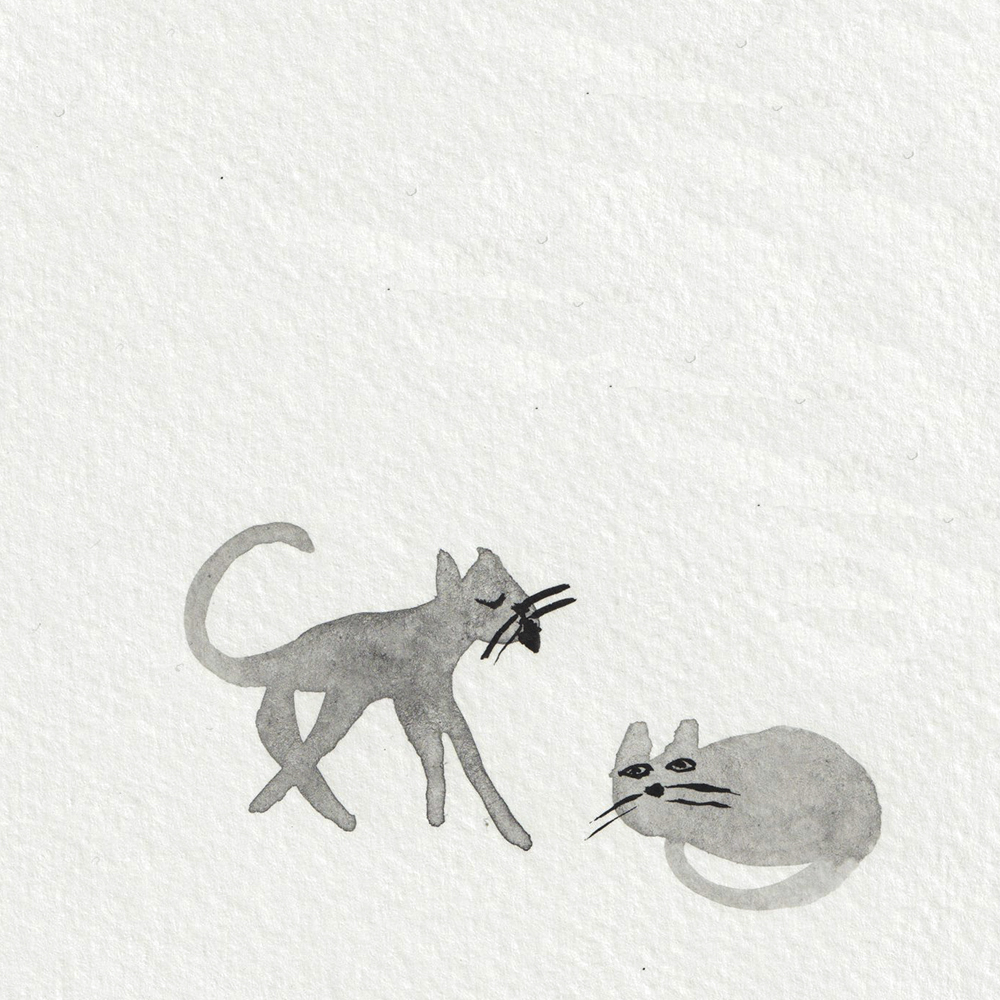
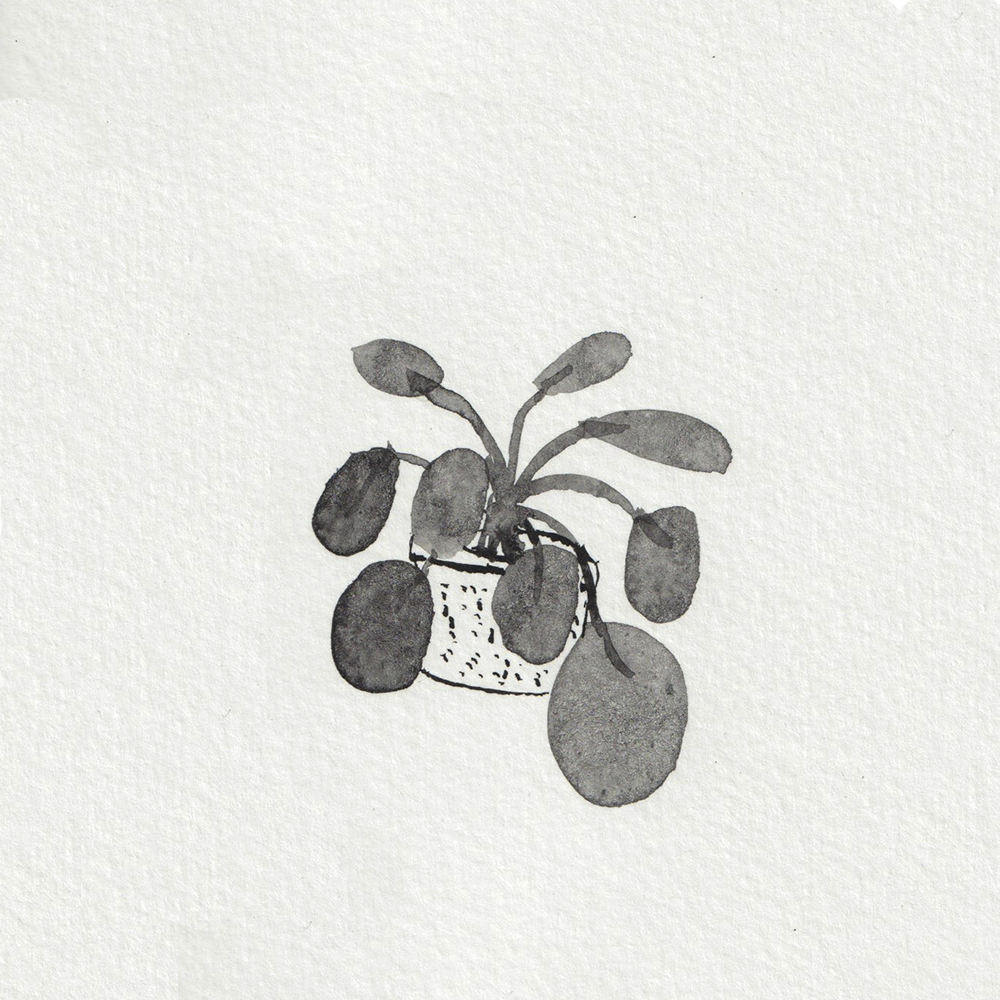
I asked people on instagram to share with me what it was that made their house their home, and I illustrated their answers. I made small, ink vignettes. This is what they said:
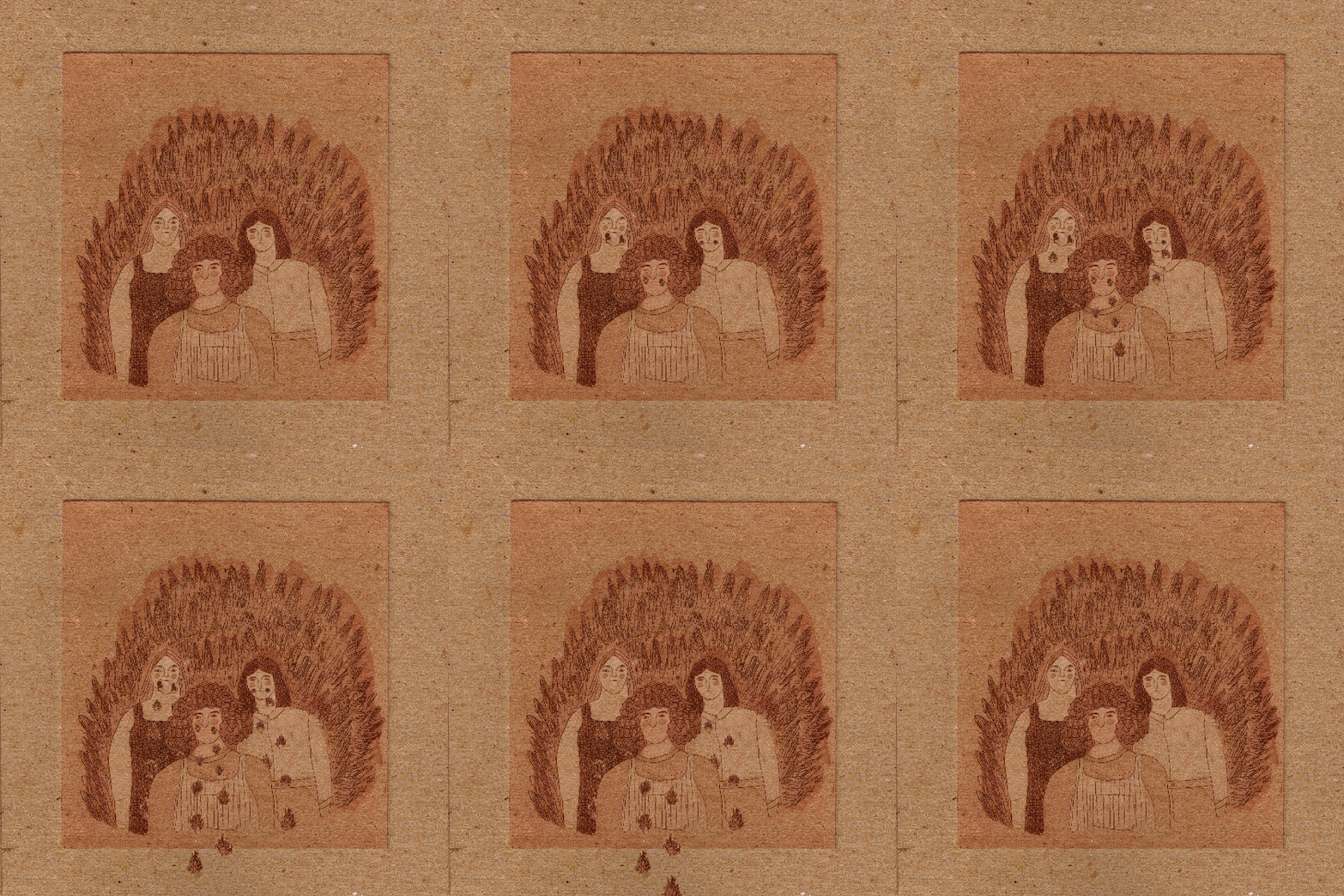
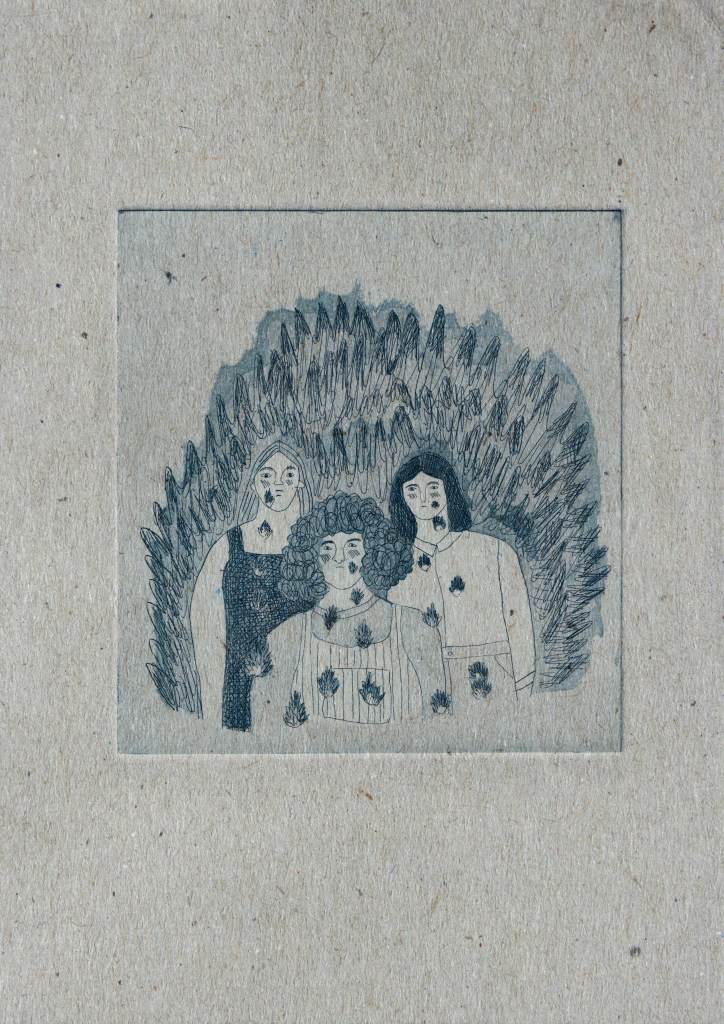
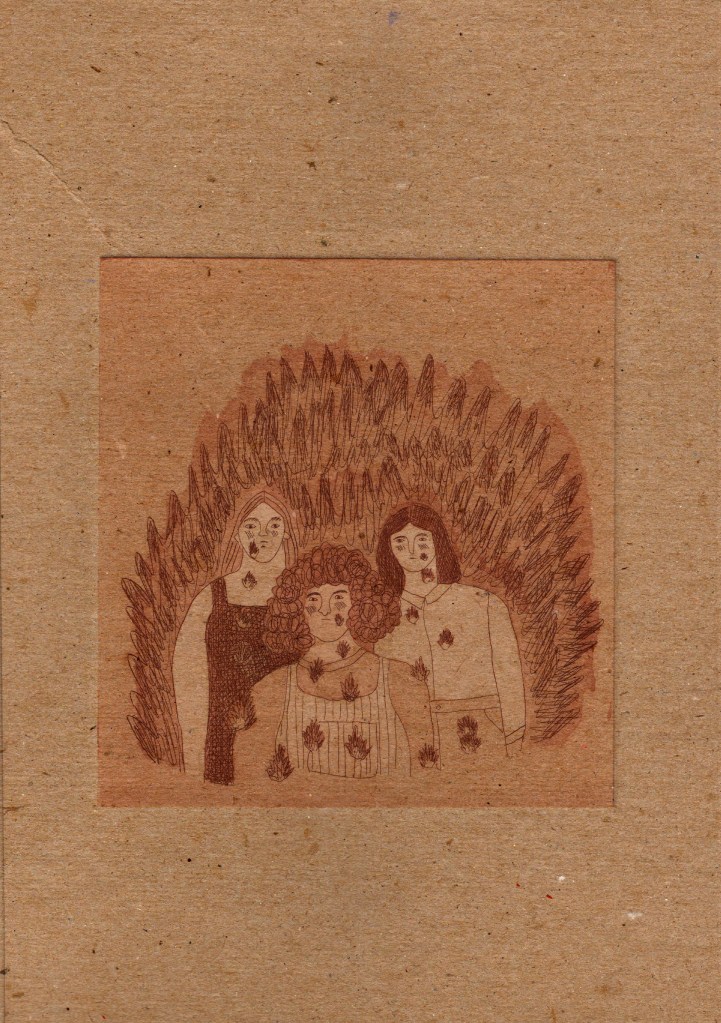
I scanned the etchings I made at Peacocks about femicides in Mexico:
«10 women are murdered daily in Mexico. If I were in there, I would be joining my friends in the protests. They send me voice notes when they march and tell me about the fears they are feeling, and I wish I was there to be angry together. If I’m not back tomorrow, burn it all.»
I had made an animated gif of a vignette I drew, but I wanted it to be more cohesive with the other illustrations I have produced. I work a lot with craft paper or recycled paper because of the materiality it offers storytelling, and the brownness, too. It has an earthy quality I enjoy and relate to, which is why I multiplied the etching layers to the paper textures on Photoshop.
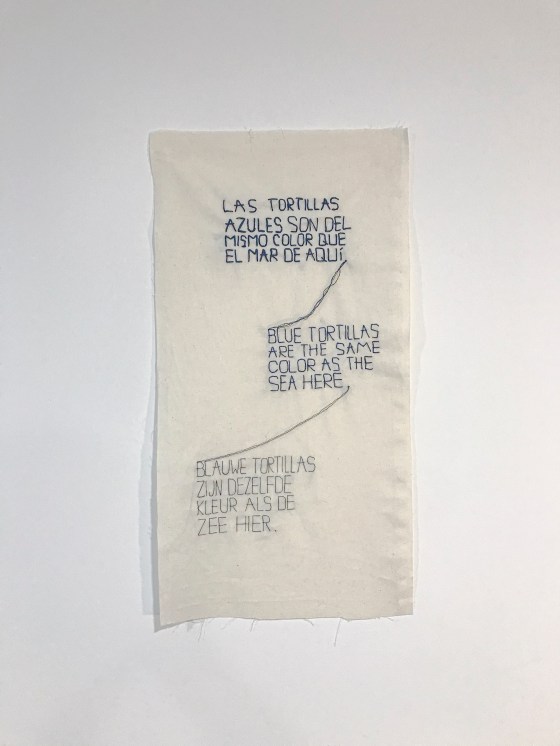
I made a video of the process of embroidering «Blue Tortillas are the Same Colour as the Sea Here». With the embroidery sessions, we have reflected on how embroidery is a practice that is not taught to my generation anymore because our mothers were forced to do so, and, in a way, rebelled, by not passing that particular knowledge down. Antonia argues that by teaching and learning it amongst each other, collectively, we are reappropriating the practice and rebelling with it, too. The audio of the video is a voice note my mother sent my sister and I, where she talks about how, even though we are all in different parts of the world, she knows we are transforming our little unit into something else. Something new. She says «it feels like we are leaving a dress behind, or something else that doesn’t work for us anymore».
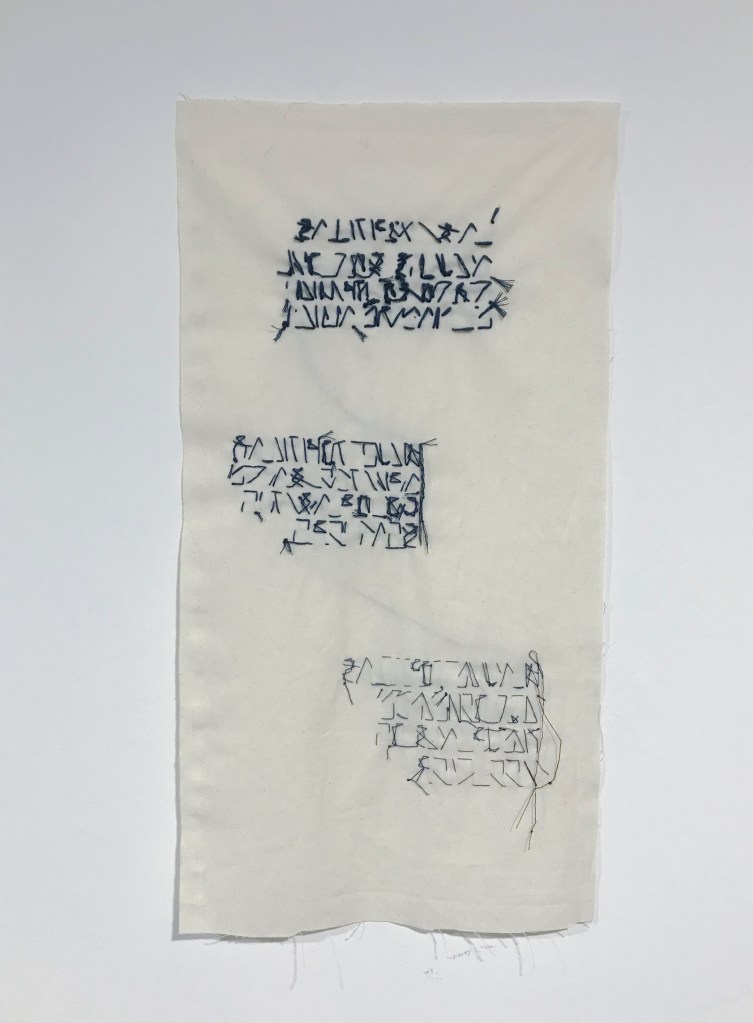
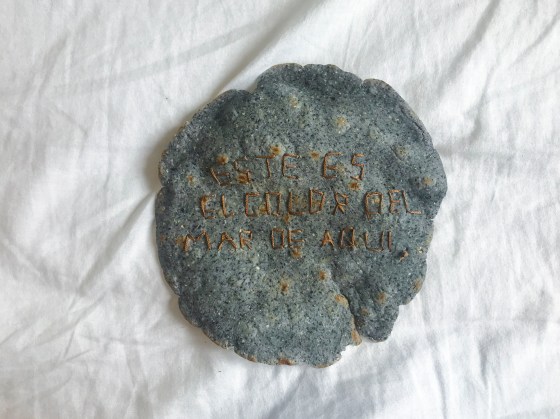
I embroidered this piece with the phrase «Blue tortillas are the same colour as the sea here». I used a 6 strand, cotton, dark blue thread on natural, cotton fabric. I used 6 strands to free hand embroider the phrase in Spanish first, then divided the final stitch in half to use 3 strands to embroider it in English, then divided that and ended up using 1 strand to embroider it in Dutch. I am still learning Dutch, so if I were to assign a number of strands to express my confidence or closeness to the language it would be 1, not 2. This is the reverse:
I wanted to express my relationships with different languages I’ve collected in my migrant experience. By not defining «here» with the name of a place, the piece is open to interpretation as to where «here» is or «there». Language has a special role in the act of «othering». The word «tortilla» remains the same in the three versions of the phrase, and, in a way, it symbolizes, my Mexican identity. On the one hand, it can be viewed as a concept that is able to stay the same, but it can also mean that Mexican identity is untranslatable. Even though, I make an effort to find substitutes of the things that help me construct it. Perhaps, it can also be that the word «tortilla» and, with it, Mexican identity occupies an in-transferable place in other languages.
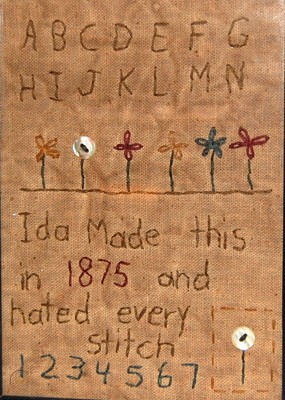
In our embroidery sessions, Antonia showed an image of an embroidery sampler a girl made in the 1800s. It was similar to this one:
We discussed how the girl reappropriated the practice of embroidery and turned it into a political statement. We also discussed Carmen Serratos work, which seemed very pertinent. She embroidered a tortilla as part of her series «Mi American Sueño» (2019):
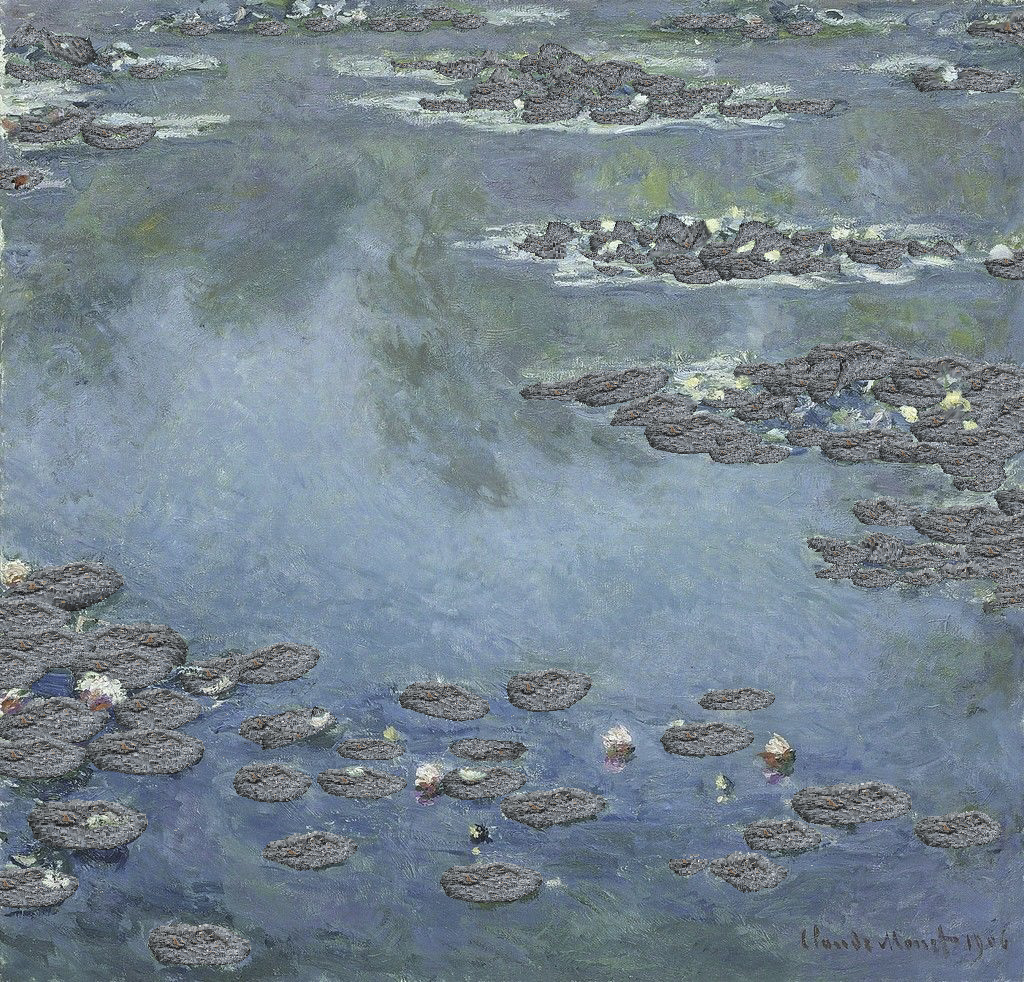
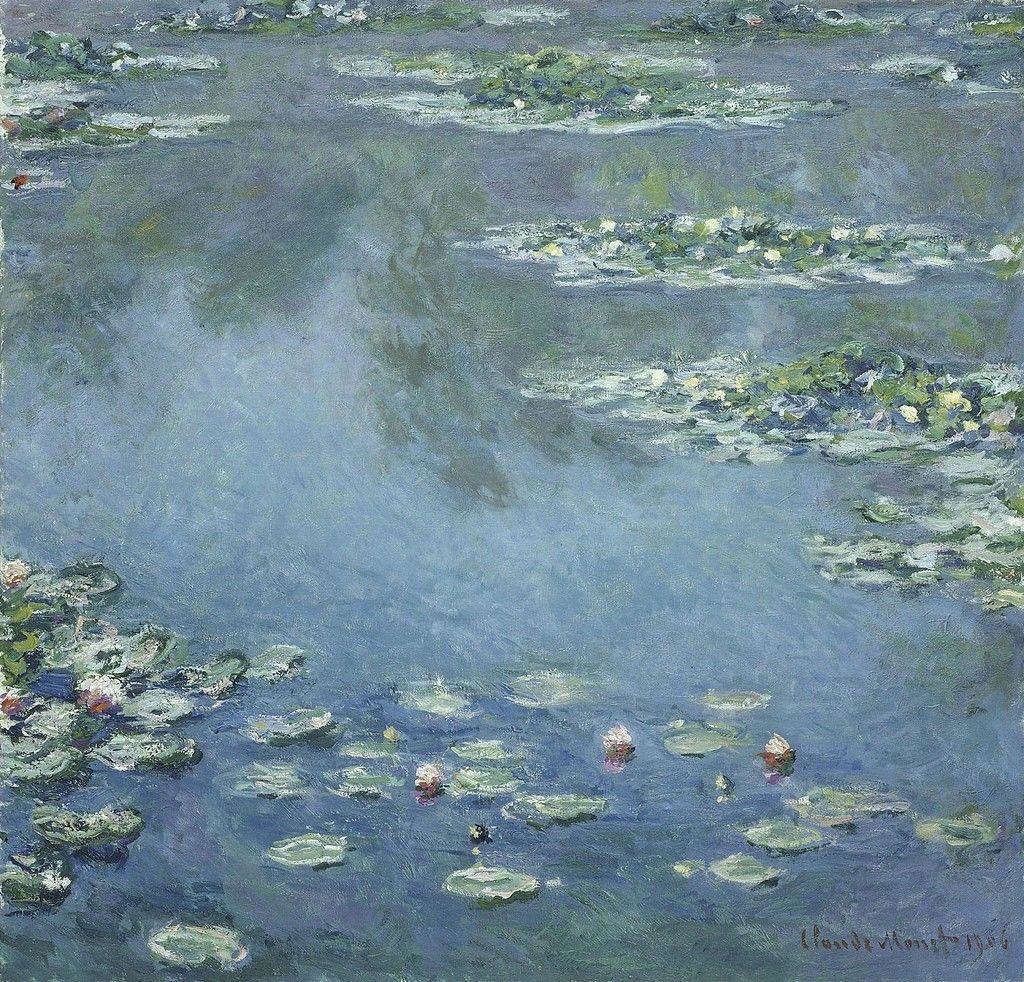
I too wanted to resignify the act of embroidering and the act of making tortillas and combine both. I went back to what I had written when I replaced Monet’s water lily pads with many blue tortillas:
I love water lilies. They grow from mud. Earth and water. They float. They are resilient. I love blue tortillas. They are an in-between colour. Blue and brown. Earth and water.
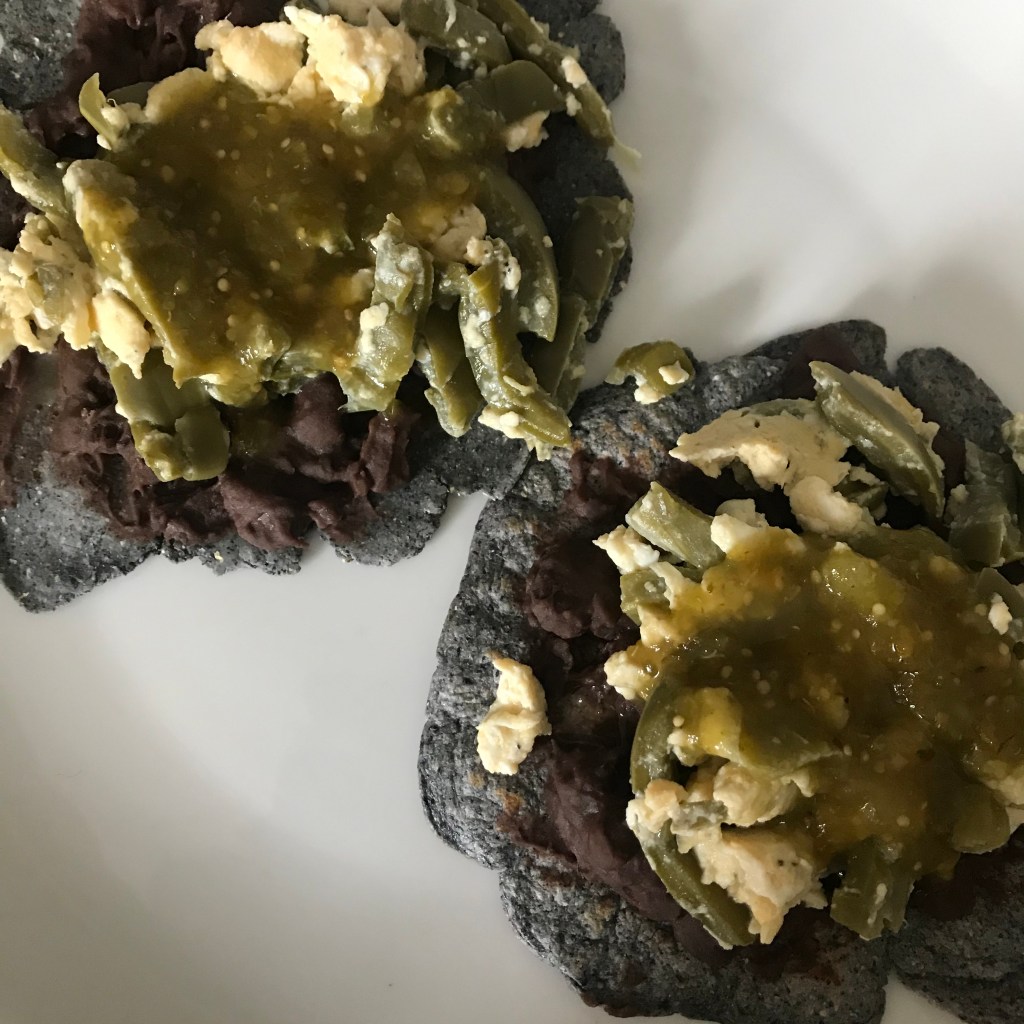
I remembered seeing the sea in Aberdeen for the first time. It too was an in-between colour. Not blue, not brown. I found that colour again when I photographed the tortillas I was making, so I embroidered a fresh, blue tortilla with this phrase: «This is the color of the sea here» in Spanish.
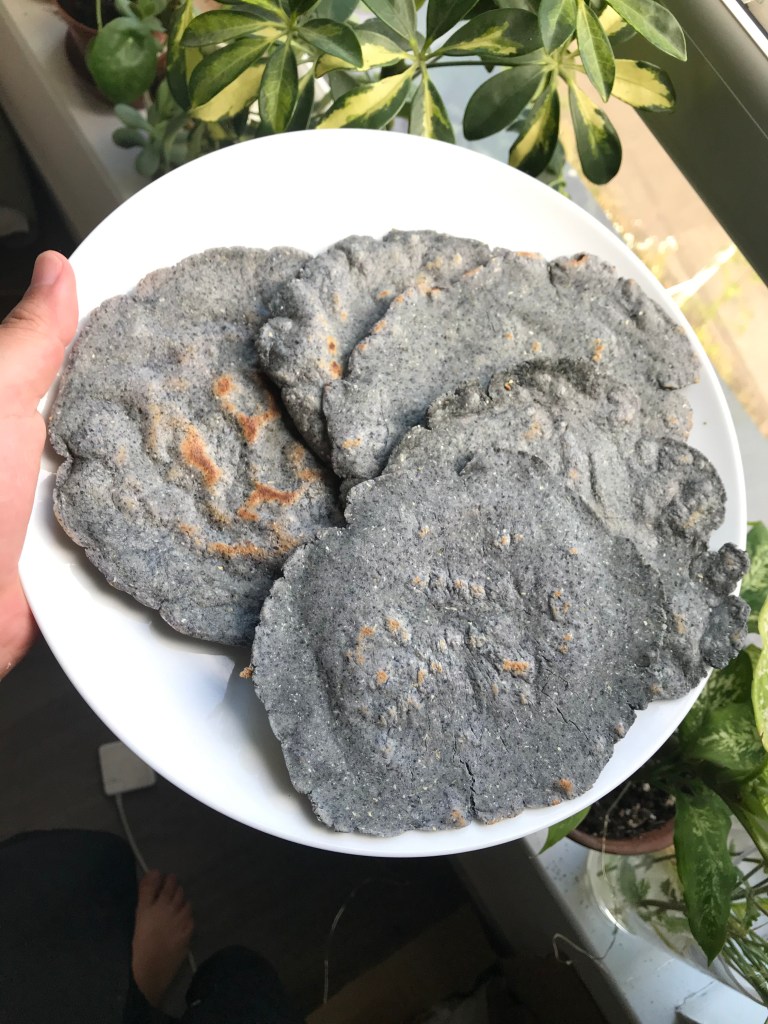
I was frustrated because I felt like I wasn’t able to explain my thoughts and my intentions with my MA project. I wanted it to be known that I come from love and I am making an effort to tell a story from that place. I have no migrant pain or anger to perform. Humanity can be found in joy, too. I sent a voicenote to a friend where I thought I was very clear (in Spanish). I mildly subtitled it. I wanted my tortillas to accompany my words. This is how I make them:
I chose this intimate, quotidian moment to translate because it is a moment I felt comfortable sharing. It is a moment I offer and am willing to translate. If I were to stop explaining myself constantly, I would play this video instead for anyone to see. Here, I am making white corn tortillas in Aberdeen. My husband and I dubbed our tiny conversation from English to Spanish and Dutch.
Corn is central to Mayan cosmogony. According to the Popol Vuh, the gods first created humans from clay, but it broke easily. Then they made a new type of human from wood, but their hearts were too cold to believe in gods. They then tried making them from corn, and that is how humans were made.
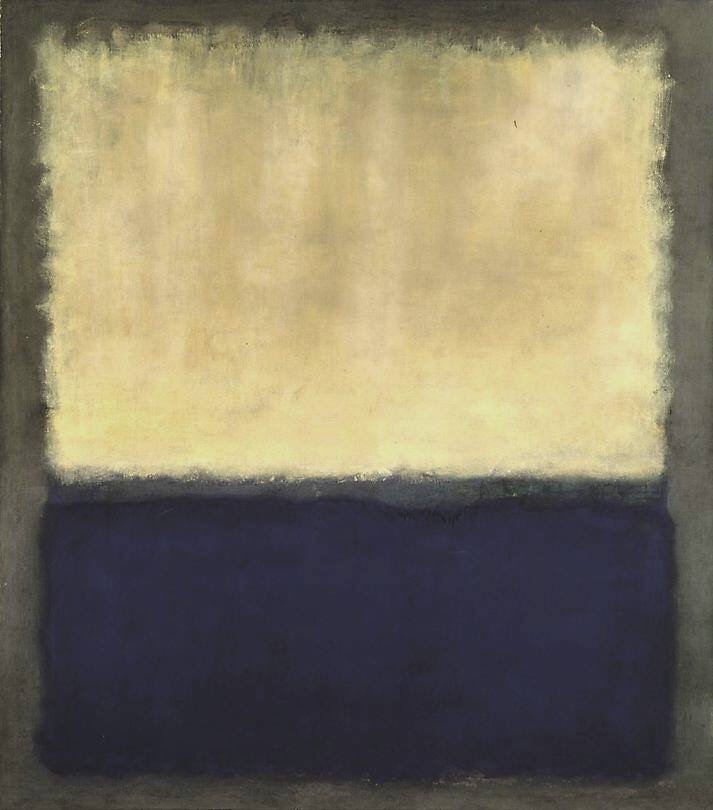
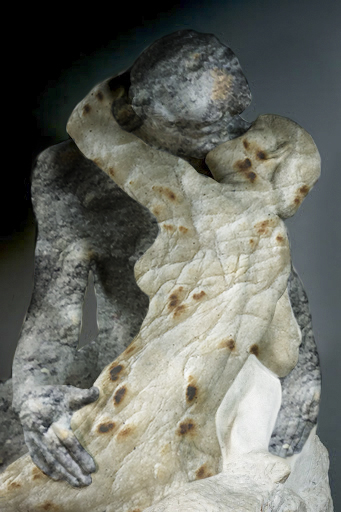
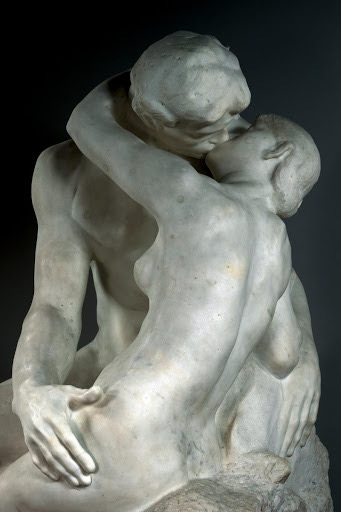
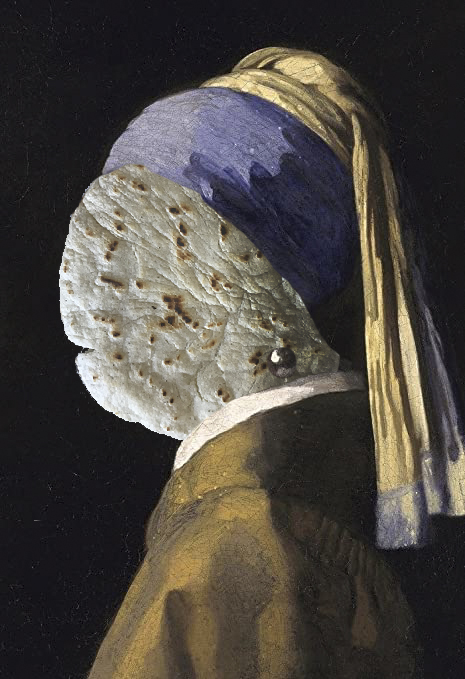
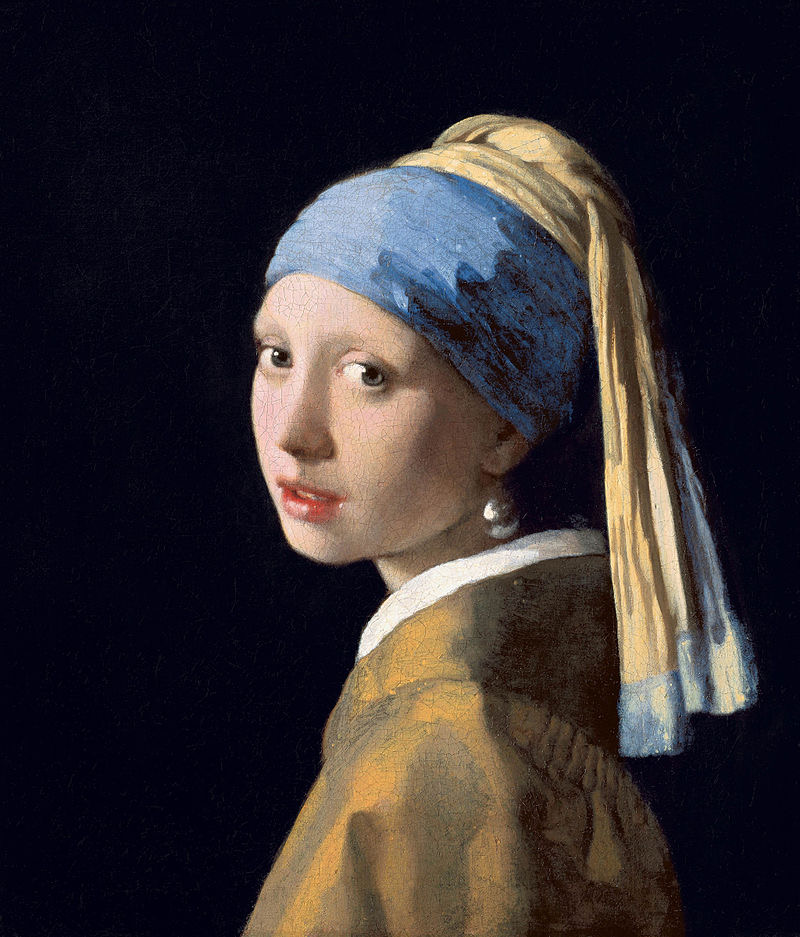
I wanted to keep celebrating tortillas and corn, and I wanted the tortillas I was making to occupy other important places. I was, too, crafting them with my hands, as I make illustrations or write, so I photoshopped the photos I took of them and placed them in a Rothko, a Rodin, a Vermeer, and a Monet.
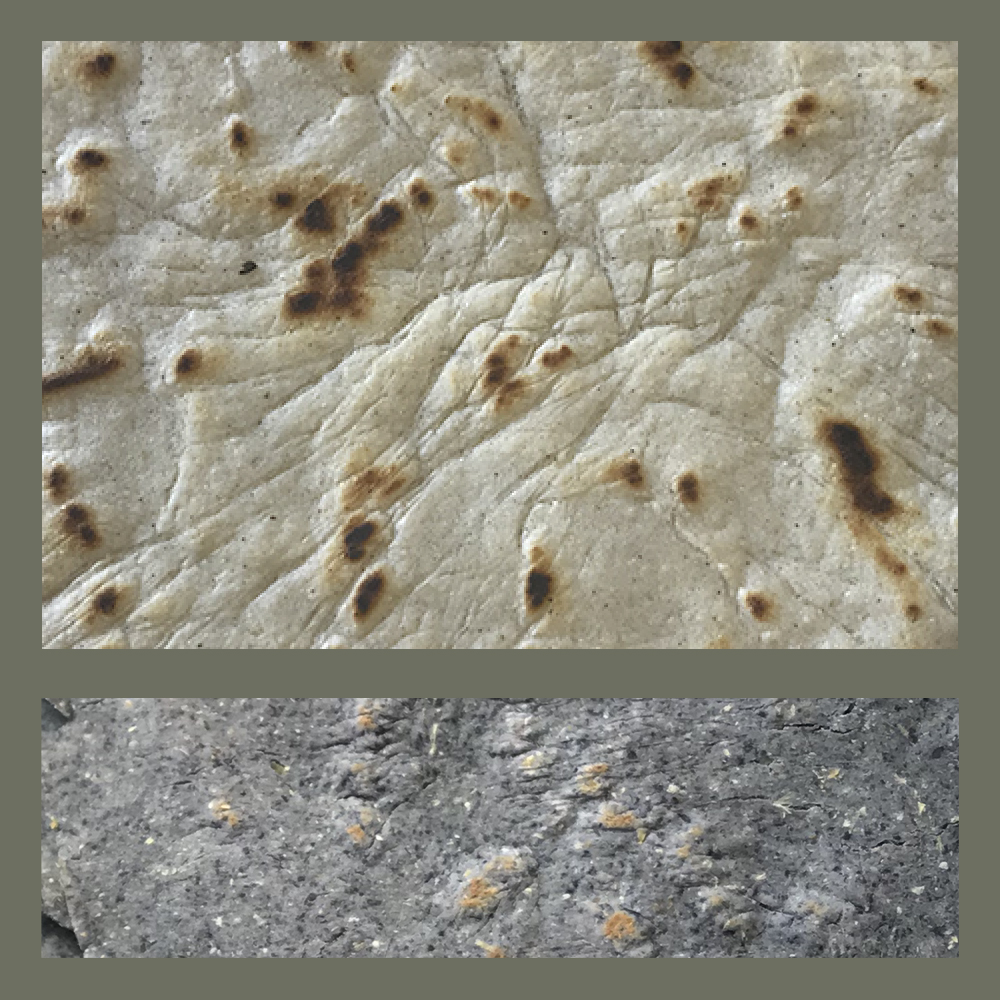
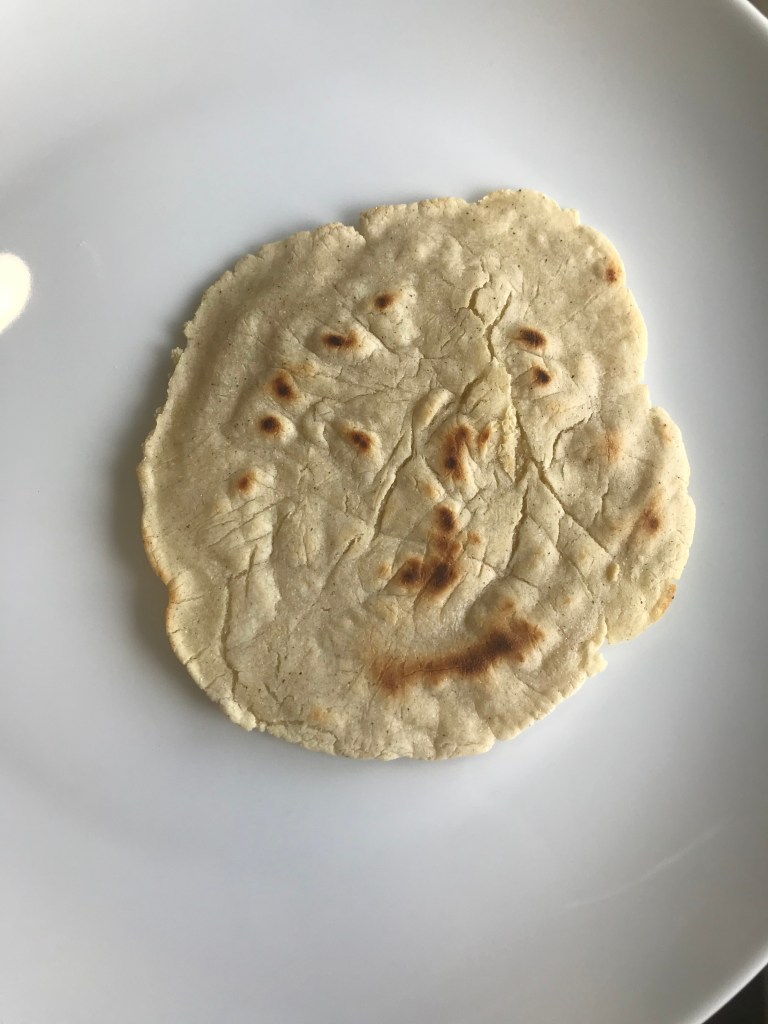
My second favorite thing about tortillas is their texture. It looks like an aerial perspective of a place, or wrinkles in skin, or dry earth, like a dessert, or rock. With this in mind, I first thought of placing them in Rothko’s «Light, Earth and Blue» (1954).
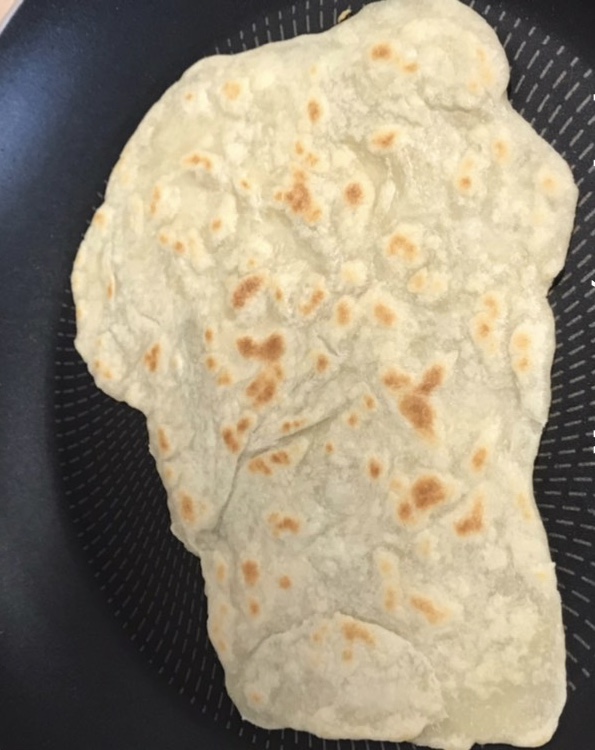
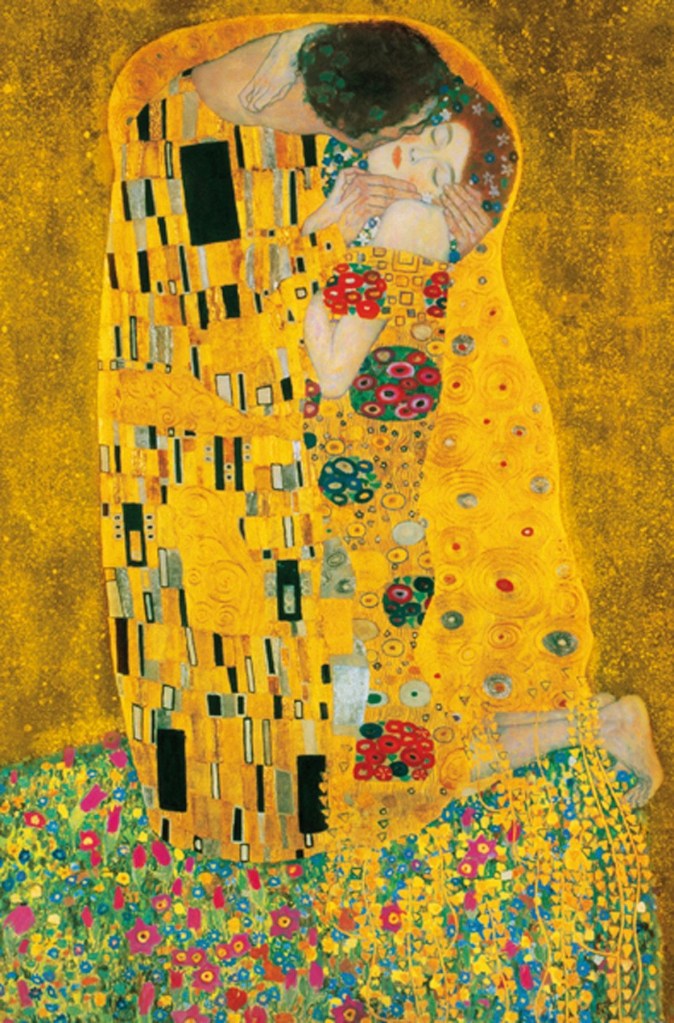
Different types of corn make different colours of tortilla. My favorite is blue, but I also had white. Having had both doughs cook so nicely seemed too fortuitous and wanted to celebrate both colours. I placed them in Rodin’s «The Kiss» (1901-1904).
The third I made to occupy a Dutch place. My husband is Dutch and we plan to build our lives in The Netherlands. I imagined going to a museum and finding a tortilla in a painting and thought it would be very welcoming for someone like me. Maybe in a silly attempt to revision the Dutch Golden Age and decolonize it a little bit. I placed a white corn tortilla in Vermeer’s «Girl with a Pearl Earring».
I love water lilies. They grow from mud. Earth and water. They float. They are resilient. I love blue tortillas. They are an in-between colour. Blue and brown. Earth and water. I replaced the lily pads with blue tortillas in Monet’s «Water Lilies».
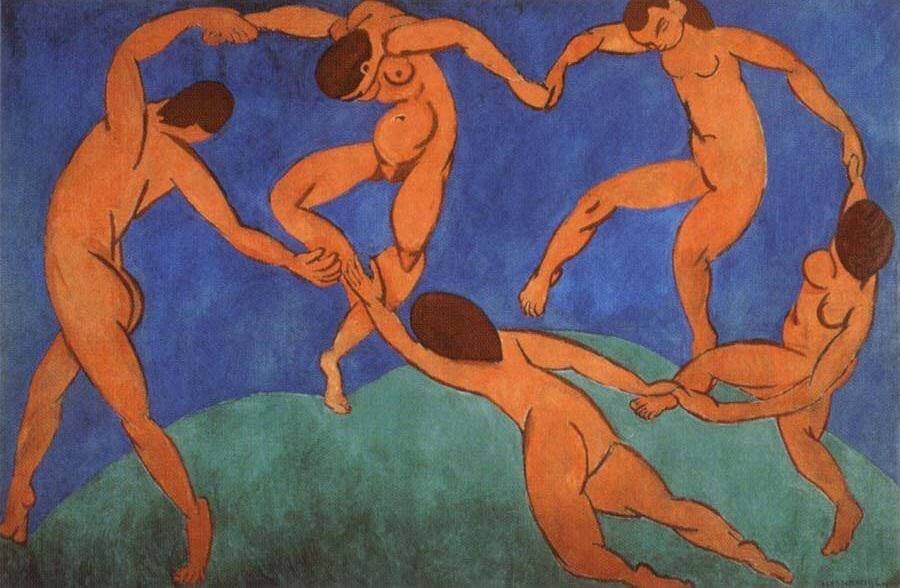
I found an online store in Luton that sells Mexican products and immediately ordered a pack of blue and white corn flour. They arrived shortly after, and I kneaded the blue dough first. My first batch was strictly non-circular, but I was very proud of them. I wanted to celebrate having made them so far away from where that corn grew and the quotidian suddenly felt political, and I felt triumphant. I had made a little piece of home in Aberdeen. I photographed the tortillas and wanted to commemorate them further. I immediately started noticing similarities in the shapes of my tortillas with great works of art and wanted them to occupy the same important spaces.
 Maxim Zaragoza