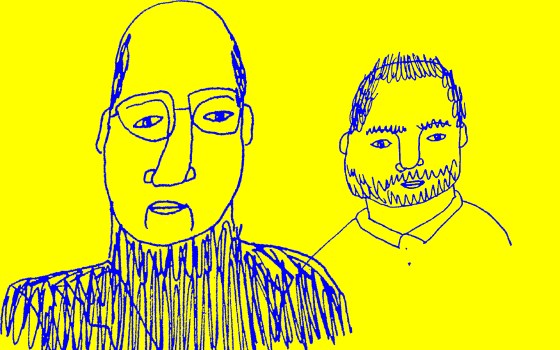
Charles Esche

For Guest at Gray’s last week, Charles Esche spoke about how art changes the world. He said it first changes perception and then our value system and then the world. I liked that.

He also talked about how the word «modern» in modern art can be problematic because one might fall for the modern-colonial trap which is basically about not realizing that eurocentrism is still a thing. He referred to Rolando Vázquez Melken‘s work about the decolonizing of aesthetics:

«Eurocentrism assumes itself as universal and assumes that there is no outside its own logic, so that there is no epistemic outside and no genealogical outside its epistemic territory. When non-western-centered peoples show that they have other knowledges, other philosophies, other forms of life, they are often seen as holding romanticist positions. We are told that everyone has been touched by modernity and that there is no such thing as an ‘outside modernity’. For decolonial thought, however, there is an ‘outside’ of modernity.»

Charles also mentioned Sandi Hilal‘s «The Living Room»:

The project is inspired by a story about a Syrian refugee couple Yasmeen and Ibrahim, who had moved to Boden from Syria, and continued what was an essential part of their life back home, opening up their Madhafah-living room to host both Swedes and others in their new home in Boden.
Turning private spaces, such as the living rooms, into social and political arenas, is often a response to a limitation of political agency in the public realm.

This project highlighted the importance of being a host and being a guest and finding a balance between both in the process of inhabiting a place. I thought it was funny that Charles Esche was a guest at Gray’s himself and was being terribly rushed to finish the conversation.
Deep map ideas:

  1. A map of where chilangos are from.
  2. A map of how my walk on along the River Dee has changed with my getting acquainted with the city.
  3. A map of where grief is deposited in Aberdeen and Mexico City.
  4. A map of where my loved ones are.
  5. A map of memorial benches in Aberdeen.
  6. A map of how I got from Tokyo to Aberdeen.
  7. A map of how my movement in the city of Aberdeen has changed as I get acquainted with it.
  8. A map that shows where my comfort foods are from and where I find them in the city I am in.
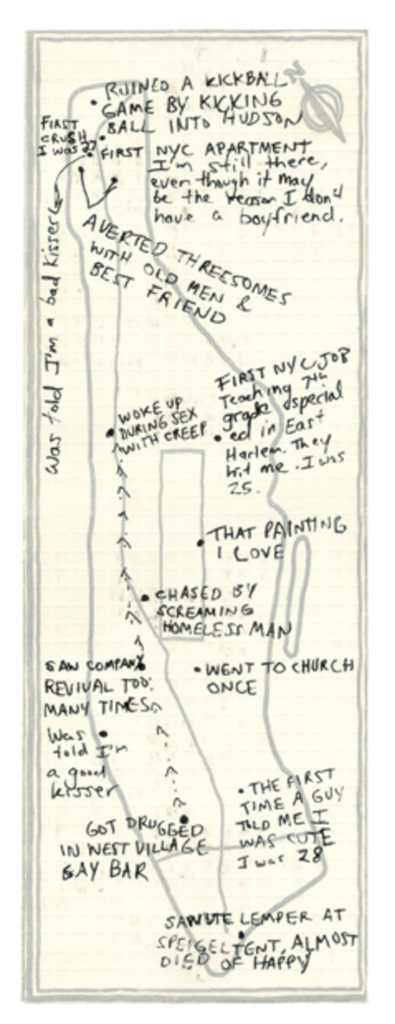
from «Mapping Manhattan» by Becky Cooper.

Deep mapping and experience mapping

The lecture made me think that deep mapping is a just way of representing a personal account. The fact that it embraces experience as a guiding and writing tool, works well in the making of a visual representation of movement and travel. Deep mapping makes space for empathy because it makes visible the relationship between those who inhabit a space, the space itself and the people who seek to speak of that space.

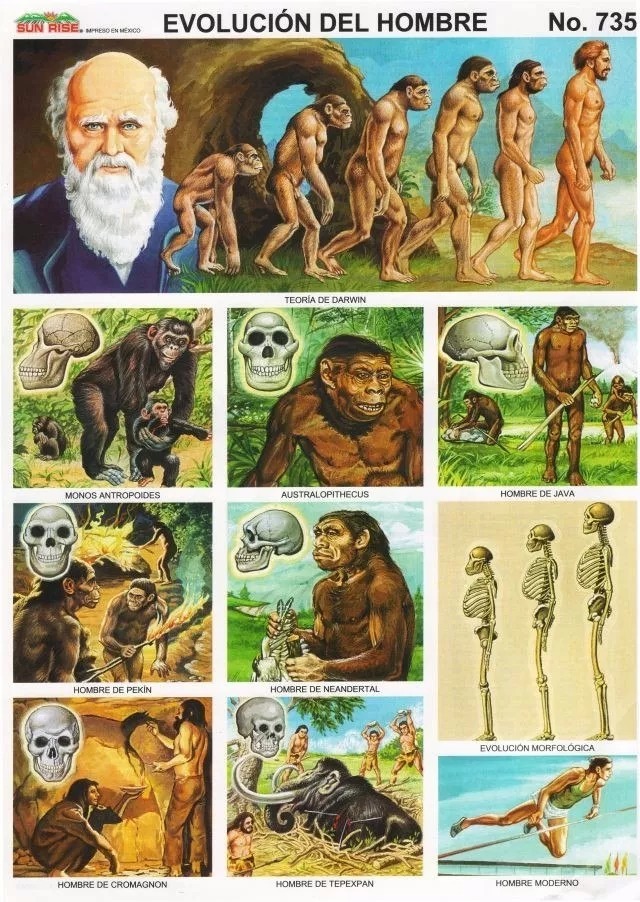
It is also interesting to consider the politics of map making. A power relation exists in the narrative. It reminded me of Mexican monographs. I used to buy them in primary school from the little stationery and grocery shops that are in every corner of Mexico City. Our teachers asked us to recreate it by hand, so we would draw our interpretation of the illustrations and copy the exact text that was on the back of each. They were «official» versions of historical events such as the Mexican Independence, the Revolution, and the «discovery» of America. They were so horrible looking and, most of the time, incorrect and incomplete.

There is agency in a deep-mapping experience.

I learned about Patrick Geddes, who recognized an interdependence between culture and nature. Which made me think again about the memorial chairs and the placing of grief close to a pretty view or flowers. Deep mapping seems like a good way to communicate these layers in which we experience a place.

The problem with «universality»

I read Myriam Gurba’s review of «American Dirt» by Jeanine Cummins. It is a book about migration, and it has been met with severe backlash from latinxs. They are calling it brown trauma porn. However, Oprah, recommended it on her monthly book club.

«American Dirt» is a story about a Mexican mother and son that flee Acapulco after a violent, assassin-filled quinceañera party.

Myriam’s critique focuses on the fact that the story is not an accurate representation of migrant lives, and that Jeanine has no place (geographically and metaphorically) on the telling of such stories (especially since she is now claiming her right to voice stories of people of color because of a Puerto-Rican great-grandmother). The book is filled with stereotypes about Mexicans, Mexican Americans, and migrants, and does no justice to their actual experiences. It’s not that she doesn’t have a right per se, but rather she does it so wrong, it does a disservice.

Authors definitely have the right to write outside of their identity. An absolute legal right. No one disputes that. But there’s homework to be done. Questions to be asked.

David Bowles: «American Dirt», Dignity and Equity.

The text made me question my initial thesis about wanting to find a universality in the migrant experience. It made me realize that I am also too far away from even considering to represent this supposed universality or to even suppose such universality in the first place.

It made me realize that -right now- the only story I can tell truthfully is from my own perspective, and to do that I have to be aware of the privilege that my own experience entails. Mine is a story about migration, about leaving homes constantly, about not being in one place long enough to make a home, about missing my mom and sister because of the distance and my dad because he passed away. It is about grief, about where to place it and how to carry it and about its weight and about the suitcases I need to take it with me. It is also about buying too many plants and caring for them even though I can never take them with me. It is also about missing green tomatoes.

More about pigeonholing POCs in the creative industry: here.

Shirin Neshat

I have decided to make the narrative for this project more personal, but not necessarily autobiographical. Like what visual artist Shirin Neshat talks about in a podcast (30:05) when asked about boundaries and truthfulness in her work:

The way I do it is I make very personal work. I don’t just choose a subject and say oh, that’s a hard political subject, I’m going to make a work about it. I make work that relates directly to my own personal life that I have felt the pain. You know, you can’t fake pain. You can’t fake the anxiety of being an immigrant, f or example, or political injustice or anxiety of different kinds. So I think my methodology is I make the work as personal as possible but not autobiographical because that doesn’t interest me. And when you’re personal, people believe you because there’s a lot of transparency, there’s a lot of emotion, and I think that’s my approach. I don’t know how other artists do it.

I can’t talk about a universality in the migrant stories because I can’t account for everyone’s experience, but right now I can talk about what I am closer to, from where I am standing, which is what I am living here.

Memorial Benches

In the park, I went to the David Welch Winter Gardens and noticed there were a lot of benches there, too. I realized they all had a little plaque dedicated to someone that had passed away.

Daaf said: «All of a sudden, it looks like a graveyard».

I thought it was a curious place to deposit grief. In México, we place it on Day of the Dead shrines, and in Aberdeen in benches. There is something to be said about the idea of permanence in memorializing someone.

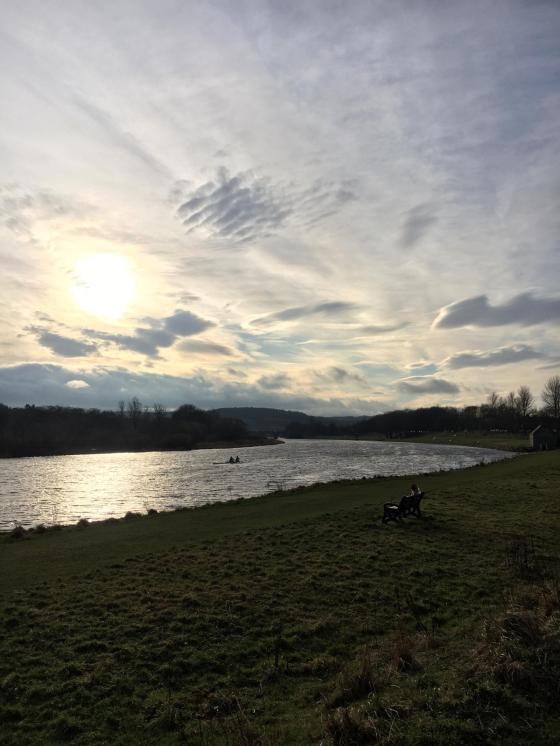
On my way back to my apartment, I realized that all the benches along the river were also dedicated to someone.

Duthie Park

I came back to Aberdeen after the break and went to the park for a walk. I realized I hadn’t gone since I arrived last September. I had taken walks along the river from the university library towards Cults and the golf clubs, but never towards the sea. I had only seen a couple of people and dogs walking on the trail. I slipped so many times on the mud but didn’t really mind it because I like the privacy and the trees, but there had been a pretty park with benches all along.

This new walk felt like I was more part of the city. The benches felt welcoming. The area is very open and public. However, it is still nice to hide in the trees a little, sometimes.

Borges’ Bilingual Poetry

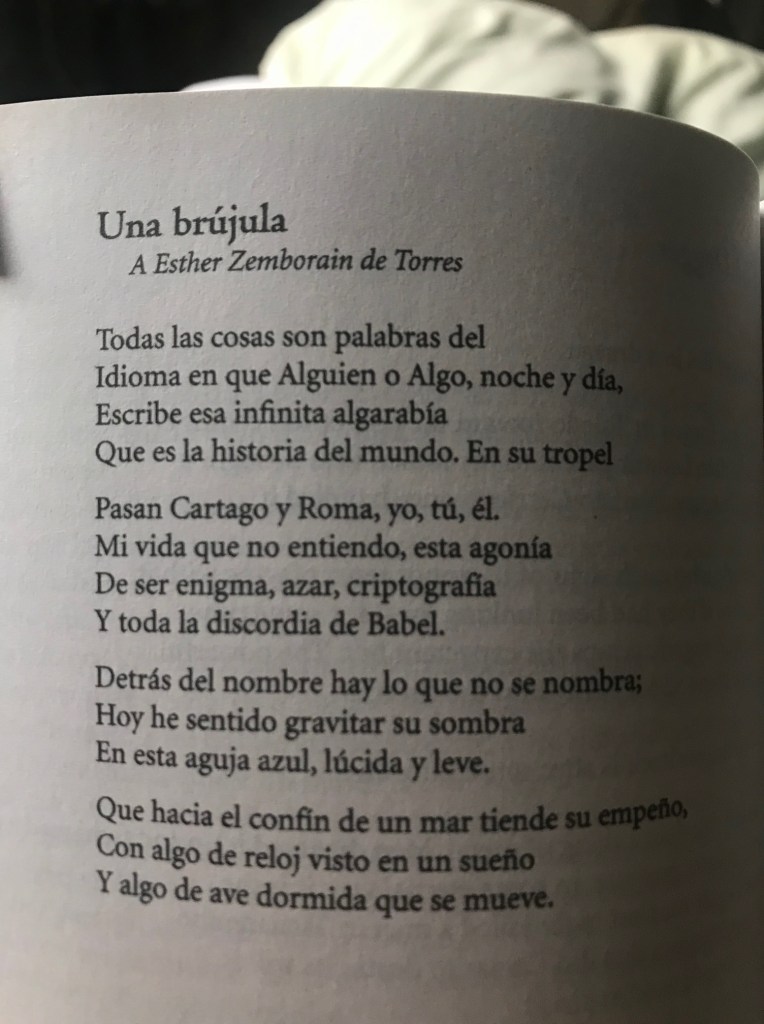
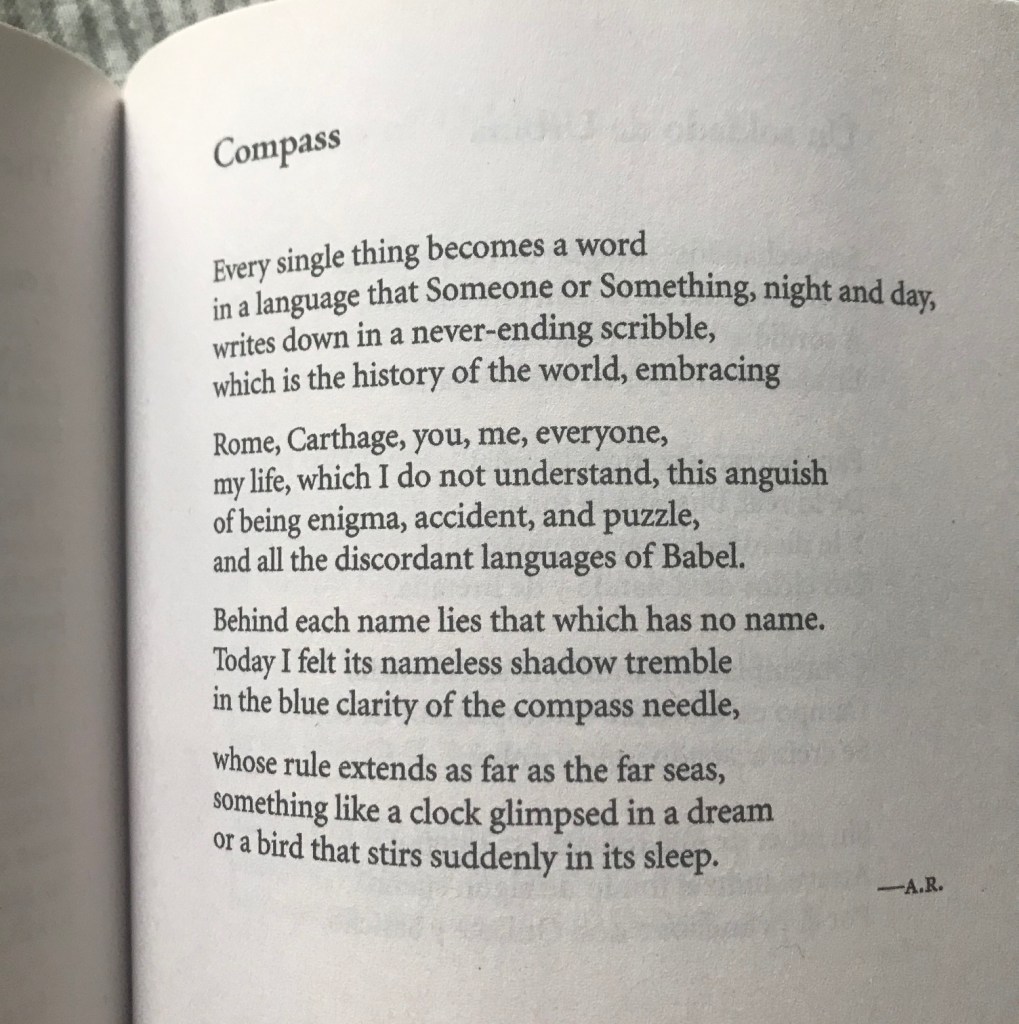
I bought a book of poems. It’s «selected poems» by Jorge Luis Borges, who was born in Buenos Aires, but the whole of Latin America claims him. He dies in Genève and, for some reason, that seemed very important to me. I’ve never read his poems in English, so the bilingual edition I got seems like a good find.

Sometimes there are words in Spanish that I don’t know and read the translation to get a feel, but it feels like there is something lost in translation.

It feels like the poem in Spanish and the poem in English are two different poems about the same thing.

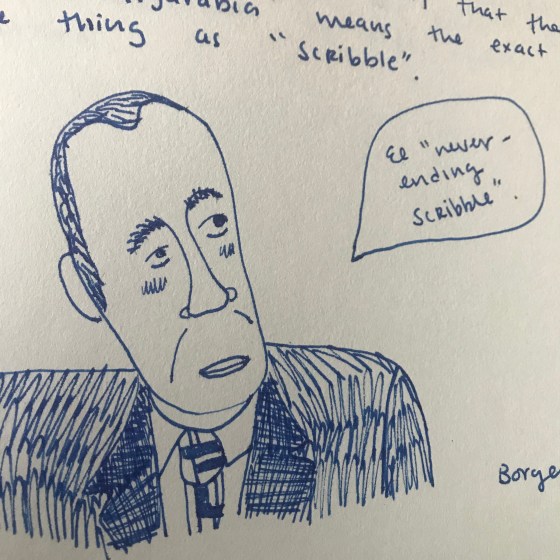
It seems unlikely that the word «algarabía» means the exact same thing as «scribble».

Borges on translation: here.