About bodies

I have been thinking about the placement and misplacement of homes and bodies, mostly of women. I listened to a podcast where Mexican-American author Sandra Cisneros (who wrote «The House on Mango Street», which is a modern classic of Chicano literature, and also didn’t completely condemn «American Dirt» by Jeanine Cummins) rephrases a quote by Virginia Wolf about what it means to be a woman and an immigrant.

Tippett: So this title, “A House of My Own” — of course, echoes Virginia Woolf’s A Room … — but I didn’t see you quoting Virginia Woolf on that, but you did — you have mentioned something she said, that “As a woman I have no country. As a woman, my country is the whole world.” And you said that you would rephrase that. And you would say, “As a woman, I have no country. As a woman, I am an immigrant in the entire world.” And I wanted to hear what you mean when you say that.

Cisneros: I had a postcard with that quote of Virginia Woolf when I was traveling on my first NEA grant, in my 20s, when I finished House on Mango Street. It was very important to me, that quote, as I was learning how to travel, because I’d never gone anywhere alone. But the more I traveled, the more I met women. And they befriended me, and they never asked for anything in return, the way that when men gave you something, there was always an ulterior motive, but not with women. And I just felt that, regardless where I went, I was experiencing my father’s immigrant experience — what it was like, for him, to come across and to feel uncomfortable and to find friends among strangers and to be alone and to be taken into people’s homes. You have gratitude, when you’re traveling and you don’t have a lot of money — or even if you do, if someone invites you to come into their home and share a meal. There’s a kindness in that.

And I just felt I understood my father’s life in a different way after I made that trip. So I think I’m still, at 64, trying to discover what’s good for me, and I’m still an immigrant, but now I have dual citizenship.

[laughter]

And I’m trying to cross many borders now in my life, both physical and spiritual, and I’m trying as best I can, because my time is running out. I don’t feel that I’ve done my best work. I don’t feel I’m as wise as I would like to be. And it seems like you’re just getting in the groove, and the party’s getting really good, and it’s like, “I gotta go.”

[laughter]

Why do I have to go? My father used to do that a lot when he was in his 50s and 60s; he’d say, “Mmm — ya me voy.”

[laughter]

And I would just tease him and say, “Where are you going? You just got here.” So I feel like I just got here. Pero ya me voy.

[laughter]

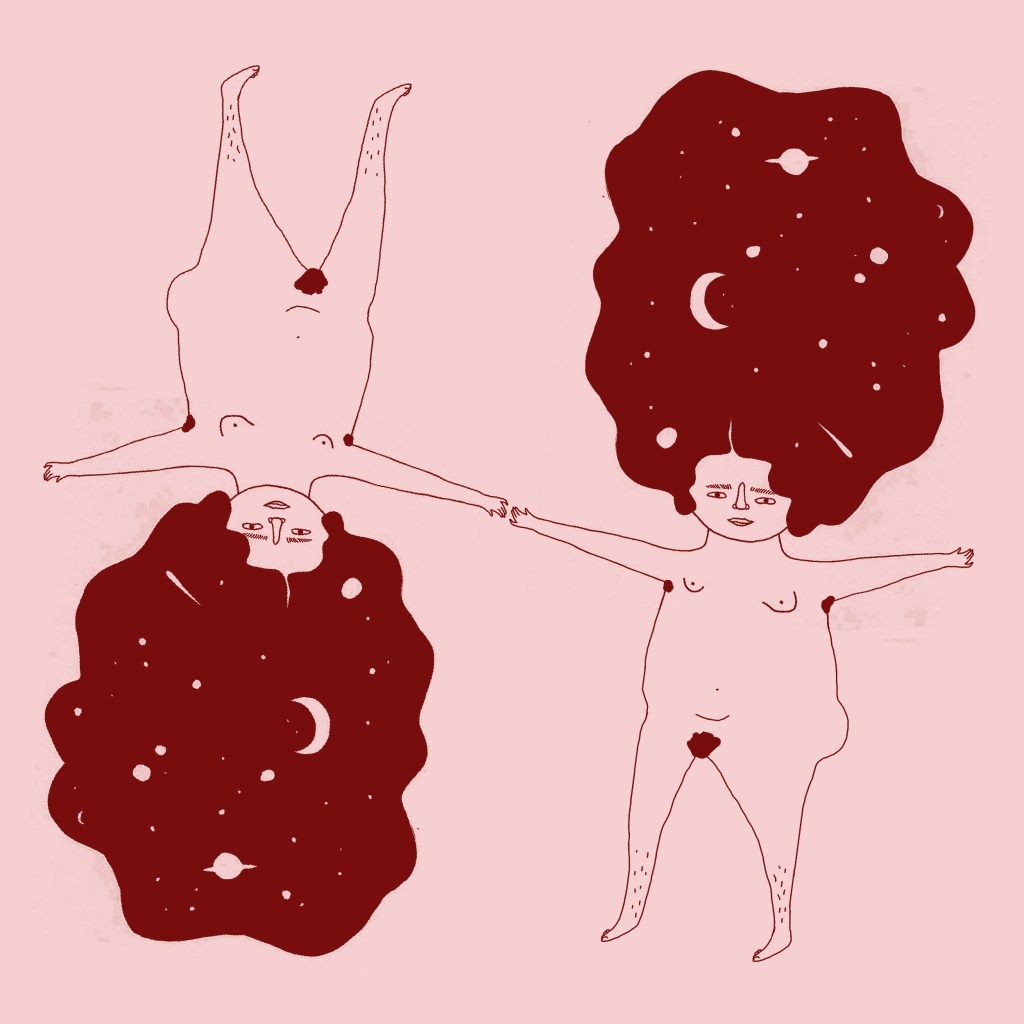
With this in mind, I revisited an old doodle I had made of a woman with hair big enough to contain the universe:
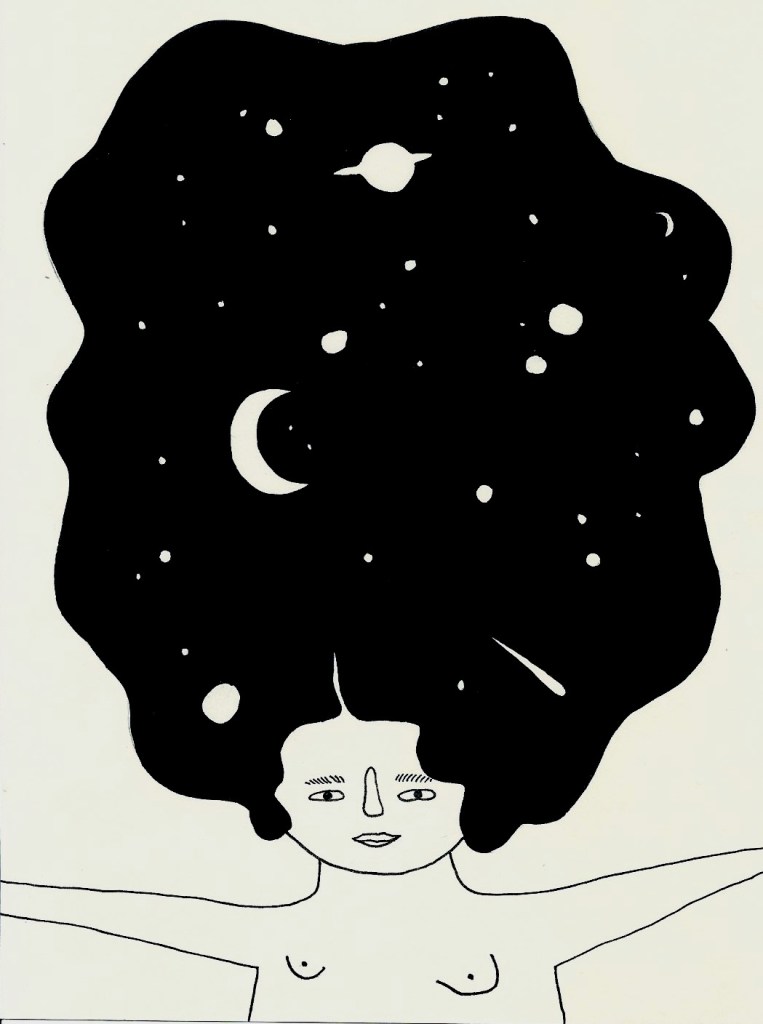
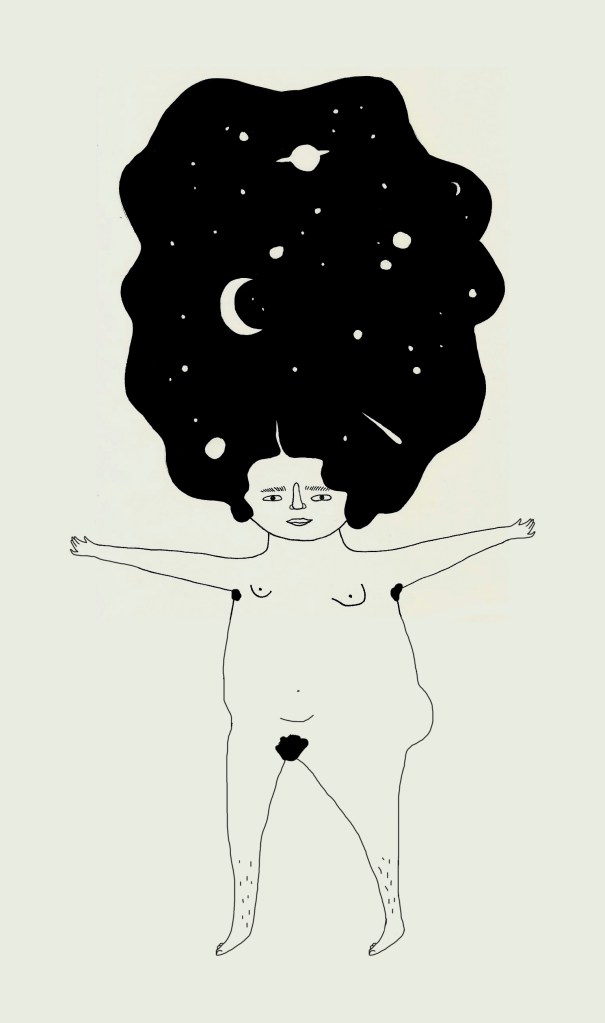
I had run out of space in my notebook and didn’t draw her a body. I corrected that in a newer version and gave her body hair, too. In this new version, this woman holds all homes inside her, including her own.
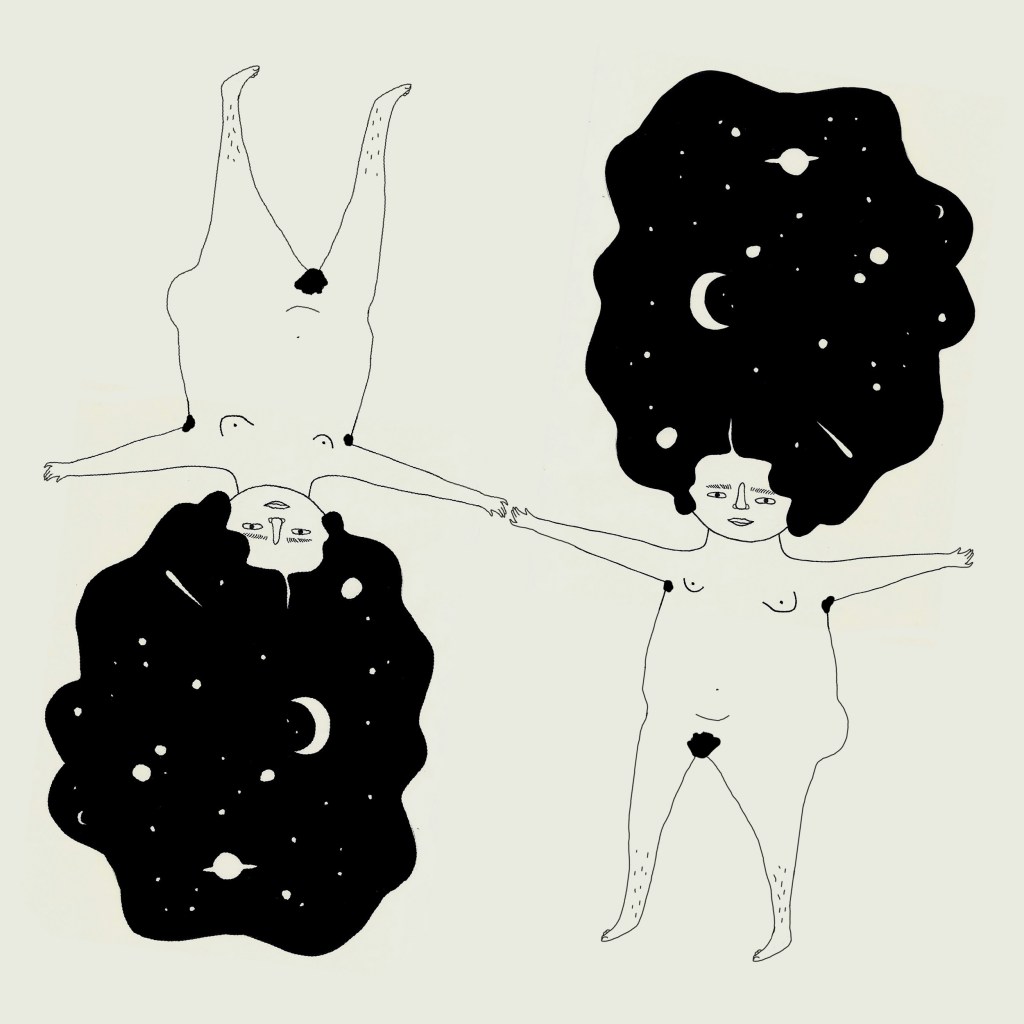
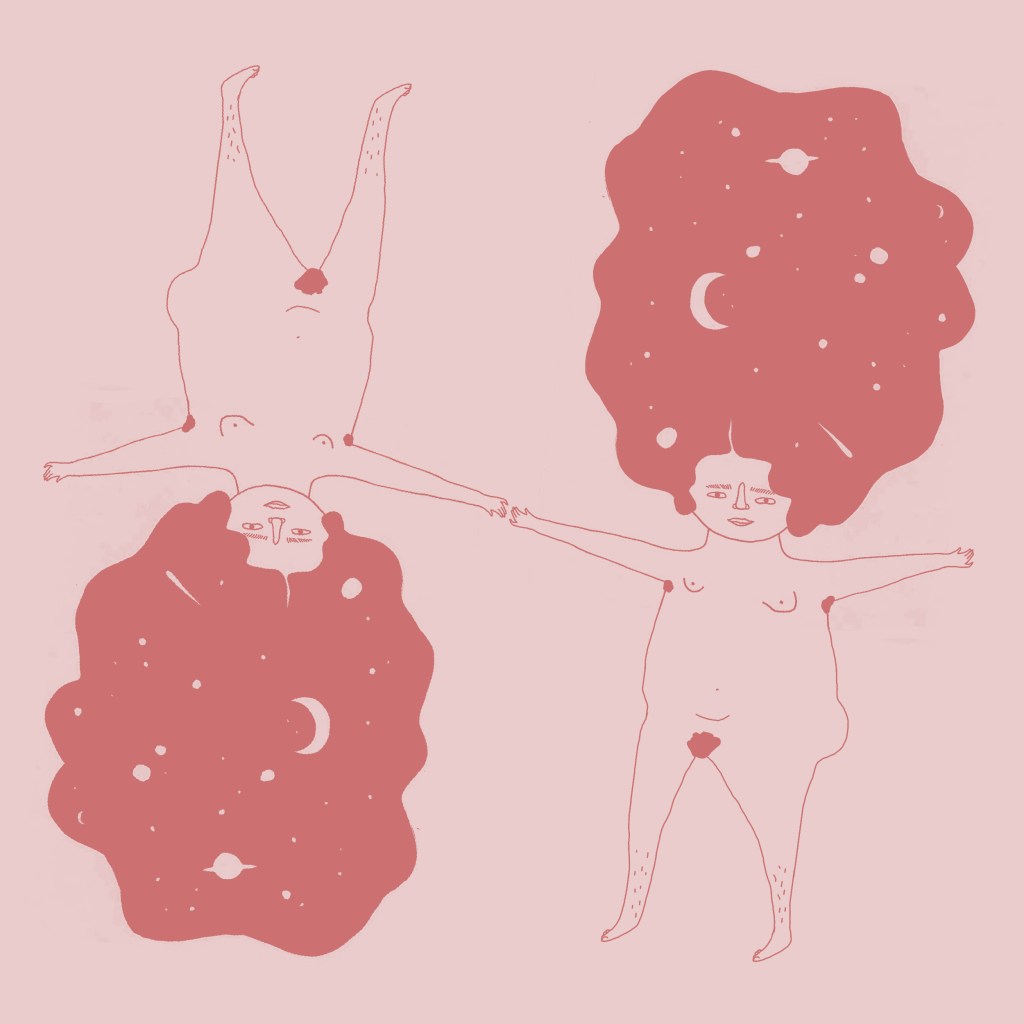
In the newest version, she is not alone:
An abstraction

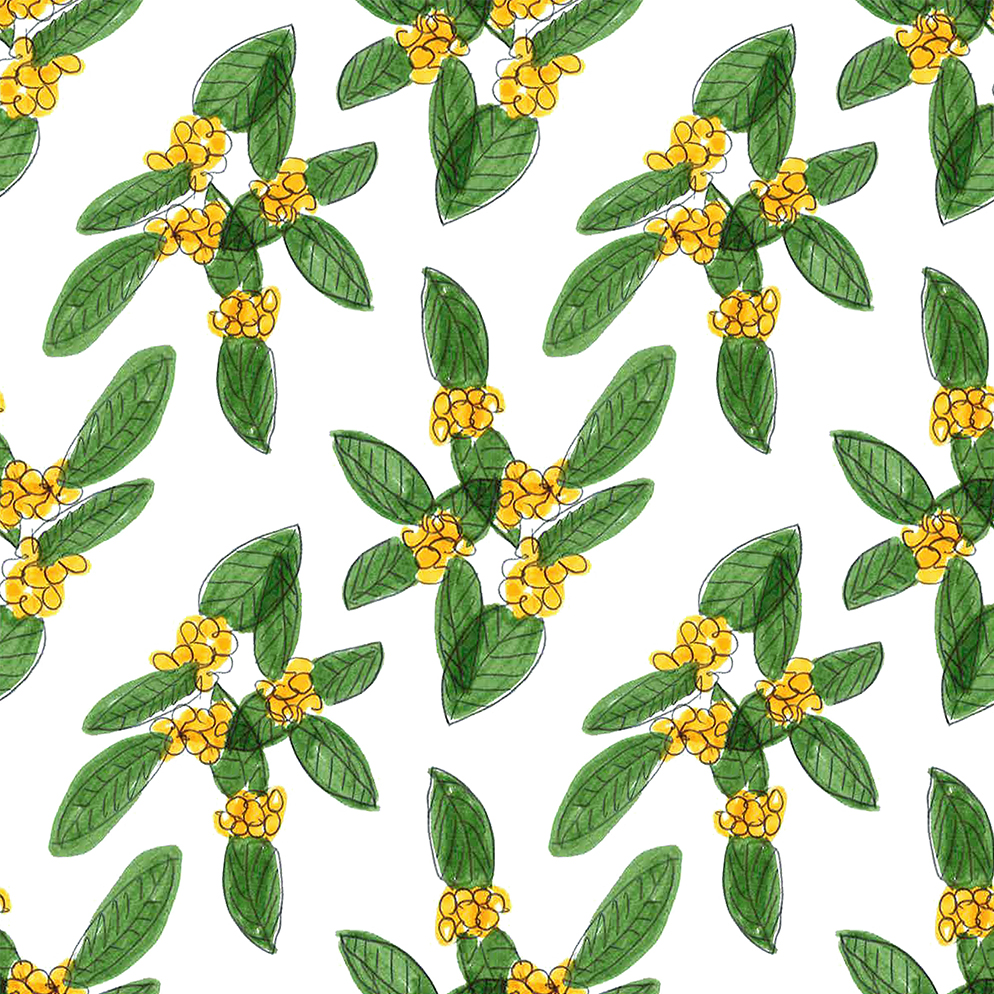
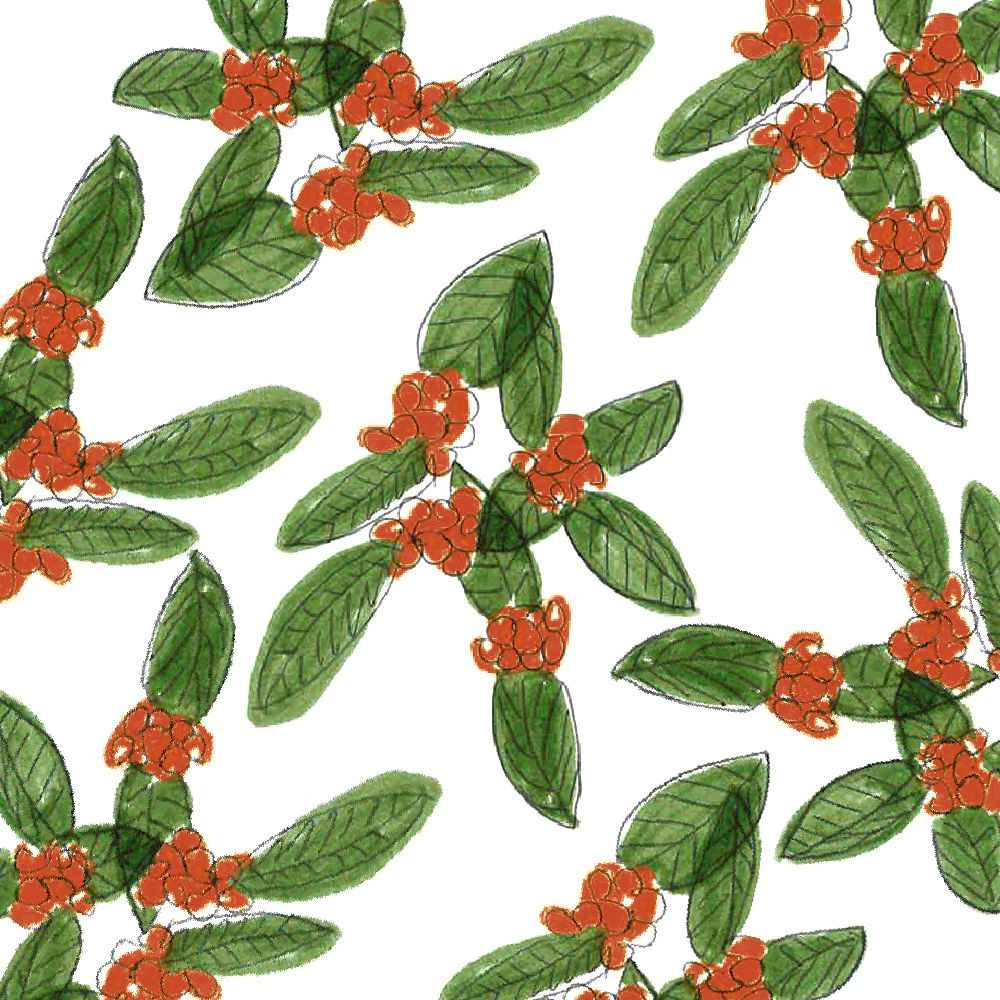
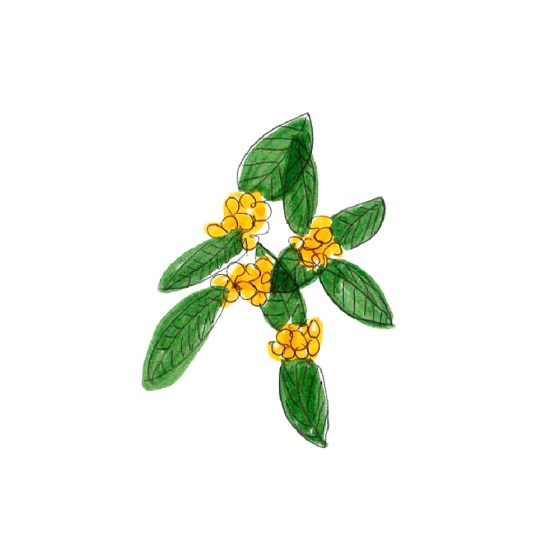
I kept thinking about the idea of berries, fruits and flowers being misplaced on branches, leaves and trees. I thought of thistle flowers on jacaranda trees because they’re the same shade of purple, or apples on palm trees. I usually do very figurative illustration and thought it would be interesting to see how this concept could look in a more minimal, abstract way.

Rowan berries on guava leaves

Snow/sneeuwklokjes

This was the view of Gray’s from my window last Saturday morning when it snowed.

Frances Priest

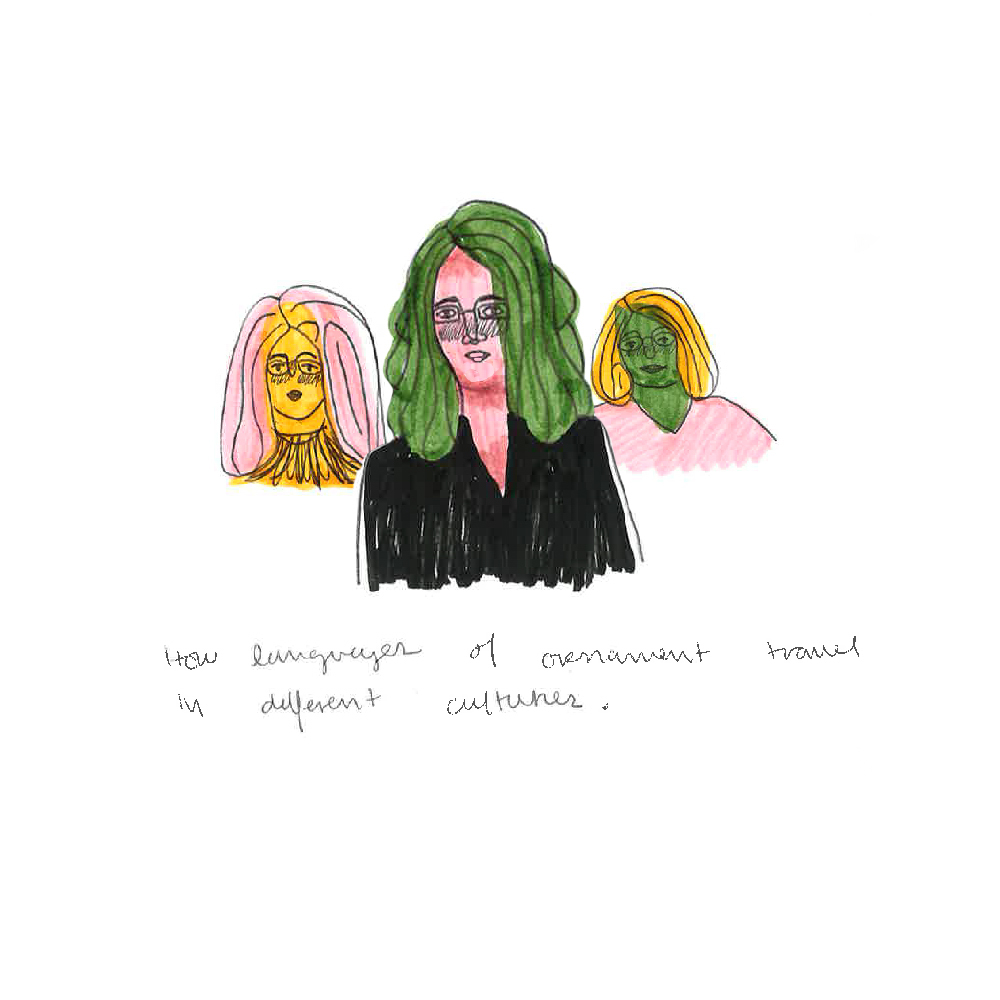
Frances Priest is a ceramicist and was at Gray’s this week. She talked about how she is interested in the languages of ornament and how they travel in different cultures. She talked about «the movility of pattern» and, as an example, she mentioned how we interpret plant habitats, for example. I thought it was curious how pattern can also move, like a person. She talked about how important it is to have the quality of art and craftsmanship applied to spaces like hospitals, in order to humanize them. I didn’t have my glasses with me and couldn’t see her face clearly, so I doodled three plausible portraits of Frances Priest. I also couldn’t see the images of the presentation very well, but when she mentioned interpreting plant habitats, I made out these colors and shapes. It is my interpretation of an interpretation of a plant’s habitat.

If I’m not back tomorrow

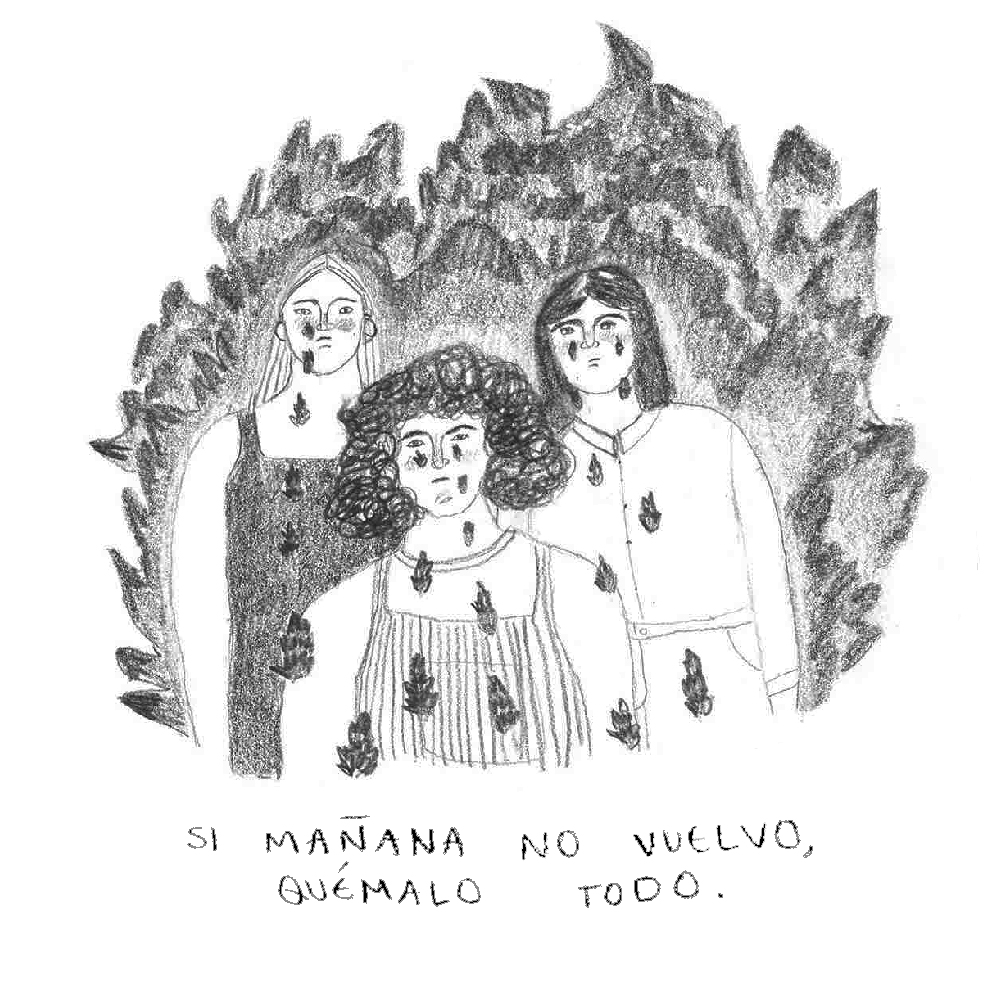
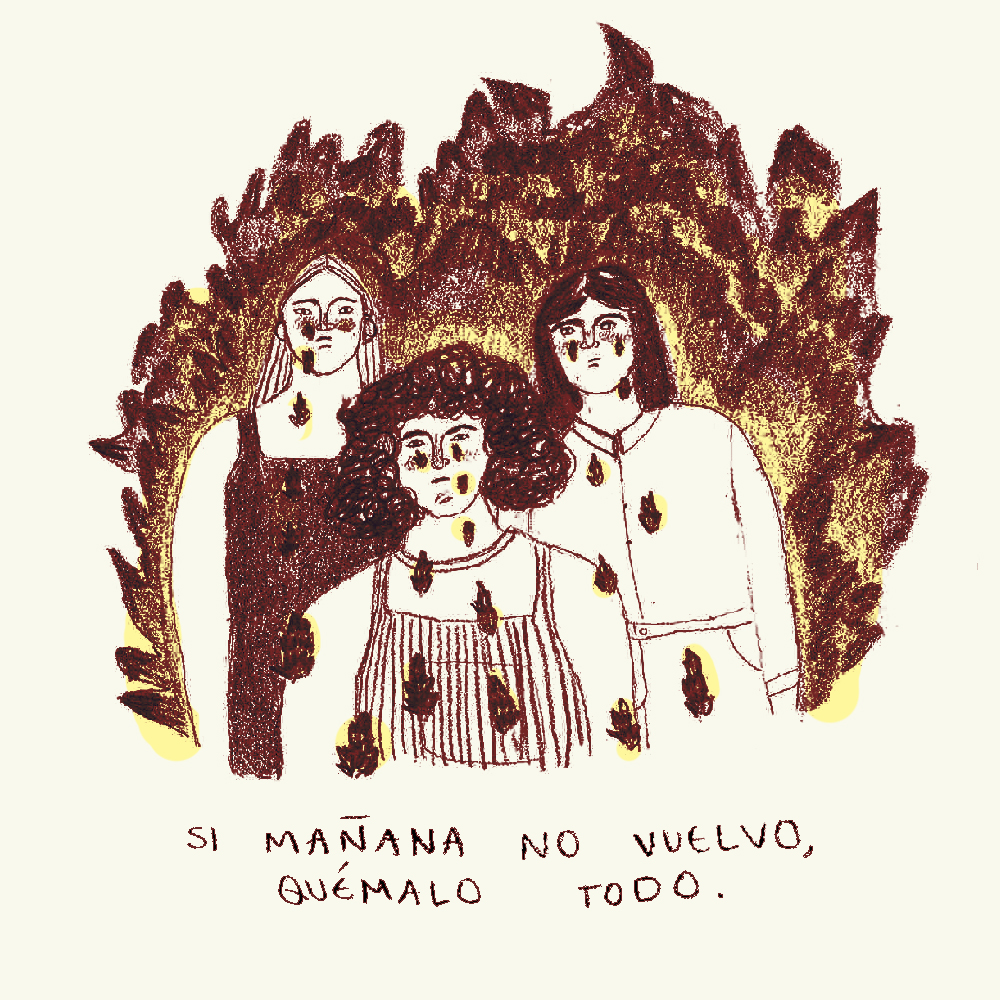
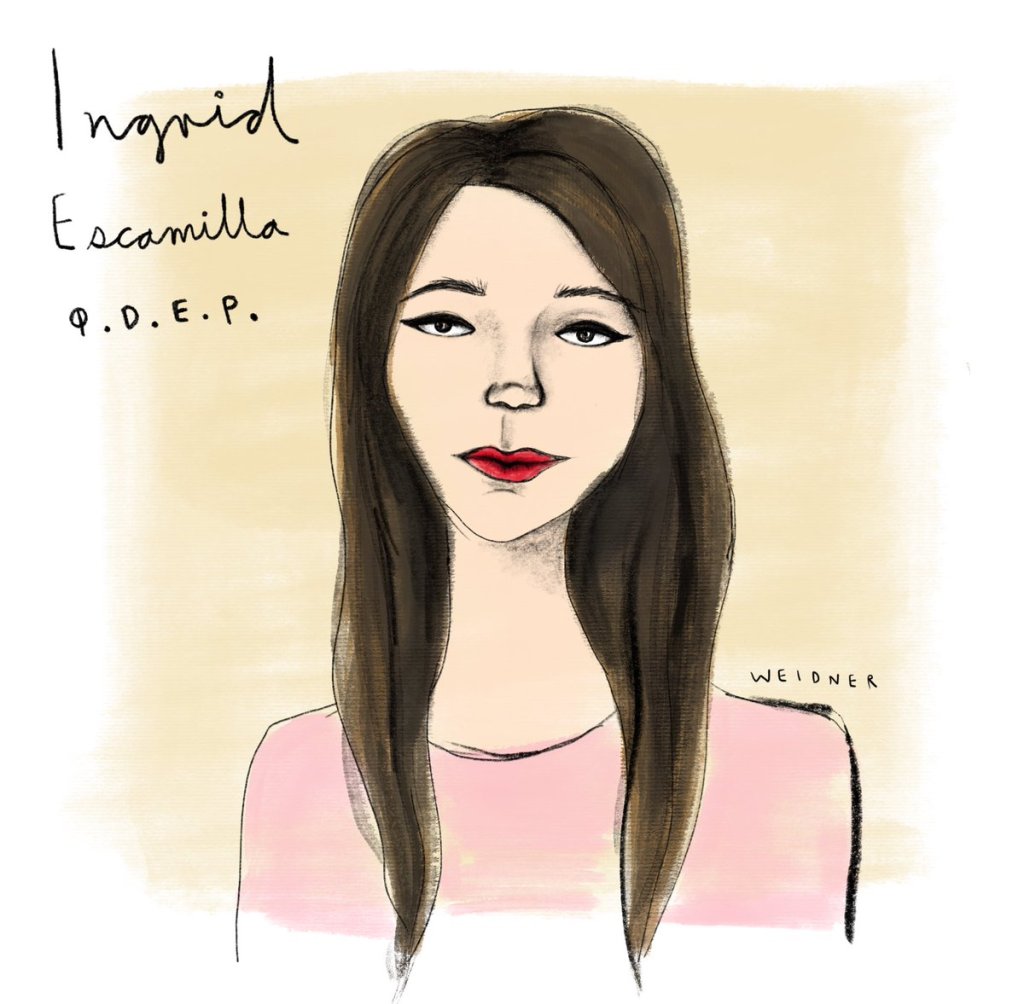
A day after Ingrid Escamilla’s murder, Fátima’s body was found inside a plastic bag. If I were in Mexico, I would be joining my friends in the protests. They send me voicenotes when they march and tell me about the fears they are feeling, and I wish I was there to be angry together.

I made a graphite vignette for social media. It reads «If I’m not back tomorrow, burn it all».

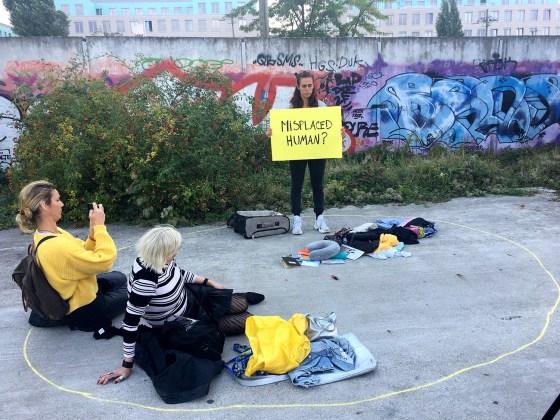
Misplaced Women? A performance by Luciana Damiani.

Luciana Damiani: “The Safe Circle”, Misplaced Women? Workshop, Park am Nordbahnhof, Berlin, 2019. Photo: Tanja Ostojic:

«I started with taking everything out of my suitcase: books, clothes, shoes, papers, documents. I turned all my clothes inside out. After my suitcase was empty and all my belongings were on the floor, scattered, I began to read my manifesto.

‘I am body and I am statement.

I am witness and I am evidence of manipulation.

I don’t want to ask permission to be.

I don’t have to ask permission to be.

I don’t want to be defined by you, or anybody, or anywhere, or anything.

I don’t want to be from here or there.

If my existence threatens you, that is because you’re afraid of losing  your privileges.

If your walls will surround me, my words will be the weapon to make them fall.

If you hurt me, I will heal.

And I will repeat this all over again.

Because I have a pact with all of my kind.

Because that’s my duty and my only way to resist.

After the reading, I tried to get inside the suitcase but of course, it was very small, I would never fit inside it. At some point this action was immediately connected with my experience in Barcelona, ​​trying to be in a place where there was no room for me. It was like bringing everything back.»

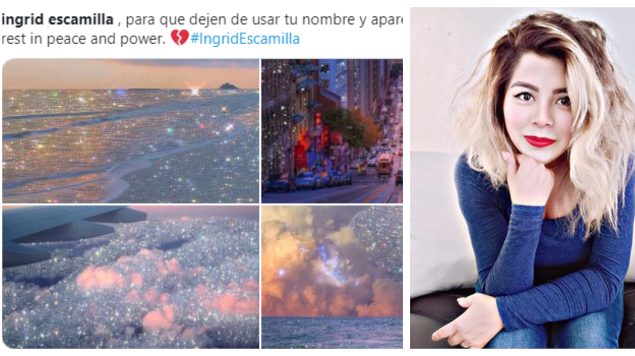
The digital memorial of Ingrid Escamilla

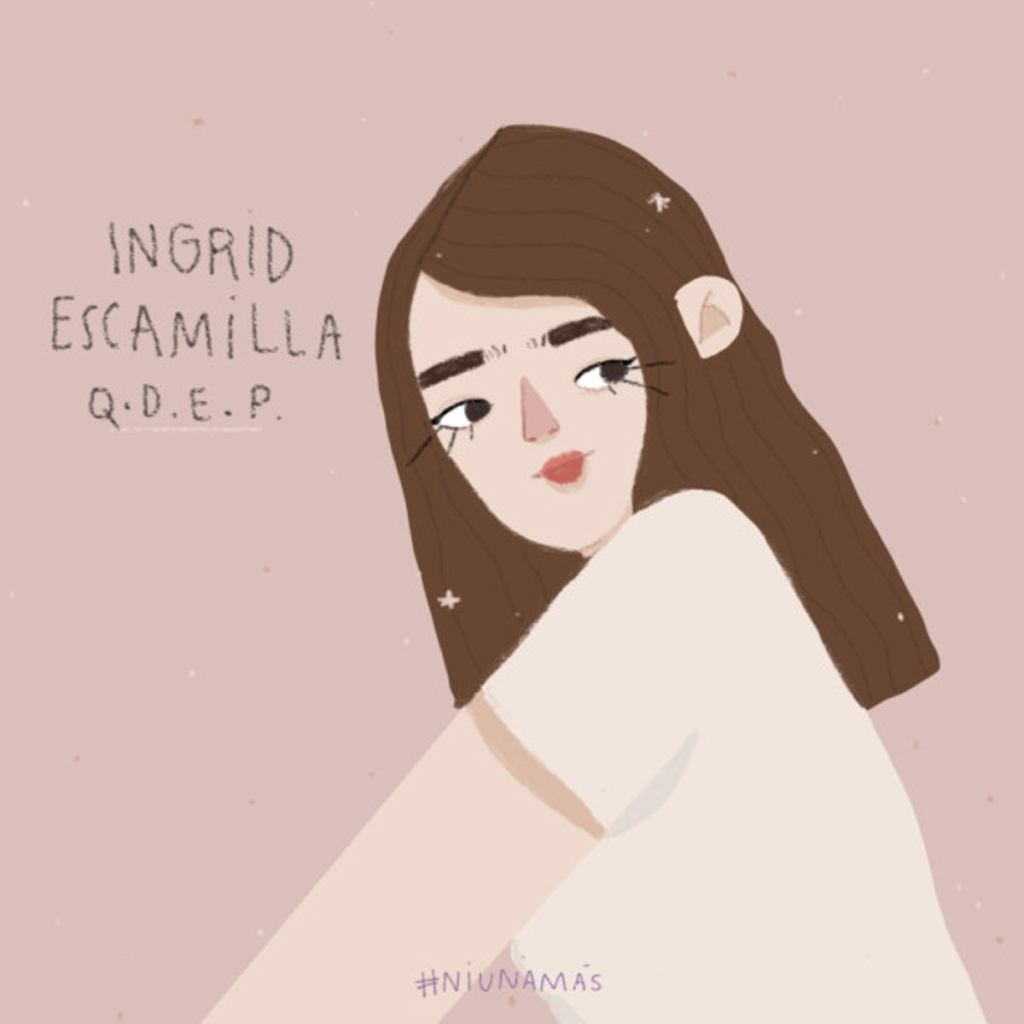
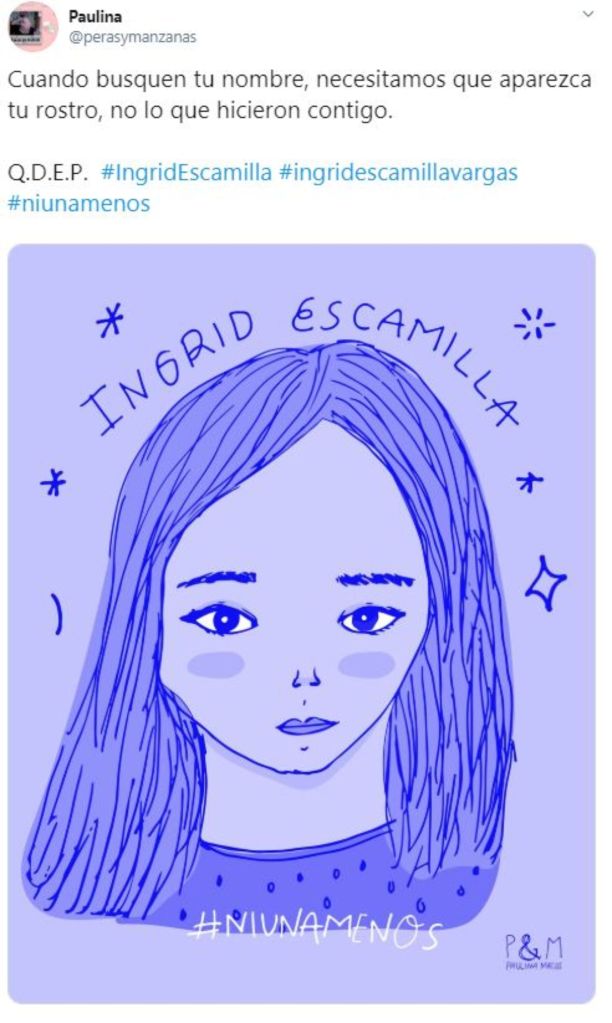
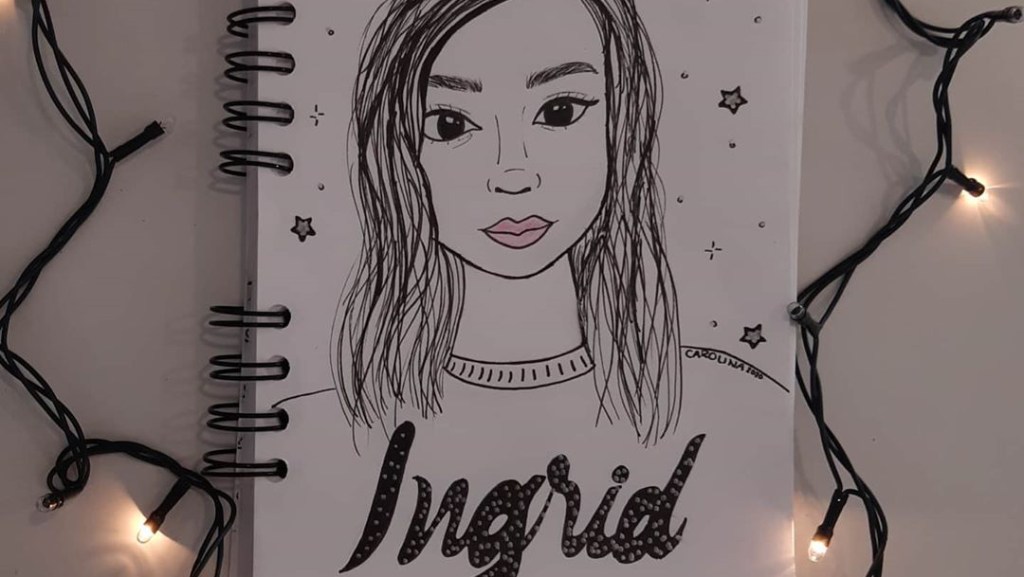
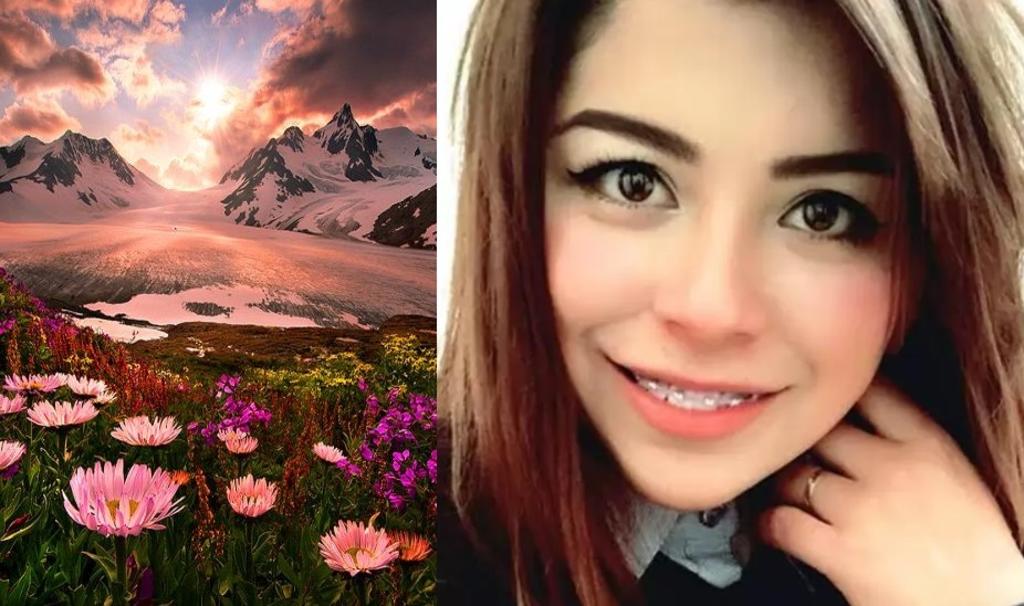
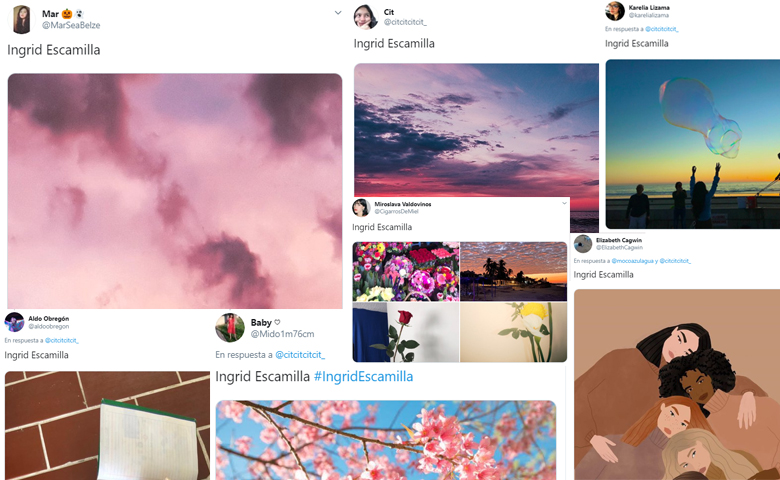
After the murder of Ingrid Escamilla, authorities in charge of her investigation leaked extremely graphic photos of her death that went viral. In an effort to control and dignify the internet search results for her name, twitter users spammed social media with photos of nature, flowers, illustrations of Ingrid and photoshopped images of her in beautiful places. I think it’s very powerful how people are collectively altering metadata that was dehumanizing her, and turned it into a colorful, digital memorial to honour her life instead.

“That when someone searches for the name of Ingrid Escamilla find beautiful images that honor his memory and that honor the life of his family.”

“When they look for your name, we need your face to appear, not what they did with you».

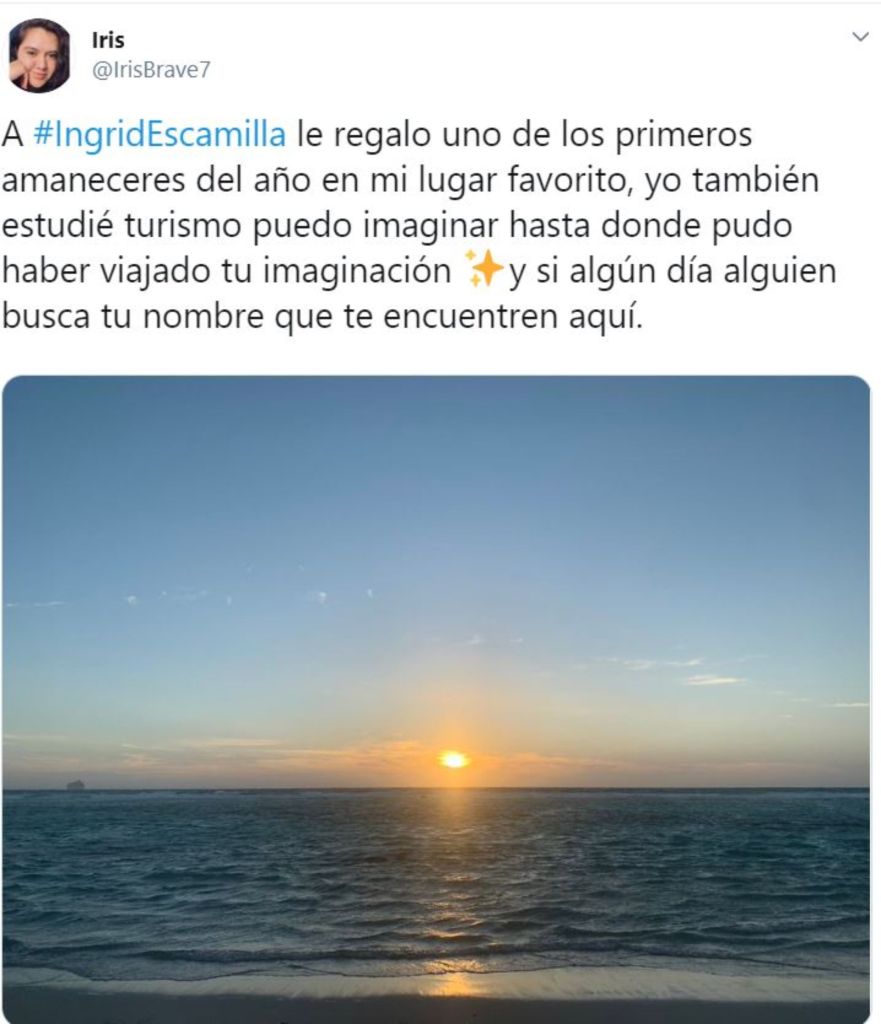
“I give Ingrid Escamilla [a photo of] one of the first sunrises of the year in my favorite place. I also studied tourism, I can imagine how far your imagination could have traveled, and if someday someone looks for your name this is how they will find you».

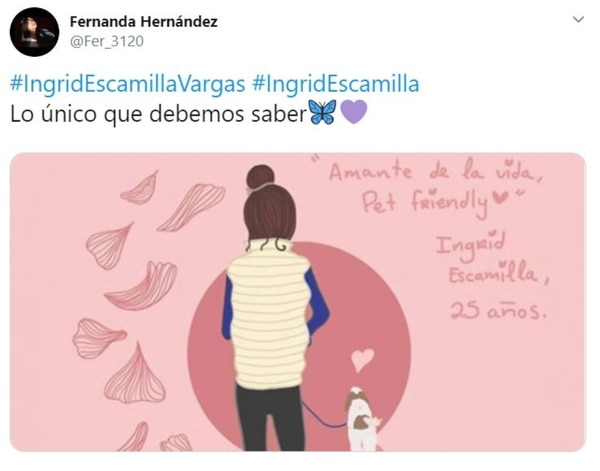
«Pet friendly. The only thing we should know about you (cited from her bio)».

An interesting text about the theory of online memorial culture: here.

A text about Deleuze and Memorial Culture: here.

A thought

I have been thinking about a lot of things I miss: green tomatoes, the jacaranda in front of my house, the color of my bedroom, words, my father, recipes my mom makes, smells, and so on. I thought about making a digital suitcase to pack visual representations of these things. Making memorials or memories portable with the digital. Something like that.

About my nose

I translated this part of a text I wrote about my nose, about feeling homesick and about dealing with grief, but it’s mainly about my nose.

«My nose is big and competent, like my father’s was. It is just as round and wide. I don’t know if he ever had an empirical concern about his, but I know that my nostrils are big enough for three things: two of my sister’s fingers, three broad beans, and to tell if a green salsa has avocado leaf or not. 

I am particularly good in distinguishing spice smells; they are my favorite. My mother’s kitchen smells like cumin and garlic, my bedroom like cotton and myrrh, the living room like old flower water, star anise, floor cleaner and musky notes from my dad’s chair. They are not elegant smells, or harmonious, but the combination of all of them makes my mouth water with a craving to inhabit all these rooms again.

A few years ago, I got my left nostril pierced. The anxiety that resulted from the lack of completeness forced me to get rid of it just two days later. I felt like something was escaping from me through the perforation, like a nasal glaucoma. It’s tragic, really, how such a vital organ –at least in my case– is completely ignored by our eyes to make way for sight, which has given me nothing extraordinary.

The smell of my dad’s chair is beginning to fade. If someone was interested in smelling it, someone would have to squeeze her face to the backrest, firmly. It is strange to begin to assume this nose as fully mine because it was always his. Everyone said so. If I had the chance to choose, I would prefer my eyes see it always.»

I thought about illustrating this.